Godzilla: Final Wars (2004)

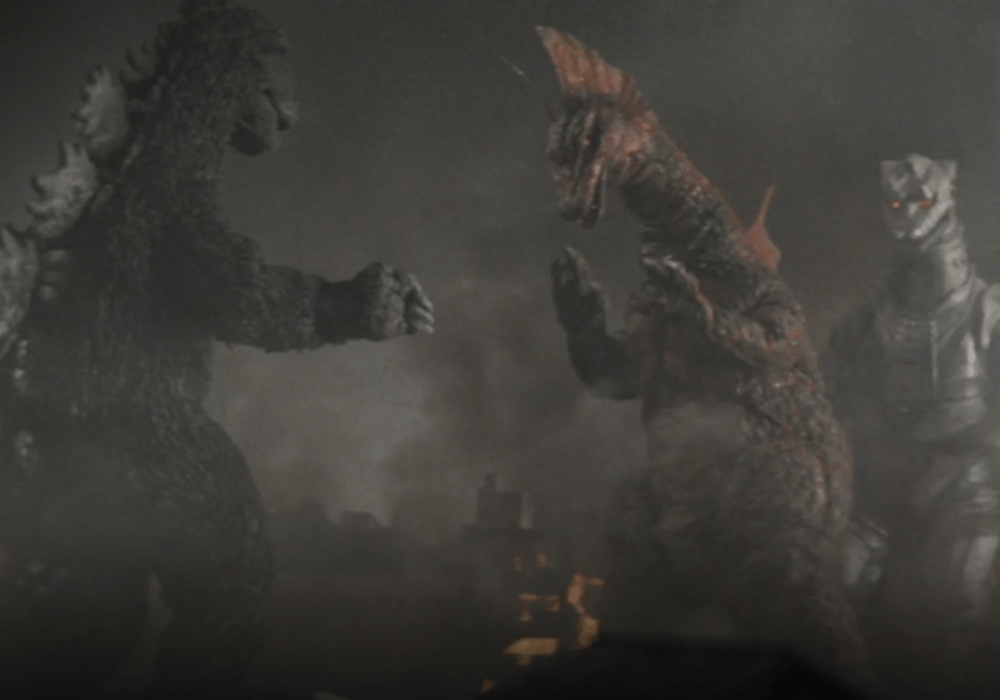
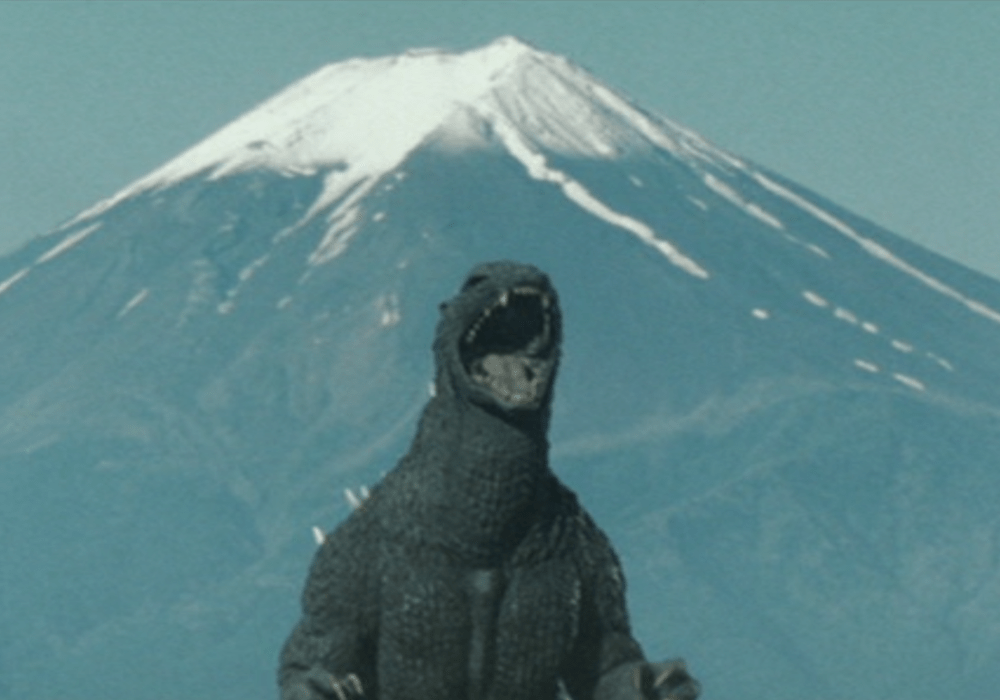
Fifty years. FIFTY YEARS! Five DECADES worth of Godzilla cinema. It seems so long, but in the context of human civilization, it’s a blink of an eye. Technology during this particular time was rapidly developing, leading to a boom in digital effects. A far cry from the boxy wireframes of the Dire Straits’ Money For Nothin’, CGI had recently been pushed to its limits and used to spectacular effect in major film franchises like The Matrix, The Lord of the Rings, and Harry Potter. So where does that leave Godzilla? For fifty years and seven actors, the King of the Monsters has been portrayed by a guy in a suit. RIP, Kenpachiro Satsuma who recently passed away. Some films have toyed with these new tools, but nothing as pervasive as their Hollywood counterparts. 2004’s Godzilla: Final Wars embraced this debate over digital and practical effects in microcosm, stealing a lot from the Wachowski’s Matrix films in the process.

Godzilla: Tokyo S.O.S. had the poorest box-office haul ever, but there was no way Toho was going to let the 50th anniversary of Godzilla fall by the wayside. The Millennium era hadn’t hit the mark with new audiences, except for a niche few like myself. The franchise was languishing, and numbers drive production. This isn’t the first time Godzilla stared down the barrel of obscurity, and producer Shogo Tomiyama recognized that reality. Toho would produce one last, big, swing-for-the-fences film to mark Godzilla’s anniversary, before going dormant as they had done after Terror of Mechagodzilla and Godzilla vs. Destoroyah, waiting for the next generation to take up the mantle. Enter Ryuhei Kitamura, a young filmmaker bucking the trend of safe, formulaic, cookie-cutter productions that conservative studio execs were going for, but were no longer delivering.

Read More

Godzilla vs SpaceGodzilla (1994)

The birth of hip hop can be traced back to the 1970s in the Bronx, New York, New York, America. DJ Kool Herc pioneered a turntable technique of isolating and repeating musical breaks. The genre started small, only available at block parties, house parties, and schoolyards. Young people would bring out a boombox and start rhyming, improvising intricate poetry on the fly. By the 80s, the genre became popularized enough to sell records from greats like Kurtis Blow, Grandmaster Flash, Doug E. Fresh, and way more than I can list here. In retrospect it shouldn’t be surprising, but a prevailing casual racist belief among older white people was that it was music for uneducated thugs who didn’t have the best grasp on the English language. It’s an absolutely insane take considering the craftsmanship and grasp of rhythm, cadence, and structure required to spit fire, be it freestyle or pre written. The backlash against “ebonics” or African American English would come to a head in 1996 with Oakland School Board’s resolution to recognize the legitimacy of Ebonics and incorporate that into teaching standard English in the classrooms. As you can imagine, white people lost their friggin minds over this without understanding the actual resolution or its impact on education. Meanwhile, overseas, Japan was picking up on this new musical style, but fans felt that hip hop was more suited to the English Language than Japanese. Japanese generally ends in a small set of auxiliary verbs, as opposed to more common verbs and nouns found in English, lending to a wider variety of rhymes and cadence. But, just as AAE didn’t adhere to the steadfast rules of standard English, rappers in Japan began to bend the grammatical structure to fit into the traditional hip hop flow. This wave of new creative artists gave rise to acts like Buddha Brand, and King Giddra who embraced hip hop’s origin of promoting voices of the oppressed and voiceless. While Japan had an understandably different political climate, these bands would rail against homogeneity and cultural imperialism. What does all this have to do with Godzilla? Well, scoring legend Akira Ifukube was approached for the job of composing for Toho’s latest venture, Godzilla vs. SpaceGodzilla. While he didn’t have as much of a conniption fit as American elders, he did take a look at the project and said “When I read the script for Godzilla vs. SpaceGodzilla, it reminded me of teenage idol films. In addition, the movie was going to have rap music in it. So, I thought, ‘Well, this is not my world, so I better not score this one.'” While there is only one rap song in Godzilla vs. SpaceGodzilla, this move is consistent with Ifukube’s decisions in the past. He declined to write for the original Mothra in ’61 because he didn’t think his style would be a good enough fit to do the the twin singers who played the Shobijin justice. He also stayed away from some earlier Heisei era films because he wanted to avoid the pop synth motifs they were looking for. The man just knows how to step aside and let someone else take the reins for a while.

Read More

Godzilla vs. King Ghidorah (1991)

What does the 90s superhit American sitcom Friends have to do with Godzilla? Absolutely nothing. But in a small coincidence, our story today starts with a man by the name of Matthew Perry. No, not Chandler, but a naval officer around the year 1853. Known as the “Father of the Steam Navy,” Perry advocated for technical education of naval officers and modernization of the US Naval fleet. Prior to 1853, Japan had implemented an isolationist policy, cutting off all trade from the outside world with the exception of the Netherlands and China, and then only through the port at Nagasaki. The reason being was twofold: they saw what had happened in China with the Opium Wars, fought over trade disputes, and how much British traders brought in contraband opium and the corruption of local officials. (The first Opium War was how China lost Hong Kong to Great Britain by the way). The other was to halt the spread of Catholicism, and if you thought Catholics were pushy today, it’s nothing compared to the Manifest Destiny days. By securing the country against outside influence and controlling trade, the shogunate hoped to preserve Japanese culture and prevent any individual governor from becoming powerful enough to overthrow them. That all came to a halt when Commodore Matthew Perry sailed into what would become Tokyo Bay on his badass upgraded steam-powered battleship, insisting a letter be delivered to the leader of the country at the time, the shogun Tokugawa. After being told to piss off and head to Nagasaki, Perry shelled some buildings and the letter was delivered, outlining demands for Japan to open up trade with the US. Perry returned the following year to sign a lopsided treaty ensuring favorable terms for the US, a result of the “gunboat diplomacy.” Seeing what had happened to China, and following this aggressive strategy from the US, Japan knew it had some catching up to do or else it would be weakened or destroyed by the West. Looking to the global powers of that time, they sought to emulate their models of advancement which included imperialism fueling industrialization. Still with me? Hang in there, this pales in comparison to the plot loops of Godzilla vs. King Ghidorah.

Read More

Terror of Mechagodzilla (1975)

Well, this is it, folks. End of an era. The Showa Era to be precise, and 1975’s Terror of Mechagodzilla closed the book on Godzilla for almost a decade. Unlike Destroy All Monsters, this wasn’t meant to be the end though. Producer Tomoyuki Tanaka wanted to cash in on the success of Godzilla vs Mechagodzilla with a direct sequel, which was greenlit within four months. The script comes from the rare woman screenwriter in the series, Yukiko Takayama, who won a contest. Seems like when Toho is out of ideas (or wants them on the cheap) they’ll just hold a contest, much to the chagrin of the studio’s writers and designers I imagine. This was Takayama’s first writing credit, and she would go on to write more professionally, but is the last woman screenwriter in the franchise (the only other woman, Kazue Shiba, having a co-writer credit on Son of Godzilla). 1975’s Terror of Mechagodzilla also features another feminine rarity in the franchise: some big honkin’ titties.

Read More

Godzilla vs Megalon (1973)

When he wasn’t crafting monster suits for Toho’s Godzilla franchise, special effects legend Eiji Tsuburaya ran his own television production company. You may recall Tsuburaya stepping aside back in 1966’s Ebirah, Horror of the Deep, staying on only in a supervisory role for several films. What became of his pet project after passing the torch at Toho? None other than the beloved Ultraman series that spawned another suitmation genre with hundreds of series drawing from this source material. Ultraman inspired shows like Kamen Rider, and Super Sentai, best known as the production Mighty Morphin Power Rangers used footage from. Eiji Tsuburaya’s legacy is cemented in not one, but two media juggernauts that changed the history of entertainment forever. And it’s that powerhouse of creative force that lead Toho to hold a contest to design an Ultraman-esque robot that would be featured in the next Godzilla film. After a few redesigns (much to the chagrin of the kid that won the contest), this robot would become the both beloved and despised, the android with a plandroid, the polarizing pugilist, the one…and only…JET JAGUAAAAAAAR!

Read More

Godzilla Singular Point (2021)

I thought I’d mix it up a little and review Godzilla Singular Point, Netflix’s new anime. I’ll add the caveat that I used to watch a bunch of anime in the 90s/00s, but I really don’t like much of it anymore. Mostly because of how many common tropes and pitfalls just ruin the genre for me. Singular Point definitely employs a lot of them, but there’s some fun stuff and it will be good to knock this one out while it’s still on Netflix. The series is definitely too long for its own good, and suffers from chronic cases of Cutesy Bullshit and Pretentious Exposition. It would have been better if they had boiled the plot into 4-6 episodes like the first season of Castlevania, but the animation has a unique style, and the monster action is pretty cool. Godzilla himself seems to be following the Shin concept of evolving forms, the final two are good looking if criminally underused. Be patient while watching this series, dear viewers. For a series built around Godzilla, he’s barely in it.

Read More

Son of Godzilla (1967)

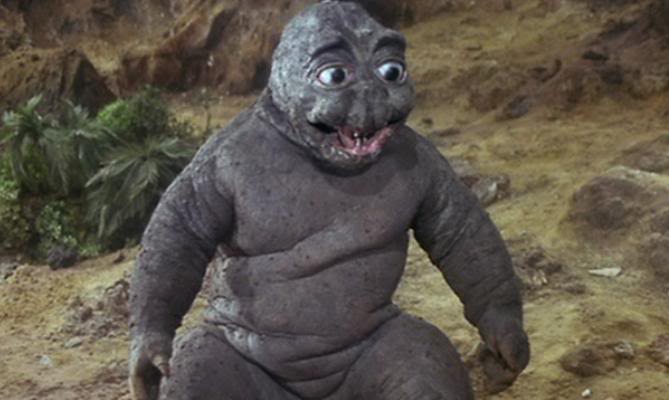
Well. It had to happen sooner or later. If you ever wanted to simulate taking edibles while having a fever as a toddler begs for your attention, Son of Godzilla is your movie. It’s kinda trippy, and not in a good way. There are some emotional notes, and some of the creature designs are pretty mint, but overall this movie is a pain in the ass. Mystery Science Theater 3000 lampooned a couple of Godzilla movies, notably the A+ previous feature Ebirah, Horror of the Deep, but this should have been at the top of their list.

The film is, however, predicated on a team of scientists researching weather control in order to solve global food shortages. In 1967, the Great Chinese Famine of 1959-1961 was still part of recent memory. The planned economy of China’s Great Leap Forward saw local governors over-reporting harvests, which were confiscated and redistributed at the State’s discretion, and rationed to the newly founded people’s communes. The ensuing famine was the largest in history and resulted in tens of millions of deaths. In contrast to that, in India in 1966, there was a famine induced by drought, but it was not nearly as bad. Government aid, as opposed to forced quotas, helped alleviate the situation, as well as sizeable donations of crops from the US. The United States sent an entire fifth of their wheat production to India at this time.

The food shortage threat was very real, but instead of controlling the weather, there was another alternative: genetically modifying crops to thrive in harsh conditions. Enter Norman Borlaug, whose research on wheat in Mexico led him to South Asia in the 60s, and helped India double their wheat production between 1960 and 1970. Borlaug won the Nobel Peace Prize in 1970 and is credited with saving over a billion people worldwide from starvation. So the next time you hear about how awful GMOs are, remember Norman Borlaug, his efforts, the tens of millions who died of famine in China, and just how utterly stupid the scientists are in this Godzilla film in particular.

Read More

Invasion of Astro-Monster (1965)

In 1964, we received a strong message on the importance of international cooperation in Mothra vs. Godzilla, and a year later Toho Studios was practicing what they had preached. Invasion of Astro-Monster was one of three co-productions with US producer Henry G. Saperstein, who claimed to provide half the funding, yet budget restrictions still forced a few shortcuts along the way. In spite of these, Invasion of Astro Monster is a fun beautiful romp and the first in the franchise to introduce an alien race. There’s a whole lot of sci-fi DNA throughout the film, so if you’ve branched out beyond the Godzilla franchise, you’ll recognize some nods to those who came before.

Read More

King Kong vs. Godzilla (1962)

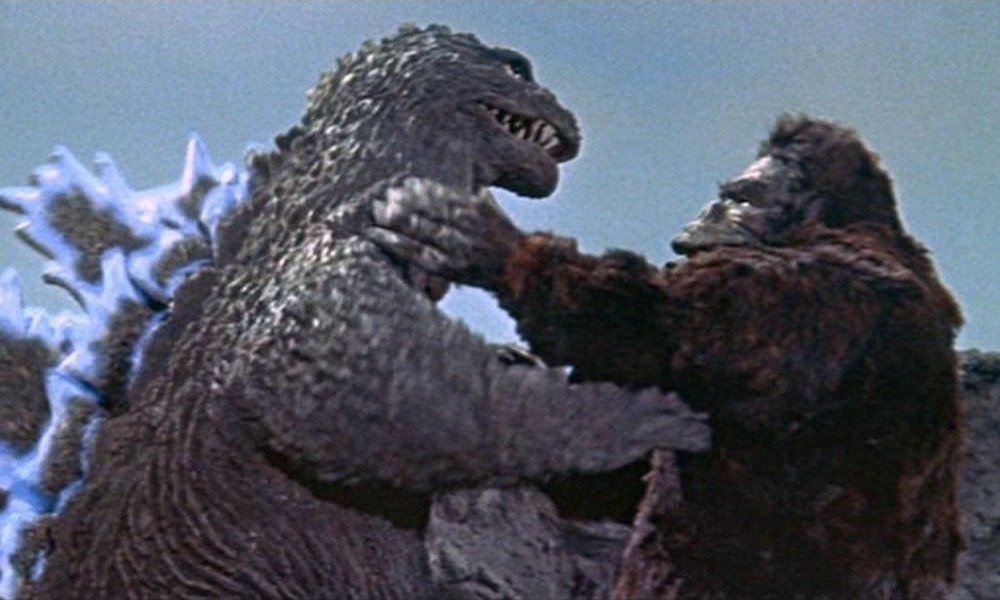
Well, we’re finally back on track folks, with the most anticipated action movie of the summer, King Kong vs Godzilla! No, not the 2021 super hit Godzilla vs. Kong, King Kong vs. Godzilla (1962). Fret not dear readers, we’ll get there. But first, WRESTLEMANIA!

In the 1950s to early 1960s Japanese Pro-Wrestling was starting to take off. Inspired by American counterparts, the Japan Pro Wrestling Alliance (JPWA) recruited from Sumo and Judo leagues. The founder, Rikidōzan, was born in Korea and moved to Japan to practice Sumo, then traveled stateside to compete in the National Wrestling Alliance. Originally introduced as a villain, Rikidōzan actually gained popularity and started defeating a ton of his American opponents. This especially endeared him to audiences back overseas as a hometown hero who stood up to the dirty, cheating Americans (his fellow athletes embraced the role as heels, giving audiences a cathartic boost in postwar Japan). Rikidōzan was unfortunately killed by a friggin yakuza gangster in a nightclub in 1963.

Read More

Rodan (1956)

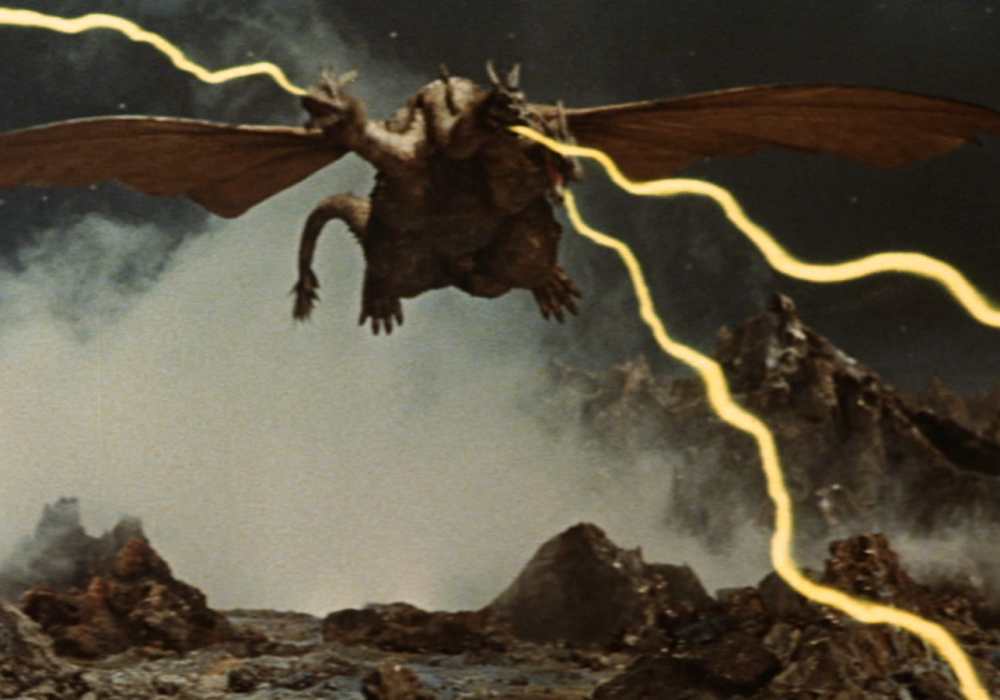
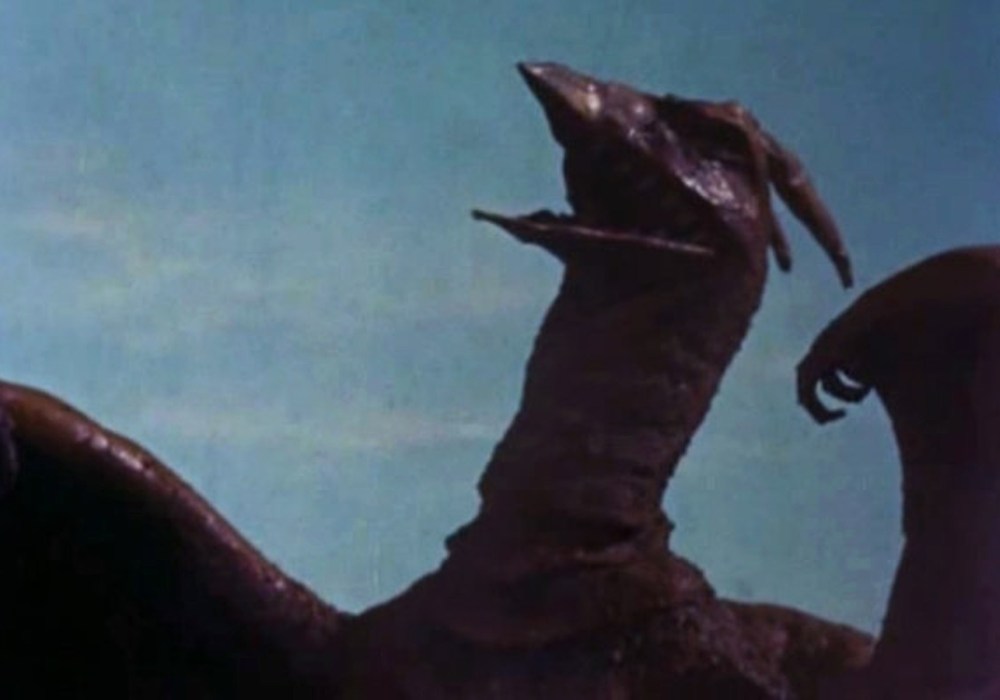
Dear readers, to-day we break from the official Godzilla franchise to preach the Good Word of Rodan, the Flying Monster! I am not too proud to admit, brothers and sisters, that I was once not a fan of Rodan. It’s true! Yes, a dark shame clouded my past. I too, was a living wretch. I too, was steeped in sin and degeneracy. I too, did not recognize…the Higher Power. WAY up on High. High in the SKY! I was once lost, good people, but now I am FOUND! I see the LIGHT! Sing it from the mountaintops with me, brothers and sisters: RODAN KICKS ASS

Read More