Godzilla vs. Mechagodzilla (1974)

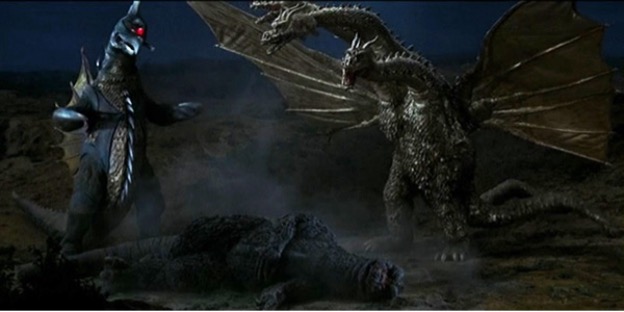
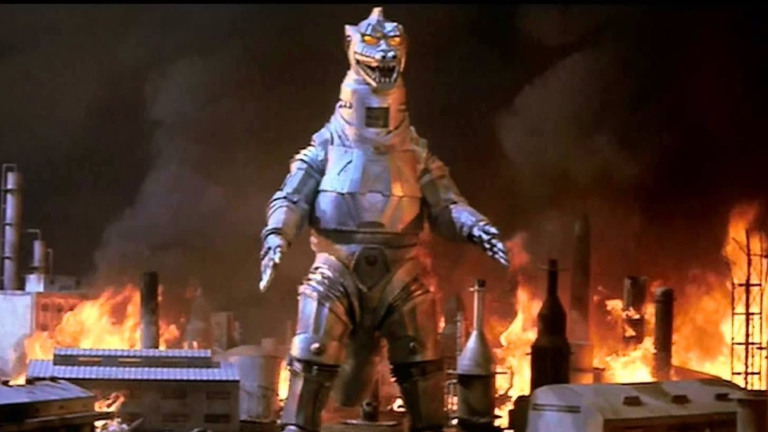
It wouldn’t be until 1979 and well into the 80s when famous giant robot series like Mobile Suit Gundam and Macross would hit their stride in Japan. But even before this, the 60s and 70s were brimming with Robot Fever. From animated series like Astro-Boy and Gigantor, to live action Ultraman style shows like Johnny Sokko and His Flying Robot, and Super Robot Red Baron, robots were all the rage. Stateside we had Robby from Forbidden Planet and The Robot of Lost In Space, and across the pond there were the formidable Dalek’s of Doctor Who, all who would go on to inspire Battlestar Galactica and Star Wars in the near future. But here, on the 20th anniversary of Godzilla‘s 1954 debut, producer Tomoyuki Tanaka still had faith in the floundering Godzilla franchise, and what better way to give it a jolt than with a new giant robot of their own: Mechagodzilla!

Read More

Godzilla vs Megalon (1973)

When he wasn’t crafting monster suits for Toho’s Godzilla franchise, special effects legend Eiji Tsuburaya ran his own television production company. You may recall Tsuburaya stepping aside back in 1966’s Ebirah, Horror of the Deep, staying on only in a supervisory role for several films. What became of his pet project after passing the torch at Toho? None other than the beloved Ultraman series that spawned another suitmation genre with hundreds of series drawing from this source material. Ultraman inspired shows like Kamen Rider, and Super Sentai, best known as the production Mighty Morphin Power Rangers used footage from. Eiji Tsuburaya’s legacy is cemented in not one, but two media juggernauts that changed the history of entertainment forever. And it’s that powerhouse of creative force that lead Toho to hold a contest to design an Ultraman-esque robot that would be featured in the next Godzilla film. After a few redesigns (much to the chagrin of the kid that won the contest), this robot would become the both beloved and despised, the android with a plandroid, the polarizing pugilist, the one…and only…JET JAGUAAAAAAAR!

Read More

Godzilla vs Gigan (1972)

It’s a shame producer Tomoyuki Tanaka disliked 1971’s Godzilla vs. Hedorah so much. The following year, after recovering from illness, he set out to get the Godzilla franchise back to basics. With Japan’s film industry in steady decline, the budgetary woes continued for Toho. The rise in popularity of television and big-budget imports from Hollywood lead to the Japanese studios cutting corners all over the place. In a few years, 1975 would mark Japanese-made films falling to below 50% market share. Like All Monsters Attack, Gigan relies heavily on stock footage, though a new monster was created for this one, and man does it rock. In another cheap move, they also use recycled music from Akira Ifukube’s other movies for the score, and uh, yeah, occasionally that works out. Jun Fukuda helms the project as director, seeking to right the ship, and special effects director Teruyoshi Nakano is back for round two after his spectacular work with Hedorah. The Godzilla suit from Destroy All Monsters is used for the fourth time, and sadly this will be the final film Haruo Nakajima will play Godzilla. Nakajima has been with us from film one, bringing Godzilla’s familiar mannerisms to life, and he will be missed.

Read More

Son of Godzilla (1967)

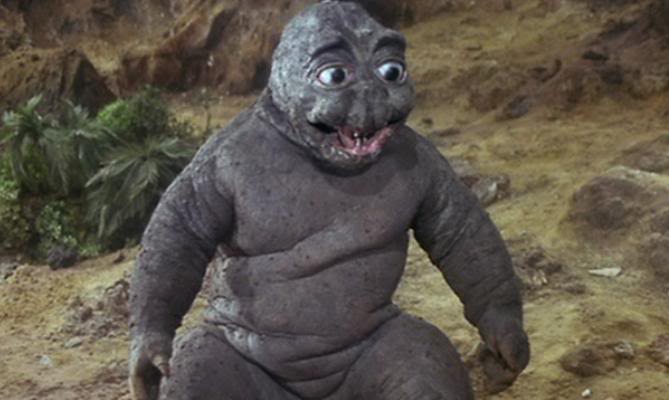
Well. It had to happen sooner or later. If you ever wanted to simulate taking edibles while having a fever as a toddler begs for your attention, Son of Godzilla is your movie. It’s kinda trippy, and not in a good way. There are some emotional notes, and some of the creature designs are pretty mint, but overall this movie is a pain in the ass. Mystery Science Theater 3000 lampooned a couple of Godzilla movies, notably the A+ previous feature Ebirah, Horror of the Deep, but this should have been at the top of their list.

The film is, however, predicated on a team of scientists researching weather control in order to solve global food shortages. In 1967, the Great Chinese Famine of 1959-1961 was still part of recent memory. The planned economy of China’s Great Leap Forward saw local governors over-reporting harvests, which were confiscated and redistributed at the State’s discretion, and rationed to the newly founded people’s communes. The ensuing famine was the largest in history and resulted in tens of millions of deaths. In contrast to that, in India in 1966, there was a famine induced by drought, but it was not nearly as bad. Government aid, as opposed to forced quotas, helped alleviate the situation, as well as sizeable donations of crops from the US. The United States sent an entire fifth of their wheat production to India at this time.

The food shortage threat was very real, but instead of controlling the weather, there was another alternative: genetically modifying crops to thrive in harsh conditions. Enter Norman Borlaug, whose research on wheat in Mexico led him to South Asia in the 60s, and helped India double their wheat production between 1960 and 1970. Borlaug won the Nobel Peace Prize in 1970 and is credited with saving over a billion people worldwide from starvation. So the next time you hear about how awful GMOs are, remember Norman Borlaug, his efforts, the tens of millions who died of famine in China, and just how utterly stupid the scientists are in this Godzilla film in particular.

Read More
Ebirah, Horror of the Deep (1966)

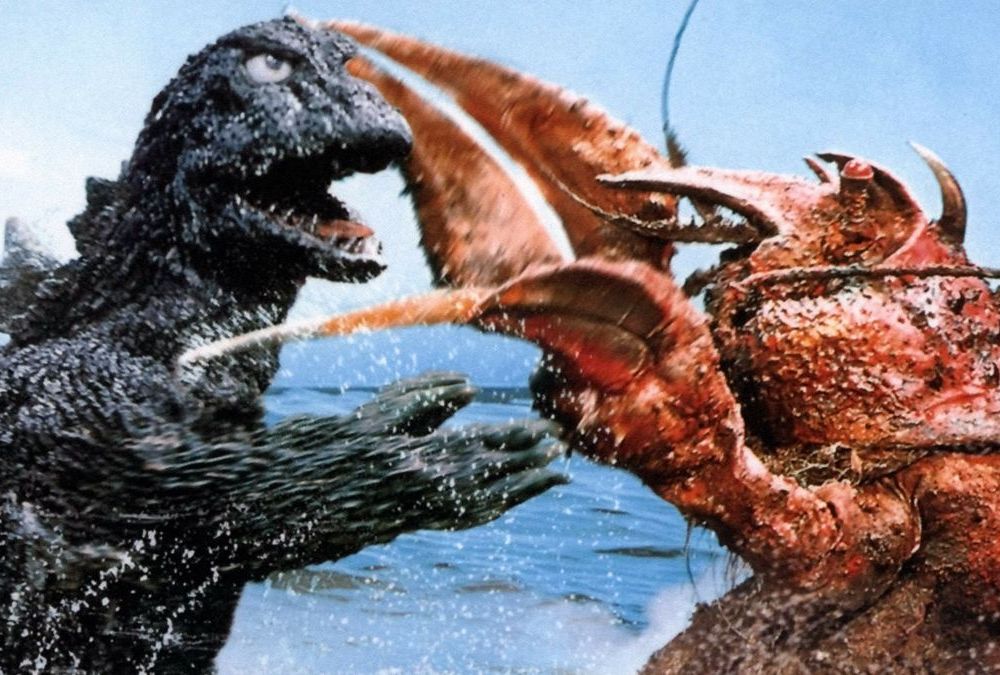
The room is dimly lit, with no windows. It’s a hot summer night, and the rumbling murmur of 600 or so separate conversations fills the air. It’s an eclectic crowd that’s gathered here in front of the downstairs stage at the Middle East in Cambridge, Massachusetts. Aging townies with bandannas, young punks with patches covering jean vests, old punks running out of places to get new tattoos, middle aged moms out for the evening. Sipping a ten-dollar rum and coke out of a plastic cup through a drink stirrer, the lights dim, and people cheer. Low, loud guitar with thick reverb pulses through the air, through your very bones. The Lebanese-American legend and surf rock pioneer Dick Dale has captivated yet another audience in the tail end of a long, successful career. You’ve definitely heard him, if from nothing else then from “Misirlou,” the iconic tune in 1994’s Pulp Fiction. After learning the trumpet and ukulele, he bought his first guitar from a friend for just $8 – spaced out over multiple payments of 25-50 cents each. Even after gaining fame and traveling the world, Dick called Quincy, MA home for decades and I’m fortunate enough to have seen him live a few times. He was one of the first to use heavy reverb that defined a genre and inspire movies like Beach Party, and Muscle Beach Party (both of which featured Dick playing himself as well as the guitar), Endless Summer, Beach Blanket Bingo, and of course Horror of Party Beach. This twangy new sound leant itself to the James Bond theme too, and both surf rock and 007 homages are slathered all over Ebirah, Horror of the Deep like a thick layer of SPF 30.

Read More