All Monsters Attack (1969)

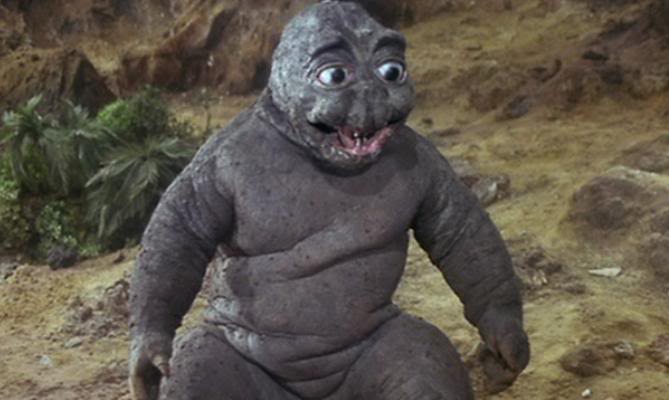
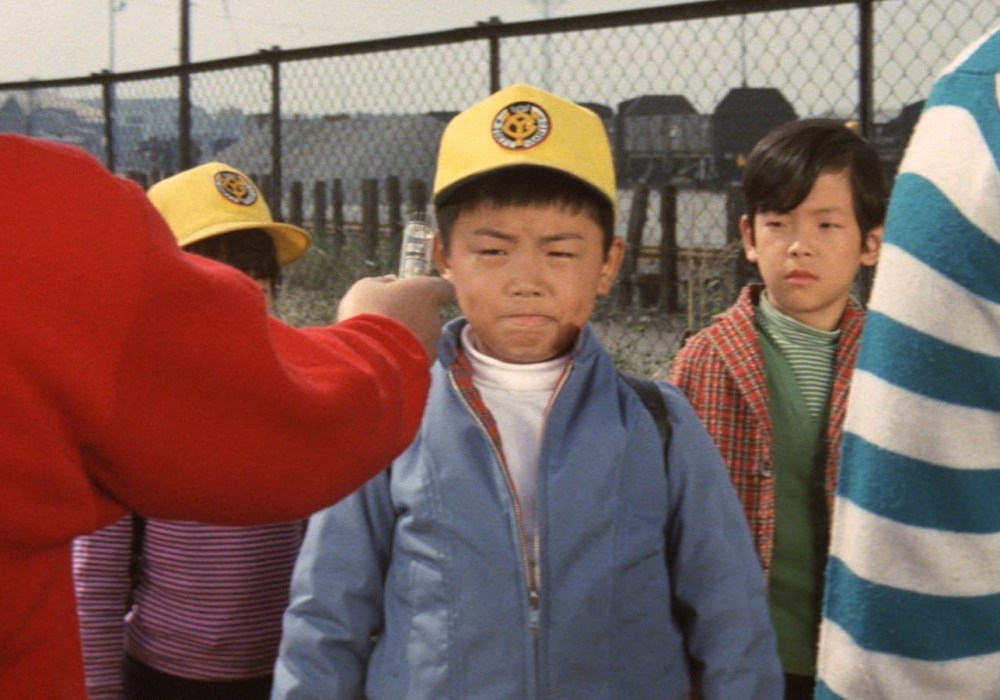
All right haters, bring on the tomatoes! All Monsters Attack is good, and you should all feel bad about hating it. In 1969, Japan was in the midst of an economic boom. Long since merely recovering from the war, government policy had been focused on, and succeeding at, doubling the size of their economy. Industrialization and social safety nets transformed Japanese life from just getting by to having more disposable income to spend recreationally, and the US’s partnership offered an enormous market for exports. Would they have been so successful if the US hadn’t been trying to combat communism? Foreign aid and trade deals were given as a way to ensure that Japan was a success story in spreading democracy, and that its citizens did not become disgruntled, impoverished, and susceptible to Soviet influence. With all this though came a social epidemic: the latchkey kid. Many families became two-income households, and children were often left to their own devices after school. All Monsters Attack is a meta-film that uses kaiju as an escapist backdrop while wrestling with feelings of loneliness and anxiety, and learning the importance of self-reliance.

Read More
Godzilla Singular Point (2021)

I thought I’d mix it up a little and review Godzilla Singular Point, Netflix’s new anime. I’ll add the caveat that I used to watch a bunch of anime in the 90s/00s, but I really don’t like much of it anymore. Mostly because of how many common tropes and pitfalls just ruin the genre for me. Singular Point definitely employs a lot of them, but there’s some fun stuff and it will be good to knock this one out while it’s still on Netflix. The series is definitely too long for its own good, and suffers from chronic cases of Cutesy Bullshit and Pretentious Exposition. It would have been better if they had boiled the plot into 4-6 episodes like the first season of Castlevania, but the animation has a unique style, and the monster action is pretty cool. Godzilla himself seems to be following the Shin concept of evolving forms, the final two are good looking if criminally underused. Be patient while watching this series, dear viewers. For a series built around Godzilla, he’s barely in it.

Read More

Destroy All Monsters (1968)

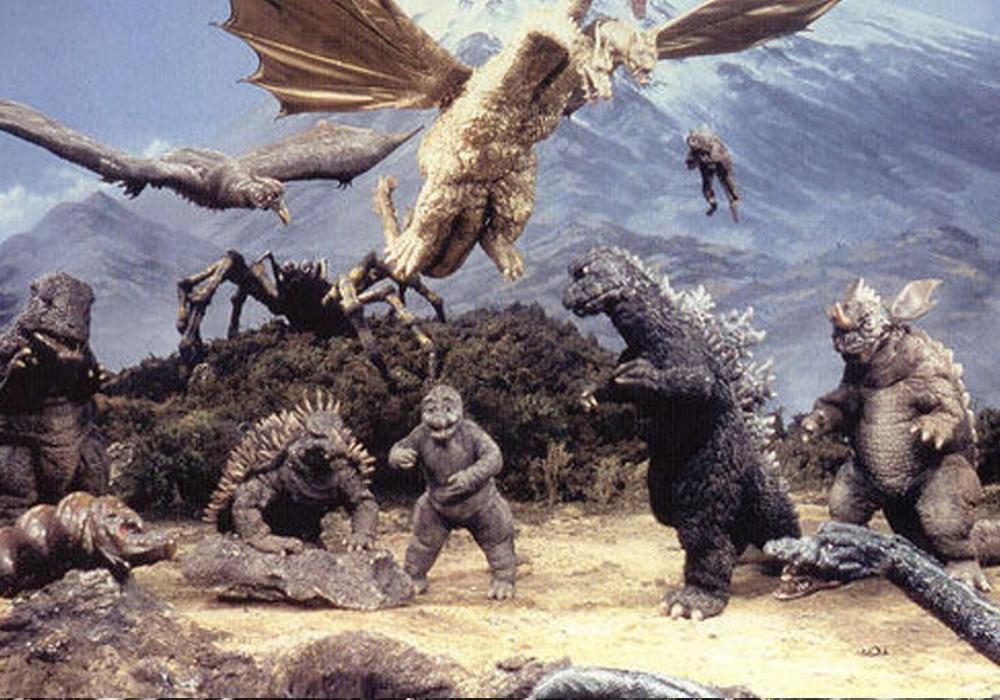
The end. Video, that mad killer, was at it again. Not content with the Radio Star, it set its sights on the kaiju eiga genre. With an expansion of variety and programming broadcast directly into people’s homes, Japan’s film industry was on a decline. And an obvious place to cut costs were special-effects heavy films like the Godzilla franchise. Props, sets, models, costumes, and post-production effects all add up, no matter how cheesy they may seem in retrospect. And so rang the the death knell for Godzilla. Deciding to go out with a bang, producer Tomoyuki Tanaka got director Ishiro Honda back together with composer Akira Ifukube and special effects supervisor Eiji Tsuburaya for 1968’s monster melee hit Destroy All Monsters. Sporting a total of eleven monsters, this film showcases all of Toho’s other creatures that never found their way into a Godzilla film like Varan, Manda, Gorosaurus, and Baragon. The team definitely went all-out for this last hurrah.

Read More

Son of Godzilla (1967)

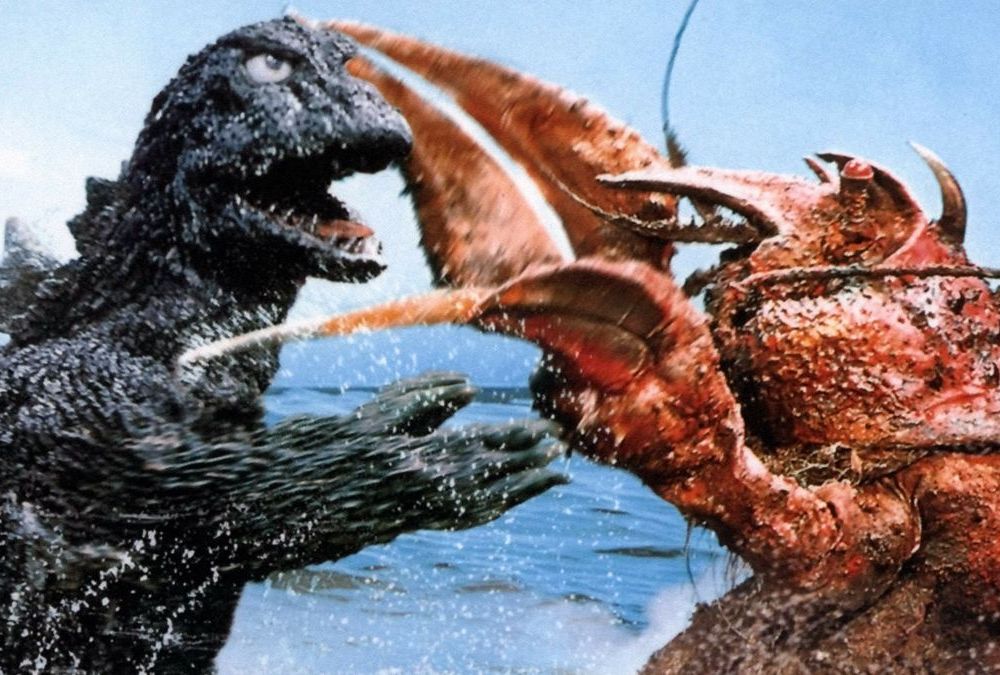
Well. It had to happen sooner or later. If you ever wanted to simulate taking edibles while having a fever as a toddler begs for your attention, Son of Godzilla is your movie. It’s kinda trippy, and not in a good way. There are some emotional notes, and some of the creature designs are pretty mint, but overall this movie is a pain in the ass. Mystery Science Theater 3000 lampooned a couple of Godzilla movies, notably the A+ previous feature Ebirah, Horror of the Deep, but this should have been at the top of their list.

The film is, however, predicated on a team of scientists researching weather control in order to solve global food shortages. In 1967, the Great Chinese Famine of 1959-1961 was still part of recent memory. The planned economy of China’s Great Leap Forward saw local governors over-reporting harvests, which were confiscated and redistributed at the State’s discretion, and rationed to the newly founded people’s communes. The ensuing famine was the largest in history and resulted in tens of millions of deaths. In contrast to that, in India in 1966, there was a famine induced by drought, but it was not nearly as bad. Government aid, as opposed to forced quotas, helped alleviate the situation, as well as sizeable donations of crops from the US. The United States sent an entire fifth of their wheat production to India at this time.

The food shortage threat was very real, but instead of controlling the weather, there was another alternative: genetically modifying crops to thrive in harsh conditions. Enter Norman Borlaug, whose research on wheat in Mexico led him to South Asia in the 60s, and helped India double their wheat production between 1960 and 1970. Borlaug won the Nobel Peace Prize in 1970 and is credited with saving over a billion people worldwide from starvation. So the next time you hear about how awful GMOs are, remember Norman Borlaug, his efforts, the tens of millions who died of famine in China, and just how utterly stupid the scientists are in this Godzilla film in particular.

Read More

Ebirah, Horror of the Deep (1966)

The room is dimly lit, with no windows. It’s a hot summer night, and the rumbling murmur of 600 or so separate conversations fills the air. It’s an eclectic crowd that’s gathered here in front of the downstairs stage at the Middle East in Cambridge, Massachusetts. Aging townies with bandannas, young punks with patches covering jean vests, old punks running out of places to get new tattoos, middle aged moms out for the evening. Sipping a ten-dollar rum and coke out of a plastic cup through a drink stirrer, the lights dim, and people cheer. Low, loud guitar with thick reverb pulses through the air, through your very bones. The Lebanese-American legend and surf rock pioneer Dick Dale has captivated yet another audience in the tail end of a long, successful career. You’ve definitely heard him, if from nothing else then from “Misirlou,” the iconic tune in 1994’s Pulp Fiction. After learning the trumpet and ukulele, he bought his first guitar from a friend for just $8 – spaced out over multiple payments of 25-50 cents each. Even after gaining fame and traveling the world, Dick called Quincy, MA home for decades and I’m fortunate enough to have seen him live a few times. He was one of the first to use heavy reverb that defined a genre and inspire movies like Beach Party, and Muscle Beach Party (both of which featured Dick playing himself as well as the guitar), Endless Summer, Beach Blanket Bingo, and of course Horror of Party Beach. This twangy new sound leant itself to the James Bond theme too, and both surf rock and 007 homages are slathered all over Ebirah, Horror of the Deep like a thick layer of SPF 30.

Read More

Invasion of Astro-Monster (1965)

In 1964, we received a strong message on the importance of international cooperation in Mothra vs. Godzilla, and a year later Toho Studios was practicing what they had preached. Invasion of Astro-Monster was one of three co-productions with US producer Henry G. Saperstein, who claimed to provide half the funding, yet budget restrictions still forced a few shortcuts along the way. In spite of these, Invasion of Astro Monster is a fun beautiful romp and the first in the franchise to introduce an alien race. There’s a whole lot of sci-fi DNA throughout the film, so if you’ve branched out beyond the Godzilla franchise, you’ll recognize some nods to those who came before.

Read More

Ghidorah, the Three-Headed Monster (1964)

1964. The Vietnam war heats up. President Kennedy had been shot a year prior, and currently the Civil Rights Act was passing in the States. 36 people died in an earthquake that struck the city of Niigata. The Olympic Games are being held in Tokyo. Survivors of Hiroshima had recently lost a case against the government that requested reparations, saying Japan had unduly waived the right to negotiate reparations from the US Government. And none of this has any bearing on Ghidorah, the Three-Headed Monster (1964). No, this film has some small climate change metaphors but is entirely focused on Having A Good Time, much to the chagrin of director Ishiro Honda.

Read More

Mothra vs. Godzilla (1964)

Japan’s economic engine in the 1960s stemmed from the Korean war a decade prior. In an economically depressed postwar nation, acting as a staging area for UN troops to fight the ubiquitous threat of communism kick-started a massive transformation across the country. With many industrial centers being destroyed in WWII, Japan was able to rebuild with the latest technology and politically invested in robust economic expansion. The nation saw agricultural, rural population move from 85% prewar, to 50% in 1945, to just 20% by the 60s. The country shifted focus towards production of high-quality consumer products and urban infrastructure. While this rising tide did indeed lift all ships, it wasn’t without flaws or social cost. Japan is unique in being one of the only collective capitalist nations, relying on tight-knit business relationships, companies owning shares in each other, creating cartels that control the supply chain from manufacture to distribution, and deeply embedded government partnerships. The cronyism and rampant greed are on full blast here in 1964’s Mothra vs. Godzilla.

Read More

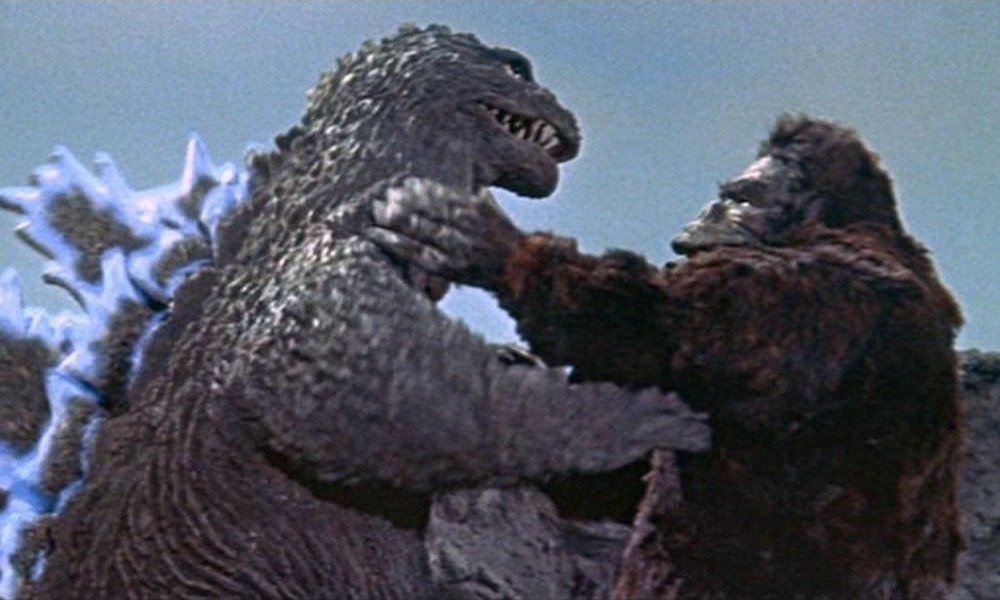
King Kong vs. Godzilla (1962)

Well, we’re finally back on track folks, with the most anticipated action movie of the summer, King Kong vs Godzilla! No, not the 2021 super hit Godzilla vs. Kong, King Kong vs. Godzilla (1962). Fret not dear readers, we’ll get there. But first, WRESTLEMANIA!

In the 1950s to early 1960s Japanese Pro-Wrestling was starting to take off. Inspired by American counterparts, the Japan Pro Wrestling Alliance (JPWA) recruited from Sumo and Judo leagues. The founder, Rikidōzan, was born in Korea and moved to Japan to practice Sumo, then traveled stateside to compete in the National Wrestling Alliance. Originally introduced as a villain, Rikidōzan actually gained popularity and started defeating a ton of his American opponents. This especially endeared him to audiences back overseas as a hometown hero who stood up to the dirty, cheating Americans (his fellow athletes embraced the role as heels, giving audiences a cathartic boost in postwar Japan). Rikidōzan was unfortunately killed by a friggin yakuza gangster in a nightclub in 1963.

Read More

Mothra (1961)

At the turn of the 20th century, new advances in technology shocked the world and connected us more than ever. Rapid expansion of the railroads gave manufacturers access to a wealth of raw materials and before long the popularization of automobiles and the combustion engine made travel more accessible to more people all over. The Wright Brothers’ first flight in Kitty Hawk in 1903 would lead to mankind’s access to the skies, and with it, access to some of the last untouched places on earth. Paired with the development of film, small portable cameras, and recording equipment, an interest in anthropological expeditions boomed to bring strange sights and reports of native customs to audiences around the globe. Adventures to pre-industrial tribes were popularized in pulp novels and magazines, and influenced film and television for decades to come. Taking more than a few queues from 1933’s King Kong, it is in this wondrous, curious, and exploitative vein that brings us Ishiro Honda’s 4th kaiju installment: Mothra. (His 3rd after Godzilla and Rodan being Varan The Unbelievable… a story for another time).

Read More