
Well, it’s springtime, there’s a still a chill in the air though not as harsh as we’ve felt these past months. The softening of the climate is making way for budding bushes and flowers, birds are returning, bees and bears alike awakening from hibernation, life is coming back into the world. In 1997, a new life in particular was brought to the world, a new kind of life. With the birth of Dolly the sheep, bioengineering produced the first mammalian clone. She lived for six years, not very long all things considered, but long enough to be impressed with the technology. The intervening years saw advancements, and as Dolly shuffled off this mortal coil, Banteng #1 gifted us with her presence. She was one of two who were born in 2003, the first endangered species clones to survive more than a few days. Banteng #1 lived a healthy life for 7 years. The purpose of cloning endangered animals isn’t necessarily to replace them via that method alone. Species become threatened when their habitat is disrupted, and that needs to be addressed first and foremost. What cloning can do, is help the species along its way, bide some time, and perhaps in the future add genetic resistance and biodiversity when their numbers have dwindled to the point where rebuilding the population would only produce offspring from a small set of ancestors. The question remains: do we have a right to tamper in God’s domain? Dear readers, you should know by now that when themes of death and rebirth come a knockin’, Our Lady of Mercy, the Massive Mighty Mother of Gaia, Patron Saint of Aerial Ass Whoopin’s, the benevolent Mothra herself will not be far behind.
2003 saw a rarity in the Millennium Era: an actual in-continuity sequel to the prior film! So far, they’ve all been isolated, one-off movies that act as stand-alone sequels to the original. Producer Shōgo Tomiyama let director Masaaki Tezuka helm this follow-up to Godzilla Against Mechagodzilla. After floating several story ideas, Tezuka rejected them all and wrote an outline for Tokyo S.O.S. overnight, and the studio eventually signed on. Tezuka said the other scripts were “boring” and looking at the final product…man, those must have been some dry scripts. The movie does have some good things going for it though. Michiru Ōshima returns on music, this time employing the Japanese Philharmonic Orchestra to produce another astounding score. Ōshima has established a style that captures a similar gravitas to Ifukube while maintaining her own unique touch. Eiichi Asada is put in charge of special effects, a veteran artist who Assistant Directed the effects on Return of Godzilla (1984). Asada also worked on a number of other Godzilla and kaiju projects, including the hilariously doomed 1985 North Korean project Pulgasari, which involved the kidnapping (and escape of) director Shin Sang-ok (I’ll do a whole thing on this another time).
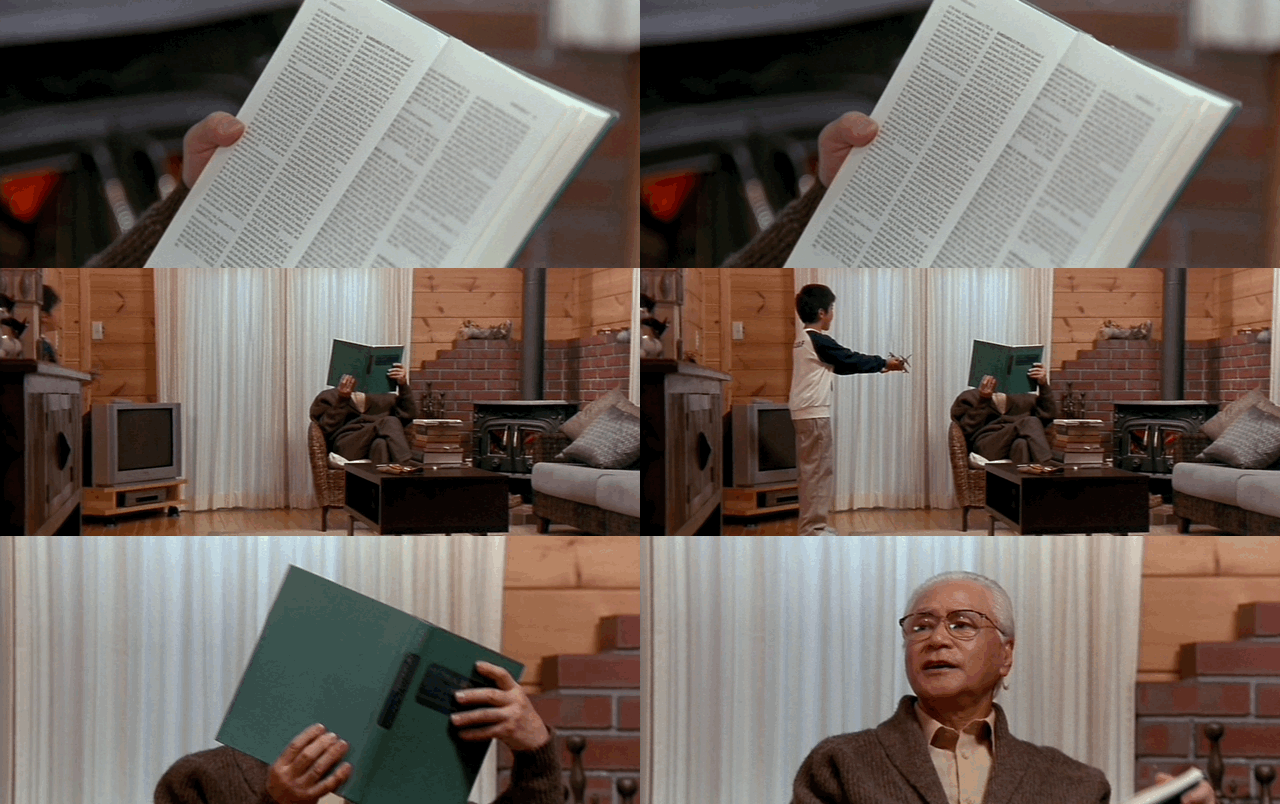
There is a surprising amount of continuity in Tokyo S.O.S., and not just with the previous film. Godzilla Against Mechagodzilla established that the Gargantuas and Mothra attacked Japan in the 60s, and both of those movie appear to be set in the same universe as this. We’ve seen actors return in different roles many times before, but this actually has Hiroshi Koizumi reprising his role as Dr. Shinichi Chujo from the 1961 standalone Mothra. If you remember that character’s introduction, he’s hiding his face behind a book, and Tezuka uses the same shot, it’s a wonderful nod. Unfortunately, the film treads a LOT of old ground trying to pack in references. The Shobijin visit Dr. Chujo to implore that Japan return Godzilla’s bones to the sea, or Mothra will “declare war on the human race.” It just ain’t right reanimating the corpse of a dead creature like that! The government apparently didn’t learn their lesson the first two times the Shobijin gave them an ultimatum, and continues the Kiryu project. Incidentally, a story just dropped that scientists are doing the same thing with birds, retrofitting their corpses with robotic technology to turn them into drones. Let’s hope Rodan doesn’t get wind of that project.
Chujo, his nephew, and grandson see Mothra outside, waiting threateningly as Ōshima’s score incorporates the old Mothra theme. It’s interesting that she doesn’t use any of Ifukube’s music, but brings back Yūji Koseki’s iconic motif. Chujo’s nephew Yoshito played by Noboru Kaneko is a mechanic working on repairing Kiryu, and my dude is so hot for this robot. And not just the robot, but one of the new pilots Lt. Azusa Kisaragi. They used to be old friends, and she does a well enough job with the role, but it’s bizarre that they replaced Yashiro from the last movie. She does make an appearance to pass the torch, and shows an affinity for this abomination of science. Even weirder is that Kisaragi isn’t even Kiryu’s main pilot. Oh well. This movie could generously be described as having an “ensemble cast” but in actuality doesn’t seem to know who its main characters are.
The film tries to make some of the familiar arguments its predecessors make. Dr. Chujo meets with the prime minister about abandoning the Kiryu project, but for some reason he doesn’t believe Chujo’s story. The events of Mothra DID happen; Frankie Sakai played a reporter in the main role, he really should know about Mothra’s whole deal. They liken Kiryu to nuclear weapons, saying they’ll have to get rid of it one day, but just can’t risk being the first to disarm. These are common arguments to this day, but sadly Tezuka doesn’t follow up on this at all, it’s mentioned once and discarded. In fact, he completely reverses course on the entire premise of the movie: Mothra helps mankind defeat Godzilla in spite of Japan repairing and deploying Kiryu. The Shobijin even help Yoshito repair Kiryu for the final battle.
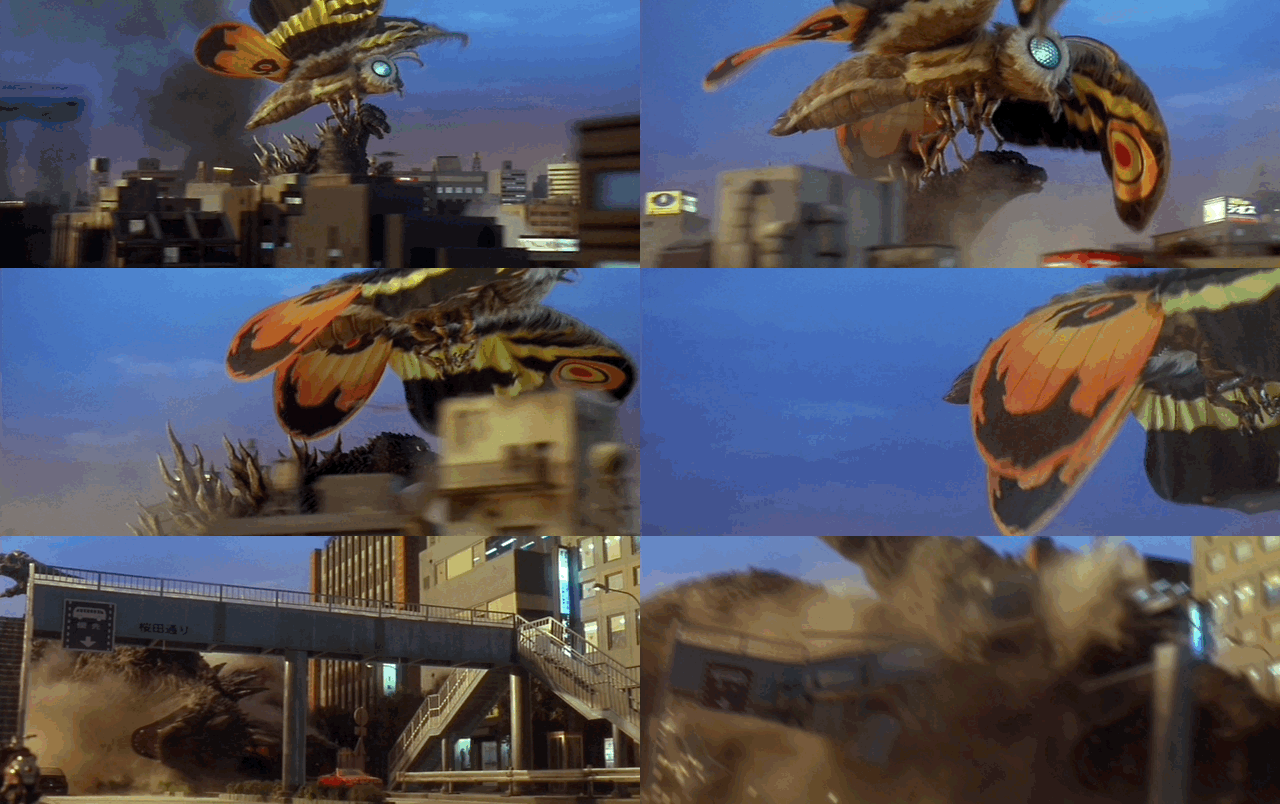
Tsutomu Kitagawa returns in a freshly made Godzilla suit, which is pretty much the same as the previous one except there’s a massive scar on his chest where the Absolute Zero cannon hit him. After emerging off Japan’s coast, Chujo’s grandson Shun is seen running around school while everyone else evacuates. This kid is clever though, he’s got a plan! He arranged a bunch of school desks into a giant Mothra symbol, summoning her to fight Godzilla. The wire work on this Mothra model is great, and I’m not sure how they haven’t thought of it before, but Shinichi Wakasa working under Asada used different sets of wires to pull the wings down as well as up, rather than just letting them fall.
The Kiryu suit is donned by Motokuni Nakagawa this time around, who makes for a much more agile opponent. They’ve added some more weaponry, but got rid of the blue jetpack so the entire thing is chrome, much like the Showa era Mechagodzilla. There’s a great exchange where Kiryu is relying on speed and utility, and Godzilla just blasts right through a skyscraper to send him packing.

Once it gets going, Tokyo S.O.S. really takes off battle-wise. It may have the most fight to runtime ratio of all the Godzilla movies. It all looks very good, and I do get that people aren’t watching them for the plots, but the pacing is a little off filling so much time like this. There’s no ebb and flow, regrouping to strategize, finding new approaches and finally emerging triumphant, it’s just a really long wrestling match. It would work super well with just a little more character development. This feels like a bog standard 50s sci-fi movie pitting stiff bland military personnel against a creature. Which was fine enough for the times, but I’m expecting a little bit more out of filmmaking at this point. At no time do you really feel invested in any of the characters. It’s cool that Dr. Chujo is back, but he spends most of the time chasing after Shun. Yoshito and Lt. Kisaragi kind of have a neat thing going, but their scenes aren’t given enough time to really breathe and feel their connection. They introduce the nuclear metaphor, and it’s always great when Mothra straight up threatens humanity, but they walk it back and discard that plot thread with no explanation. I will say that after the newly born larvae join the fight, Mothra sacrificing herself to save her children is incredibly moving. At the end of the day, Kiryu goes crazy again, but doesn’t teach humanity a lesson about their own hubris, he just saves the day by tackling Godzilla into the ocean again, which we’ve seen before.
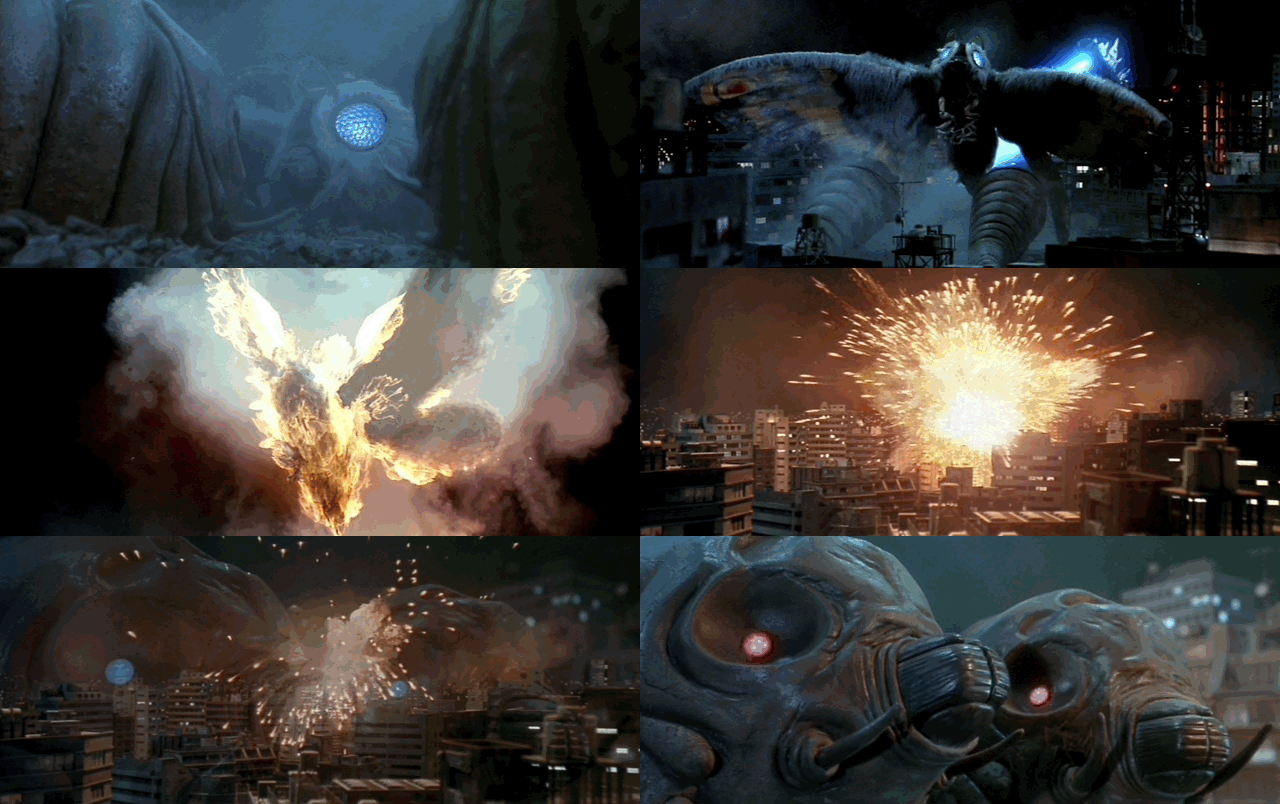
Tokyo S.O.S. has some great effects work, but not enough to salvage it in my book. For all the action, there never seems to be any real danger, even when Yoshito is getting tossed around like a ragdoll inside Kiryu’s access ducts, which is an odd choice for a film that structures itself to be mostly a military/war movie. There’s some fun references, like Tokyo Tower collapsing in a similar way as it did in 61’s Mothra, and someone tosses Yoshito a set of car keys and of course they’re for a Honda, paying homage to the original director. The Shobijin deliver a moral message about not reanimating corpses while standing in front of a cross, another nod the religious overtones of the original Mothra. But it’s not dark enough to be a serious movie, and not zany enough to capture the insanity of some other films. The Kiryu Saga is beloved by many, but I’m just not that into it. Fantastic design, but kind of a slog to get through. But if you love it, don’t let me take anything away from that! Maybe we’ll find more common ground next time in the outlandish closing entry of the Millennium Era: Godzilla Final Wars.
I’m entitled to my wrong opinion.
 Godzilla Vs...!