
Since its inception in 1954, the Godzilla has been varying degrees of an allegory about the horrors of war. Ishirō Honda wanted the world to see the massive devastation, illness, and civilian impact of the atomic bombs, and warn the human race against continuing down such a destructive path. While it’s completely fair to call out the U.S. for this war crime and and accelerating the threat to end all life on the planet, most movies completely ignore Japan’s role in the events that lead up to Hiroshima and Nagasaki. Despite what Godzilla vs. King Ghidorah may have you believe, allying with the Nazis and committing atrocities on the Korean peninsula is not something to wax nostalgic about. In addition to killing military personnel and civilians alike in the attack on Pearl Harbor, the Imperial Japanese Army abducted thousands of women forcing them into sexual slavery across southeast Asia. The Japanese government long denied the existence of these “comfort women” and “comfort stations,” but an apology was eventually issued in 1993. That, however spurred a backlash among right-wing nationalists in Japan, notably former Prime Minister Shinzo Abe who would later sign an agreement to donate money to the victims in South Korea, but insist that they stop using the term “sex slaves” and remove the memorial statue from its location in front of the Japanese Embassy in Seoul. Essentially this was international hush money. This nationalist movement also led to increasing calls to abolish or reinterpret Article 9 of Japan’s constitution which essentially waives the country’s right to declare war. The wording comes in two parts, first renouncing the threat of force to settle disputes, and second that land, sea, and air forces shall never be maintained. Some view the JSDF itself as unconstitutional based on that wording, but Japan’s supreme court determined the country does have a right to maintain forces to defend itself. Still, the country continues to push the envelope, ruling it has the right to assist allies in foreign conflicts, starting with the War in Iraq. In 2014, Article 9 was officially “reinterpreted” to allow this, but bypassed the constitutional procedure to do so. It’s along this path of ramped up nationalism and militarism eschewing the Japanese constitution that 2001’s Godzilla, Mothra, and King Ghidorah: Giant Monsters All-Out Attack gives us a unique interpretation of Honda’s anti-war legacy.
Apparently I’m in a very small minority of people who absolutely love 2000’s Godzilla vs. Megaguiras, because it did not do well financially. The recent Gamera trilogy on the other hand, made some dough and did it on a fraction of an average Godzilla budget, so Toho brought in director Shusuke Kaneko for GMK. He originally had the idea to incorporate Varan, Baragon, and Anguirus, but Toho wanted to break out the big guns and add some kaiju star power, so sadly Varan and Anguirus were dropped, making way for fan favorites Mothra and King Ghidorah. Baragon still made the cut, and is notable for being the first kaiju in a Godzilla film to be played by a woman (Rie Ota). Even though the roars would be added in later, Rie would do her own during filming and if you ever need to instantly put a smile on your face, this is the best thing in the world!
Going into GMK, you should be prepared for something VERY different from anything in the series so far. Kaneko felt that the kaiju genre wasn’t inherently a science fiction genre and reworks Godzilla’s origin, making this more of a supernatural horror film. You get a feel for this immediately as Kow Otani’s music sets a creepy, mysterious tone. It’s also the third reboot in as many Millennium Era films, acting as a standalone sequel to the 1954 original. It really has to in this iteration as well, because as we’ll find out, Godzilla is a collective embodiment of all the souls killed in the Pacific Conflict, and he is not pulling any punches in his quest for revenge.
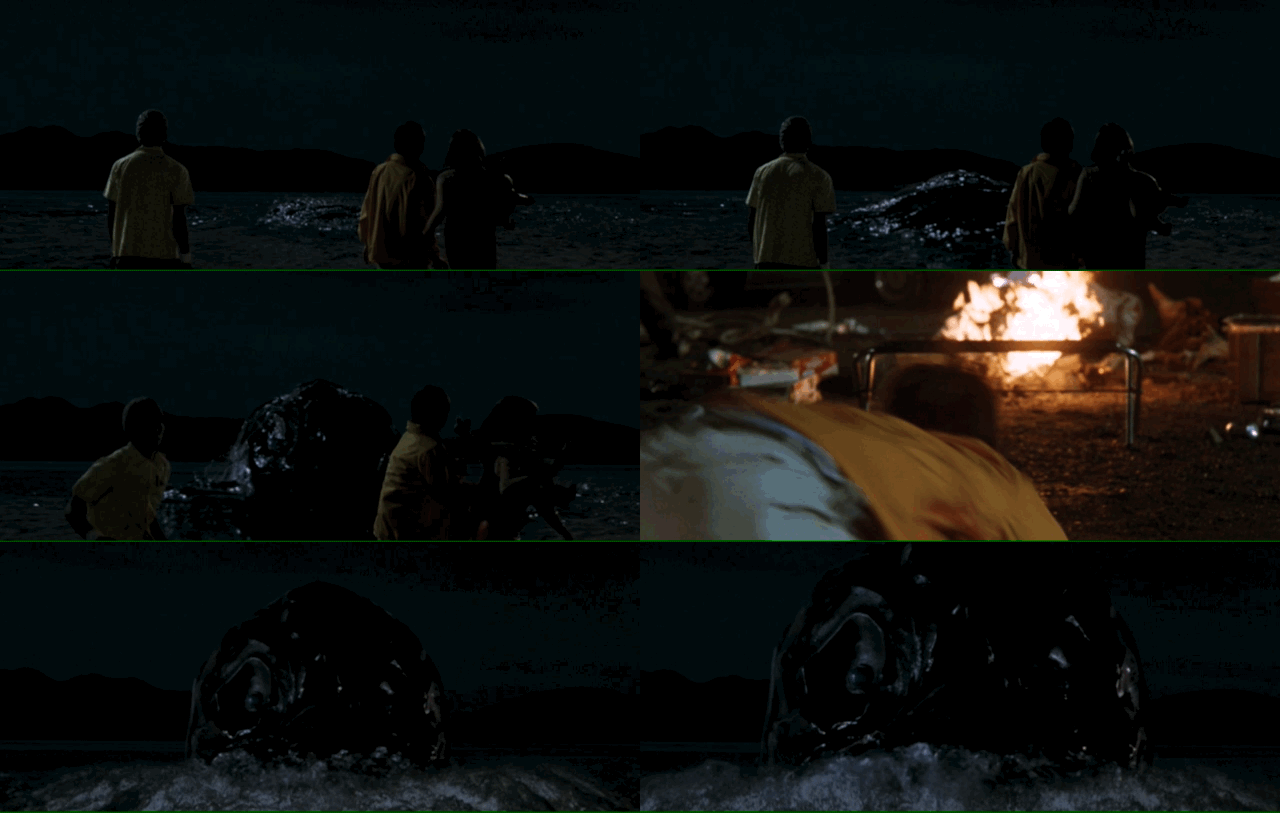
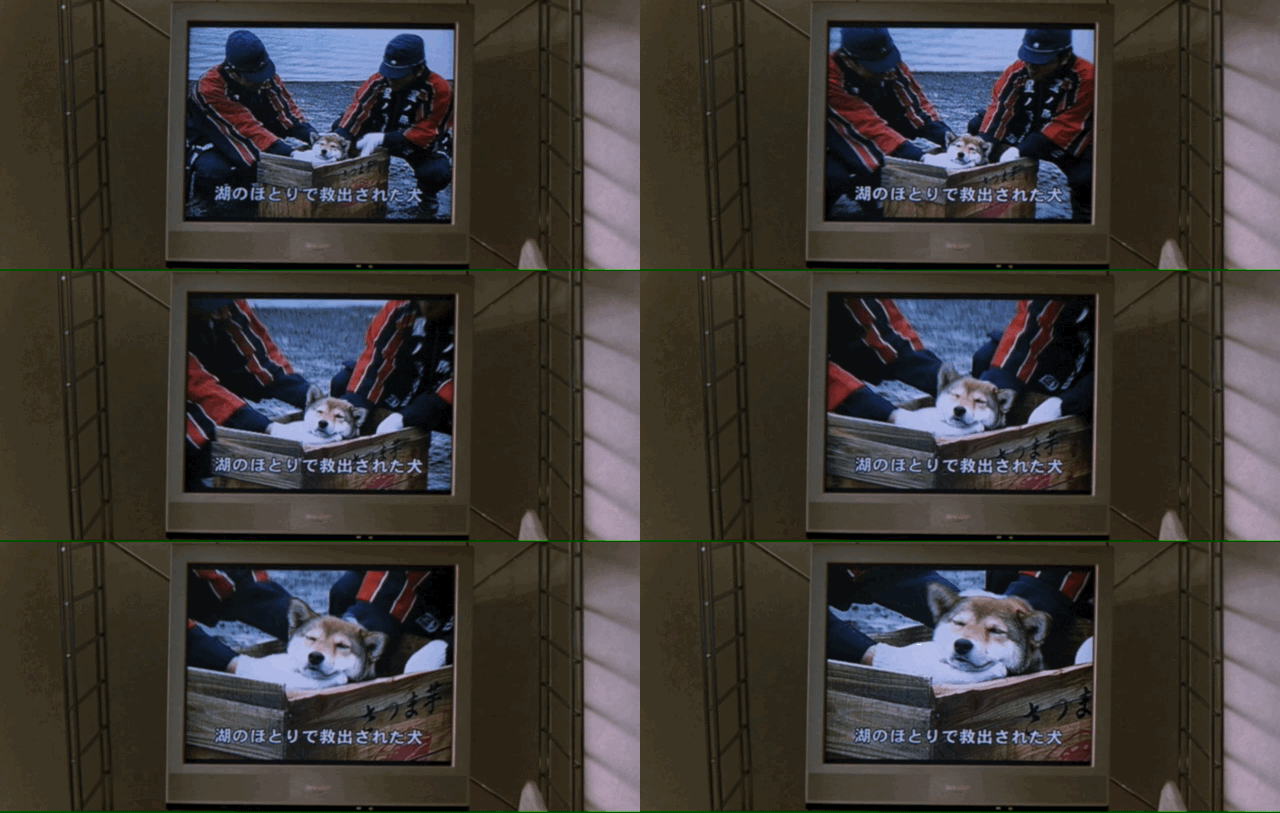
The story mainly focuses on two people: Yuri Tachibana, and her father Taizo Tachibana. Yuri, played by Chiharu Niiyama, works for a network that creates fake documentaries and news stories about the paranormal: ghosts, UFOs, cryptids, you know, like a modern day History Channel. Taizo, played by 70s rock star Ryūdō Uzaki of the Down Town Boogie Woogie Band, is an Admiral in the JSDF. Their chemistry is great, with Yuri’s rebellious streak being met not with stern admonition, but lovingly concerned parental guidance from Taizo. As for the monsters, we see a brief glimpse of Godzilla’s glowing dorsal plates while a submarine is investigating a lost US nuclear sub. Baragon collapses a tunnel killing and injuring a handful of motorcycle riding street youths dangerously harassing people on the road. He’s mistaken for Godzilla by a survivor, in a scene that may be nodding to the Emmerich film. Another scene with the JSDF reports a sighting of a Godzilla-like creature in New York, but one of the soldiers has their doubts it was the real Godzilla. This means it’s plausible that GMK and Emmerich’s Godzilla take place in the same universe for all you continuity nerds out there! Mothra’s introduction is the absolute best though. In keeping with the horror theme, and shitty kids getting their comeuppance, we see some teens on a beach getting hammered and robbing a convenience store. They then decide to DROWN A DOG because it’s barking too loud. A shadowy Mothra larva emerges from the lake and they get what they deserve! Fortunately a news story shows that the dog survived, THANK GOD.
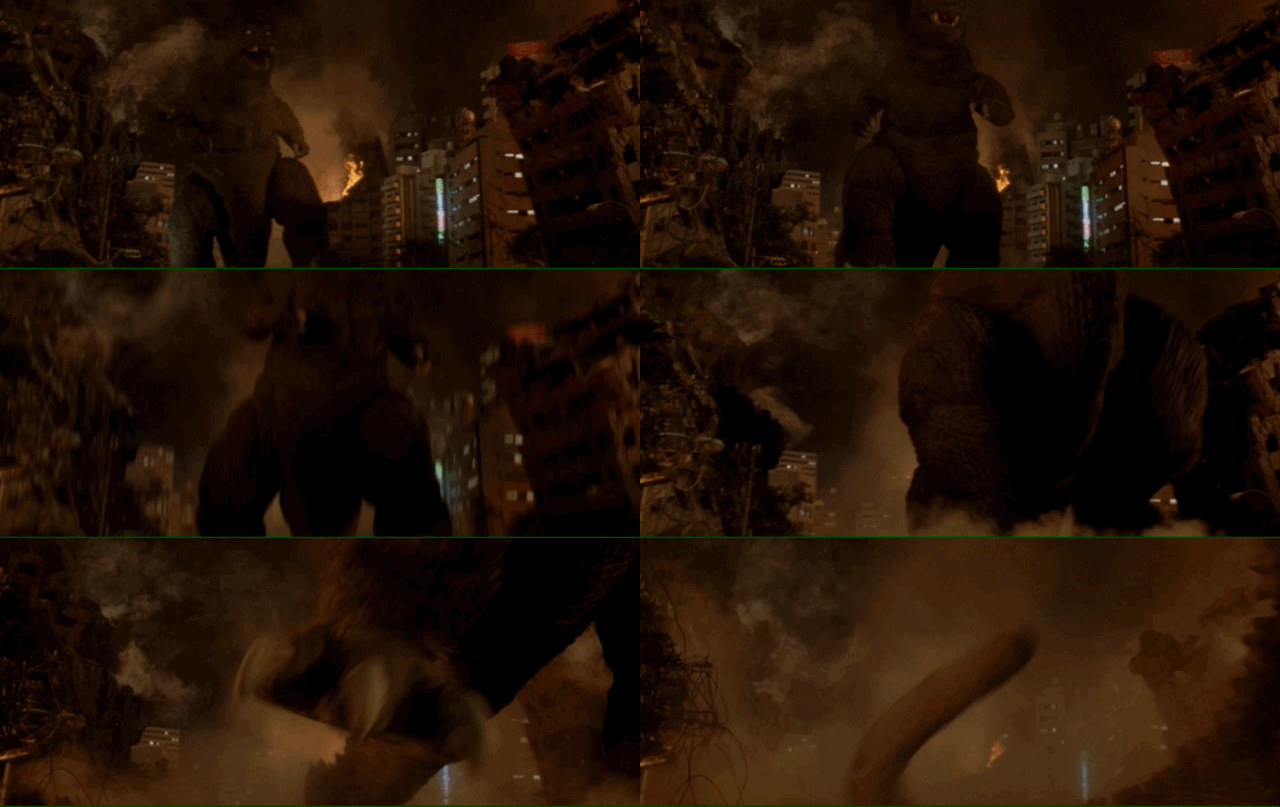
Yuri, following a lead, meets with an old hermit picked up by the police for destroying an ancient shrine, and he ominously foretells Godzilla’s return and implores them to awaken a great dragon, one of the three Guardian Monsters. If you confusingly guessed that the last Guardian Monster was King Ghidorah, congrats! Yep. He’s a hero monster for the first time in franchise history. You just gotta roll with it on this one. He also explains how Godzilla is an amalgam of souls of those killed in the war, and he’s coming back because Japan wants to forget about all the pain and agony they caused. Real subtle, Kaneko. This is illustrated many times over in the most brutal ways possible. It’s not just violent degenerate youths who meet their fate at the hands of these monsters, but regular civilians just acting a little too cavalier about the past. In a house on an island similar to the one Godzilla first attacked in 1954, some teens are sympathizing with Godzilla and how he was just an innocent creature, and the house is soon stomped by a giant lizard foot. Later, we see one of the girls in the hospital, recovering from her injuries, panicking as Godzilla strides by, narrowly missing her window. Relief waves over her only to have the whole hospital floor leveled by his tail moments later. It’s kind of hilarious, but also a grim reminder that no one escapes his wrath, and implicates the audience in rooting for Godzilla. GMK puts civilian death and devastation on the forefront, and Godzilla’s unbridled malice makes this one of the first films where you can’t really cheer him on.
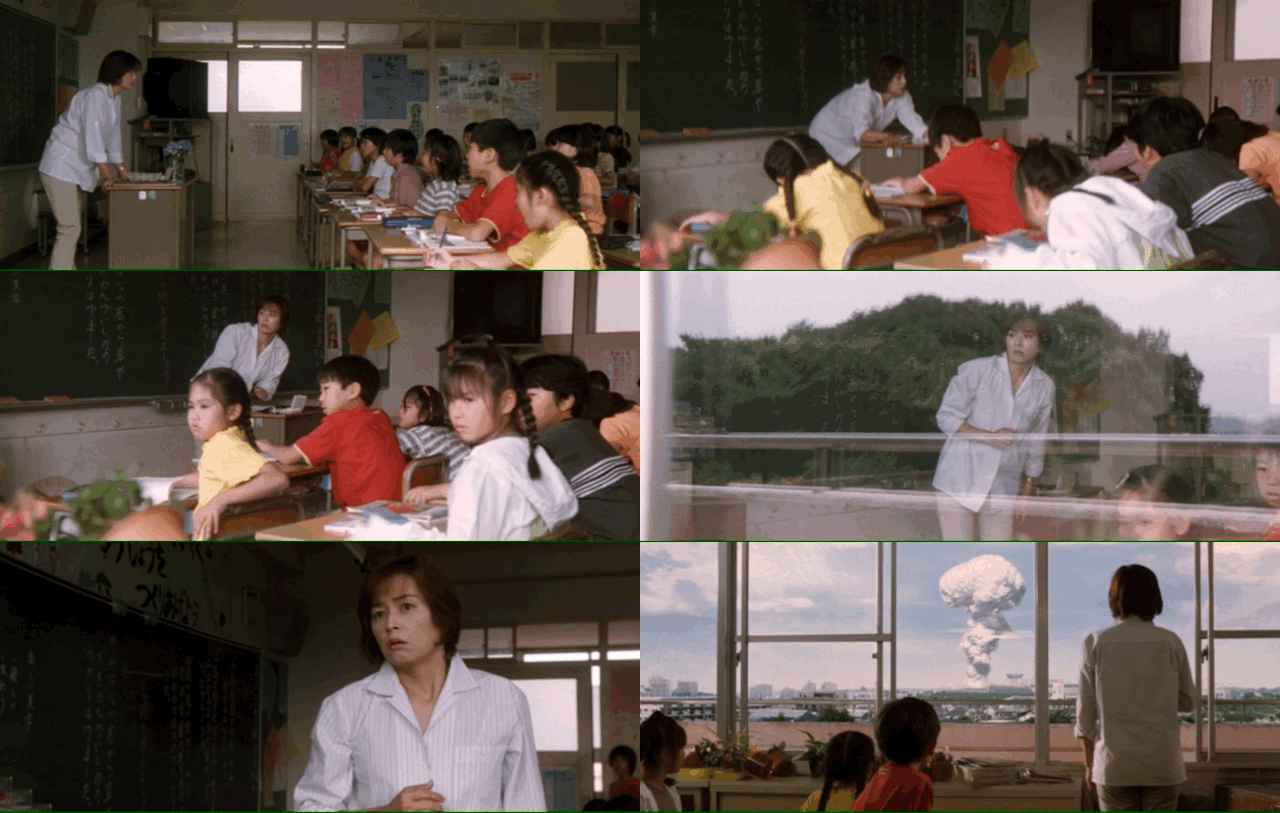
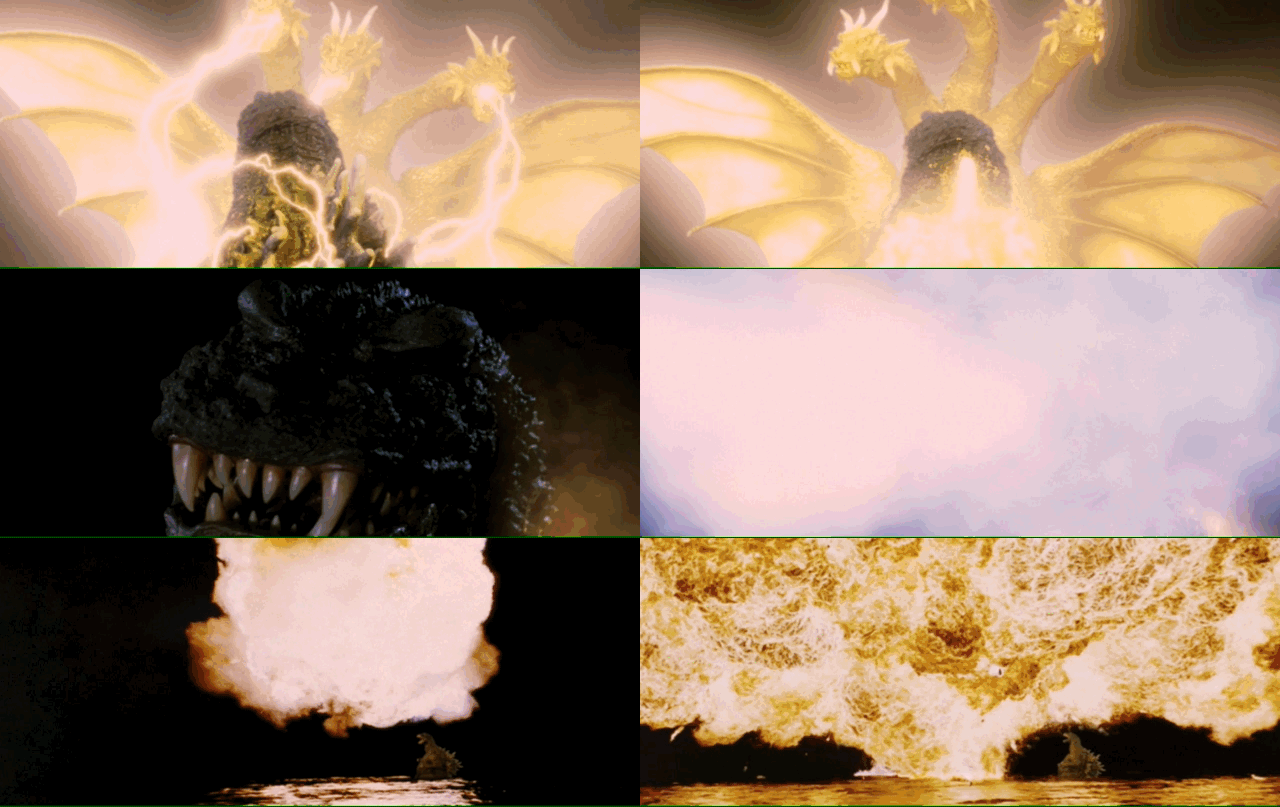
Speaking of dark, King Ghidorah’s shrine is discovered when a businessman walks into the forest to kill himself. As he knocks over a statue while hanging himself, the ground collapses to reveal the dragon below. Fun! After the attack at the hospital, Godzilla unleashes an atomic blast so powerful it creates a mushroom cloud, much to the shock of a nearby teacher and her schoolchildren. In order to further dehumanize him, special effects director Makoto Kamiya gives Godzilla all white milky eyes. This appearance paired with an upcurled mouth gives him more of a demonic look. Mizuho Yoshida joins the cast inside the Godzilla suit, the largest one to ever be made. He does a great job portraying Godzilla as straight up evil, as we see him villainously twitching his fingers while charging his atomic breath in a fight against Baragon. The blue-white hue is back and Godzilla also draws in a sharp breath before firing the beam shaking everything in the area around him. Baragon gets completely annihilated.

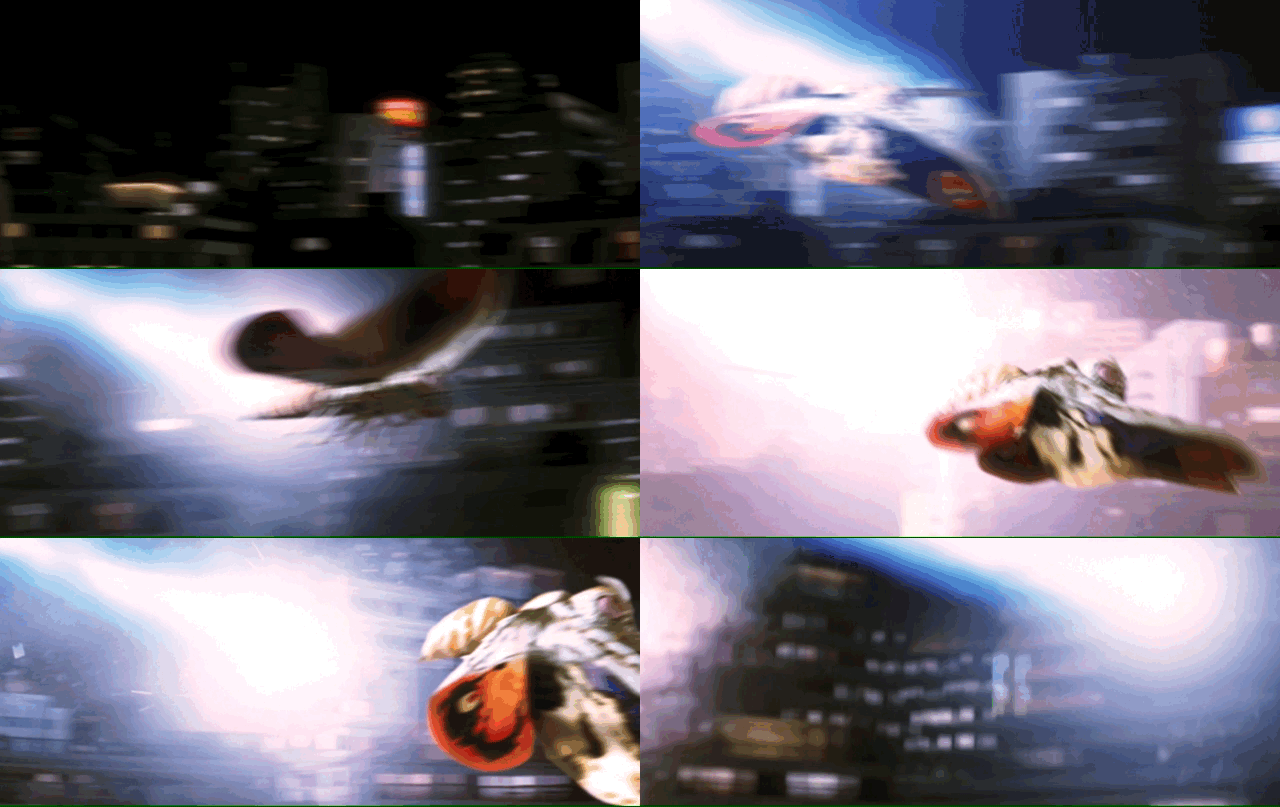
While the Shobijin aren’t in this one, there is a fun little cameo of two twin girls in the city watching in the crowd as Mothra emerges from her cocoon. There’s actually a ton of cameos in this film. Rie Ota (Baragon), Akira Ohashi (King Ghidorah), and Mizuho Yoshida (Godzilla) are all seen out of costume, as well as former director Masaaki Tezuka and legendary special effects director Koichi Kowakita. Mothra’s design is a lot more intricate and bug-like here, and CGI helps her do some cool stuff we’ve never been able to see before. She now has poison stingers she can fire from her abdomen, and trying to outrun Godzilla’s atomic blast is a sight to behold. It’s a little weird seeing King Ghidorah as a defender, and his design is a little cheap and cartoony, but I do like how Kamiya was able to incorporate some Varan horns into the heads. He goes down like a chump after Godzilla swiftly charges at him, done in a way that terrifyingly showcases his lumbering mass.
The battle between the monsters is a little anticlimactic though. There’s some cool moments, Mothra of course sacrifices herself to transfer her essence to King Ghidorah who’s empowered by a mystical aura, but he just knocks Godzilla into the ocean. There’s a bit of an underwater tussle, King Ghidorah dies again, gets brought back to life again when Yuri drops a mystic artifact, and then dies yet again. Finally the three spirits drag Godzilla down into the ocean, where Admiral Tachibana drives his submarine straight into Godzilla’s mouth. He’s really the best of them, reminding his troops that they fight as a sense of duty and should not relish in the violence. He’s also giving Japan and the JSDF something to hope for after finding out they weren’t actually responsible for Godzilla’s defeat the first time around (allusions are made to the Oxygen Destroyer).
When emerging from the deep, we see the Admiral’s sub fire a missile that drills a hole right through the monster’s flesh. In this iteration though, Godzilla is fueled by rage and can’t quit. He tries to fire his atomic breath one last time but the damn thing squirts right out the hole, tearing him to pieces and freeing Admiral Tachibana. Godzilla’s unending need for violence and hatred ends up destroying him. When Taizo washes ashore, he warns Yuri not to approach because he could still be riddled with radiation, something you don’t see too much of in Godzilla films since the first. He honors the soldiers who fought along side him, as well as the Guardian Monsters. Even though the JSDF is instrumental in saving the day, Kaneko deliberately cast Ryūdō Uzaki because he wasn’t the typical military type and wanted to take a more down to earth everyman approach to his sacrifice without lauding the might of the JSDF. Before the credits roll and we hear Ifukube’s original score, and the camera pans back down to the bottom of the ocean where Godzilla’s heart remains intact, beating, waiting to rise again.
I have to say, on the first watchthrough, I didn’t like this that much. The effects can be really hokey, even for a kaiju film, especially with King Ghidorah. If they’d added a bit more detail and articulation to King Ghidorah it would have been a home run. There’s also some scenes where the head piece of Godzilla seems to be flopping forward giving him kind of a hunch that doesn’t look great. I’m a fan of daylight scenes when they’re done well, but given that GMK was going for a more horror approach, it seems like a mistake to have his first attack and major battle in broad daylight. He looks menacing as all hell later on, and the Baragon fight could have still been done in daylight, but introducing your all-new drastically different take on a classic monster should have been more impressive. One thing that did stand out was the callous rampant destruction in this one. Godzilla kills a lot of people. Even during the Heisei revival of Godzilla as an antagonist, the audience is usually removed the human death toll and we get to enjoy some mindless destruction of miniature buildings while two guys in rubber suits duke it out. Kaneko did not want you to empathize with the titular character at all, even as a primal animal born into a world that has no place for him. Godzilla is deliberate and cruel throughout GMK. That’s pretty cool to see, and I appreciate diverting from the standard genre approach. It’s understandable if GMK isn’t everyone’s cup of tea but I did like it substantially more second time around. The ending left things open to a sequel, and I would love to see one someday, leaning hard into the spiritual horror aspects. This was an interesting experiment that has potential for refinement. A polished approach that learns from the aspects that didn’t work would rock so hard. We probably won’t get one, but if there’s a sequel to 2016’s Shin Godzilla, drawing inspiration from GMK could help it along quite well. Overall this is a unique standalone film with a polarizing redesign. Its approach is interesting, but it could have gone much farther. However you feel about it, the style took some risks and it’s a rare introspective critique of Japanese militarism, nationalism, and sensationalism rather than an outward warning against war in general and nuclear weapons in particular.
 Godzilla Vs...!