
Fusion! The crown jewel of nuclear technology, yet perpetually out of reach. So far. Current nuclear power plants harness power using nuclear fission, but the process produces radiation and radioactive waste. But there is another process, fusion, that involves creating plasma to run turbines to generate electricity. Unfortunately you need to develop a stable environment that contains plasma at temperatures of millions of degrees, and to do that, you need to consume more electricity than can currently be generated. However, fusion reactors would produce less nuclear waste, and could be substantially safer to operate. Plasma is also used in gasification plants to dispose of municipal waste. Essentially electrically powered plasma torches heat the waste to such high temperatures that they mostly gasify and the solid slag waste can be used in building materials. These plants produce power at a net negative, but have the bonus of cleanly getting rid of our garbage in the process. Think of it less as a viable way to generate power, and more of a disposal system that gives back a portion of the energy it uses. At the heart of all this is plasma, the fourth state of matter where gases are ionized, and that’s the basis behind half of the fictional technology in this bonkers entry in the Millennium Era. What’s the other half you ask? A Black Hole Gun!
Former director Takao Okawara was given the boot for this entry, being replaced by Masaaki Tezuka who assistant-directed Godzilla vs Mechagodzilla II and a couple of the Rebirth of Mothra movies. Returning on scriptwriting duties are Wataru Mimura and Hiroshi Kashiwabara, neither of who had very good things to say about working with Okawara, and could be one of the reasons he wasn’t invited back. Continuing to push the limits of green screening and digital effects is special effects director Kenji Suzuki, and inside a new Godzilla suit with the same design, just altered to better fit him is Tsutomu Kitagawa. Godzilla vs. Megaguirus is often maligned as the worst of the Millennium Era, but it really has a lot going for it. That criticism is probably a testament to how great these entries are overall. It’s mad campy fun that finds new ways to entertain and capitalize on emerging visual technologies.
Like 1984 and 2000, Megaguirus reboots the timeline again, setting itself up as a standalone sequel to the 1954 original, but this time retconning it so Godzilla was never killed by the Oxygen Destroyer. Continuity schmontinuity! Who needs it? Who cares? I love that attitude so much. Digital editing techniques had made a lot of progress and Suzuki immediately puts them to good use here in the intro, which splices the Millennium “MireGoji” Godzilla suit into classic scenes from the first movie. A narrator gives us this recap like an old timey news reel, covering Godzilla’s initial attack, then a subsequent attack in 1966 on a nuclear power plant. Surmising that Godzilla was feeding off the power source, Japan shut down all nuclear reactors and so needed a new form of alternative energy that would be environmentally responsible and not attract giant monsters. In 1996, an institute was commissioned to create a new power source: plasma reactors. As mentioned earlier, fusion plasma reactors don’t produce as much radiation, but Godzilla was apparently still drawn to it. Imagine spending billions of dollars to specifically develop a reactor that wouldn’t attract Godzilla and he shows up anyway!
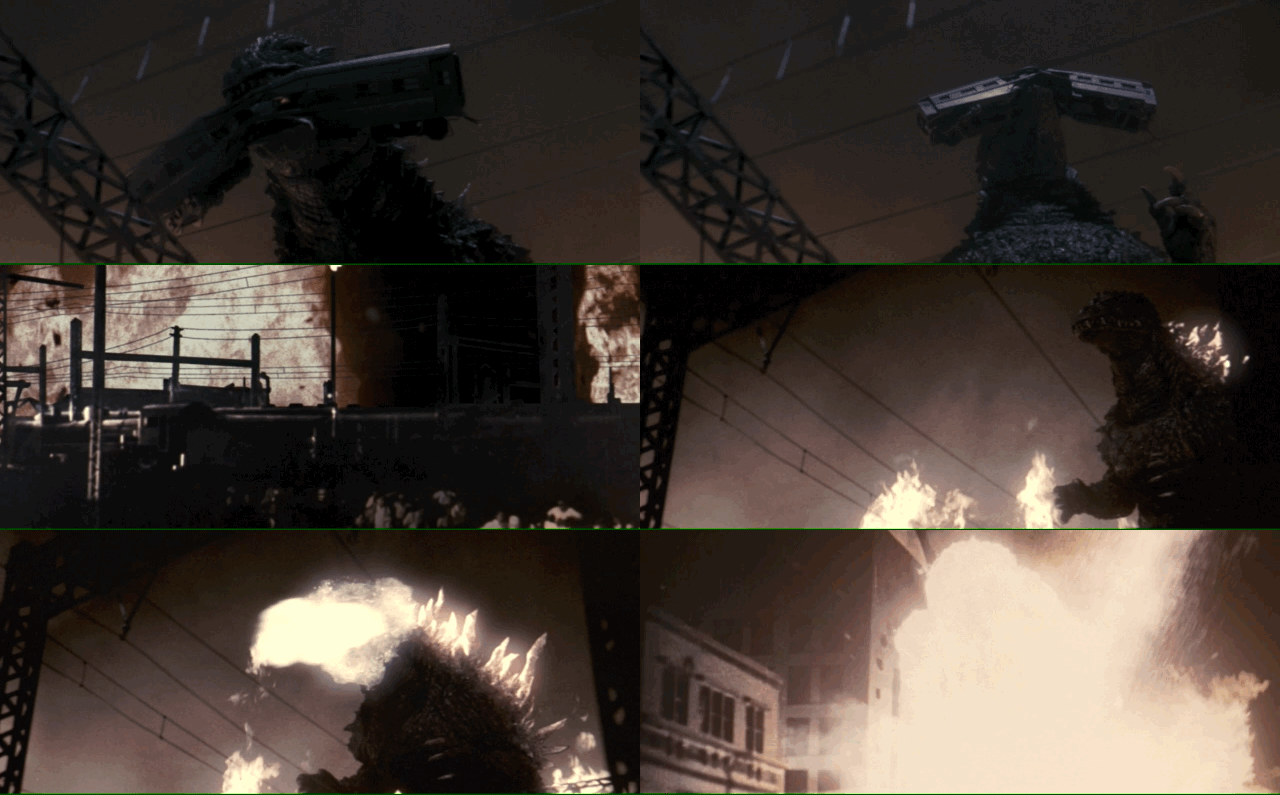
After this intro, there’s a well done prelude sequence. A platoon of soldiers armed with rocket launchers attempts to deter Godzilla and push him back to sea, and this is one of the best troop mobilization scenes in the franchise. The tension is palpable, and you can hear him roaring in the distance before they even see him in the city. Bursting through a building, backlit in orange from the flames in his wake, you can’t even see Godzilla’s eyes. Michiru Ōshima’s music here is full of percussive drums as the soldiers scramble about in the thick of battle. You can feel their desperation and futility, but willingness to sacrifice nonetheless. Misato Tanaka plays Major Kiriko Tsujimori, one of the rocket infantry assaulting Godzilla. After ignoring an order to retreat, the commander is killed pushing her out of the way as a building collapses. This event fuels a sense of guilt and burning rage for Major Tsujimori for the rest of the film, and kind of gives us that female Ahab plot that Emmerich and Devlin abandoned for the American Godzilla. It was a great idea, and I’m glad someone picked up that thread.
Several years later, we meet another main character Hajime Kudo, played by Shōsuke Tanihara, who provides a bit of comic relief. I like that the writers could have set up a romance between Kudo and Tsujimori, and Kudo tries, but he’s a man child and Kiriko is a goddamn intense professional way out of his league. This is a high mark for the franchise at the very least because of how prominently it features its women characters. Even in Biollante and King Ghidorah, the women were part of an ensemble cast, still playing mostly secondary roles. Here Misato Tanaka gets to play the main character, with Tanihara as a supporting actor. And it doesn’t end there! Yuriko Hoshi from way back in 1964’s Mothra vs. Godzilla plays Professor Yoshino Yoshizawa, a plasma energy scientist in charge of the project they’re recruiting Kudo for. She plays a competent researcher, and it’s great to see her boss Kudo around. Far from one dimensional; she’s responsible for creating the technology that brought Godzilla back to Japan, and feels regret but it also drives her. She keeps pursuing ways to eliminate the creature and atone for her past mistakes. These women are playing second fiddle to no one.
Yoshizawa’s new project they’ve recruited Kudo to work on is to create miniature black holes, and they’re going to shoot one at Godzilla from space. Seriously, how could you not love this? It’s called the “Dimension Tide,” and during a test, some insect flies out of a residual wormhole it left behind. Some kid finds an egg it lays, brings it home, feels he’s made a mistake, and then dumps it in the sewer. The whole sequence is rushed and contrived, but it gets us where want to be. Tokyo, night time: a couple of street youths are out and about, and the girl’s like “hey, let me go grab some beer, wait for me here in this shady construction site tucked back down an alleyway.” My dude gets brutally murdered by whatever hatched from the egg, and then his girlfriend comes back and gets devoured too! This scene alone makes it worth the watch; I absolutely love it when Godzilla movies can’t quite decide which age group they’re going for and err on the side of “eh, let’s throw some schlocky horror in there for good measure.”

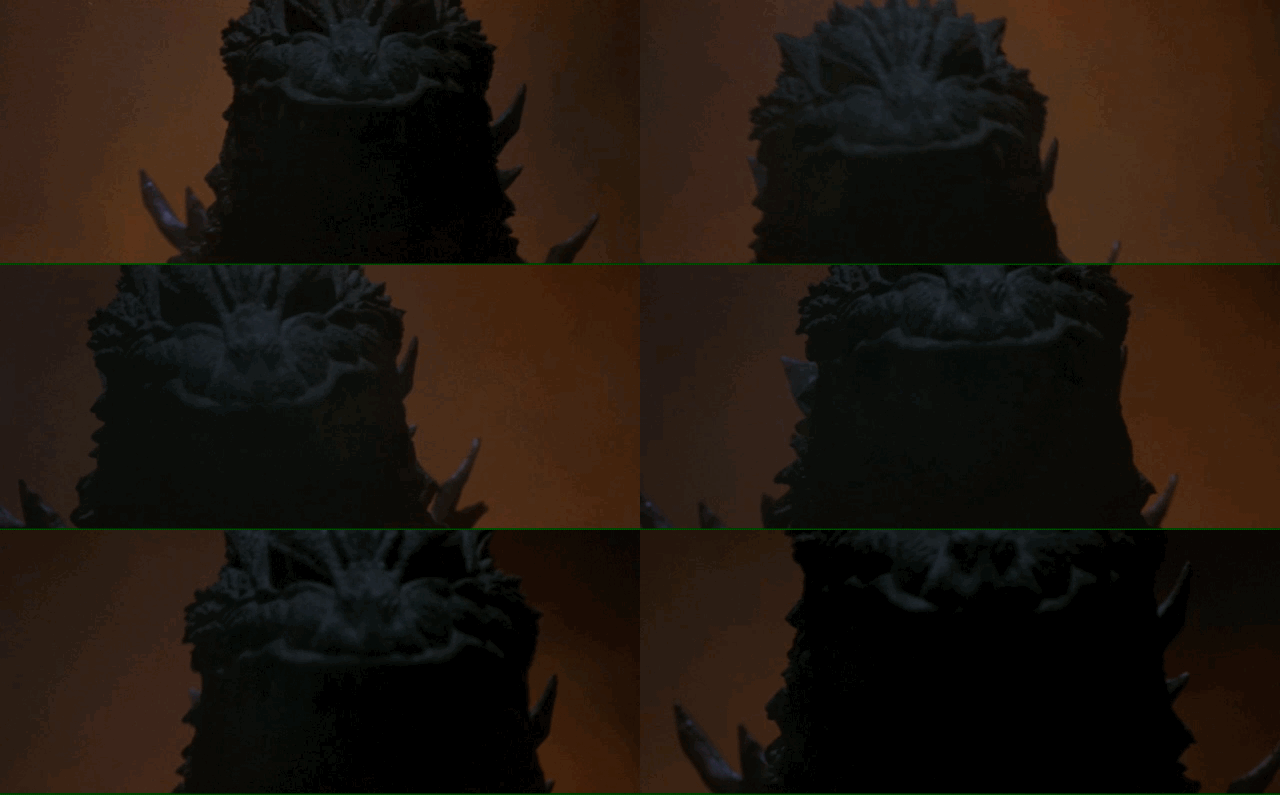
These things are delightfully gross, spitting poison bile, molting, and barnstorming the city. The creatures are identified as Meganula, a fictional prehistoric bug that was introduced in the 1956 Rodan movie. Those guys were awesome! In another incredible sequence, Misato Tanaka shows off Tsujimori’s chops as a commander while investigating a Meganula corpse at sea. As Godzilla rises from the deep, she sends her subordinate up to the rescue vehicle while staying behind in the raft. She climbs onto Godzilla’s back and fires a tracking device into his scales before jumping off. The composite work isn’t the best, but the camera panning up past Godzilla’s head demonstrates the scale really well. Ōshima’s score shines here once again.
Kenji Suzuki continues to explore the possibilities of incorporating digital effects, to mixed results. It’s usually a marked improvement over Godzilla 2000, but you can still see how poorly the technology has aged. Still, it was a valiant effort, and Suzuki at his core understood that the practical effects were key to the franchise’s success. He uses CGI to accomplish things they never would have been able to with models and suits, like swimming underwater, some neat aerial shots with Megaguirus and jet fighters, and swarms of Meganulon. The insects don’t always look great, but the animators do a better job than the cut and paste work for the Destoroyah larvae. The digital ones are used to supplement the physical models, which was honestly the best approach to using CGI at the time (and I’d argue, today). Starship Troopers did this spectacularly a few years prior in 1997.
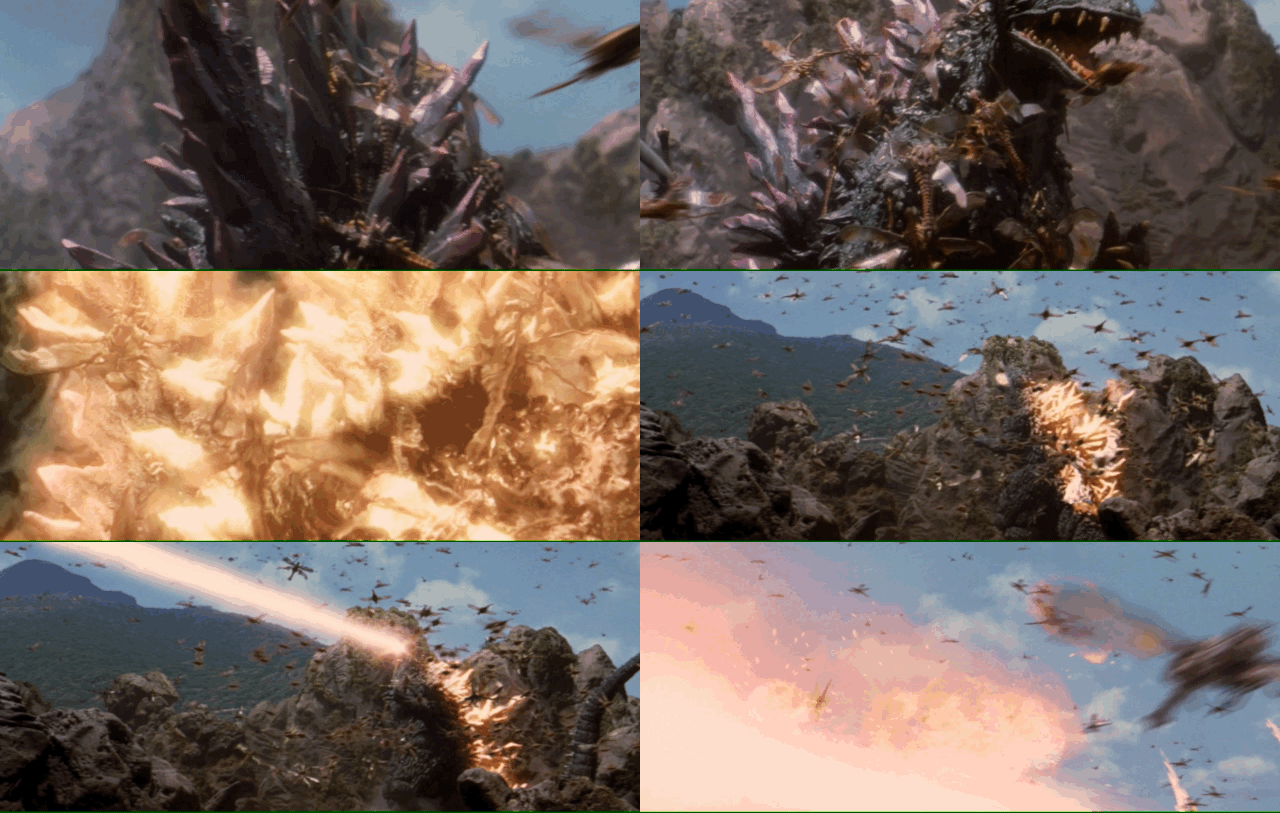
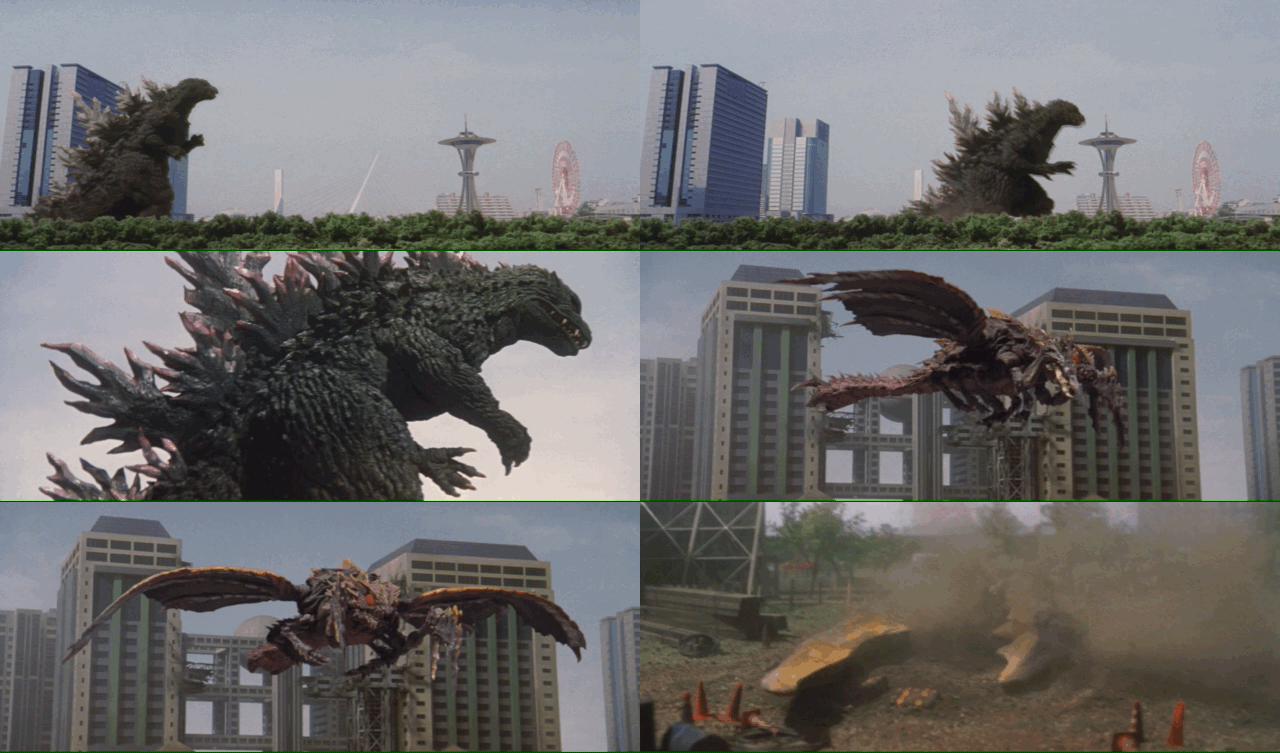
The big fight between Godzilla and the massive mutated Megaguirus is impressively creative. Where Godzilla 2000 used digital graphics to enhance transformation scenes, Suzuki leverages it here more for action. You can can feel the speed of the bug, as she zips about and Godzilla loses track of her. In one shot, there’s a very samurai-esque dash and slice exchange where Godzilla uses his jagged spines to sever a claw. In another, we see that Godzilla’s tail is prehensile now! It grabs Megaguirus’s stinger and slams her right into a building. The crew manages to get the Dimension Tide working a couple times, but totally beef the targeting. How do you miss when firing a black hole at something?!? It actually appears to work in the end, with a rad sequence of Major Tsujimori piloting a craft right at Godzilla to assist with the lock on (and ejecting at the last moment), but there’s a post-credits scene revealing he’s survived. It’s the first post-credits gimmick in the franchise, something that’s become a given in a lot of nerd properties nowadays thanks to Marvel.

While devoid of much commentary, and even coming dangerously close to trying to justify the use of horrific weapons with catastrophic potential mishaps, Megaguirus is a heck of a good time. The first film to really focus on women as main characters, this goes to some interesting narrative places. Some of the models are admittedly cheap, and Megaguirus definitely looks like a Battra knock-off, but Suzuki pushes the envelope with what can be done with computers at this time. At least on a Toho budget. The action scenes are mostly shot in the daylight as well, with effects artists better able to touch out the wires, this stuff looks good in a way that has always been a major challenge to pull off before. I do love the gloomy night scenes, but you gotta have some variety and Megaguirus provides that in spades. Next up is one I’m not sure I’ve ever seen in Godzilla, Mothra, and King Ghidorah: Giant Monsters All-Out Attack!
 Godzilla Vs...!
I love all Godzilla movies he is our protection. Looking forward to seeing him again