
Well folks, we’re up to the end of the Heisei era, and what a time to get there. 1995’s Godzilla vs. Destoroyah was billed as the death of Godzilla, putting an endcap on the iconic series. Everyone involved (and any comics fans) knew that this would likely not be the case, but they were closing up shop and filming the final chapter of the current run. In a series of poetic homages to the original Godzilla, Destoroyah revives the core themes that have made the franchise so impactful and successful to this day. Godzilla is dying, after having taken on a massive amount of radiation, and is approaching meltdown. The existential threat looms large: the clock is ticking, and if we don’t do something, it could mean the end of life on planet Earth. A timely lesson, considering the events of the past week (as of writing this, March 3 2022). With Vladimir Putin straight up invading the sovereign nation of Ukraine, the rest of the world is faced with some of the most difficult global security decisions since WW2. Any direct intervention could push Putin into launching a nuclear first strike, as he’s threatened to do, which is limiting the United States and Europe to offering financial, medical, and military supply aid rather than committing troops. While it’s extremely unlikely that this could happen, do you want to call that bluff? Only time will tell, as events are still unfolding. To make matters worse, everyone considers themselves to be an armchair expert on every current topic thanks to the internet, which leads to a bunch of dweebs on Twitter saying a nuclear war wouldn’t “actually be that bad.” I’m not claiming to be an expert, but can lay out a few points as far as I understand them. The folks saying this are making a pile of assumptions: one is that there was a study on recent wildfires showing that ash was rising far higher into the atmosphere than was previously modeled, indicating the dangers of a nuclear winter could be worse than originally expected. However, another study indicated that this was probably not the case, so the science is undecided there. The next is that targeting and delivery systems have become far more advanced allowing for more “precision” to annihilate a target. In the height of the cold war, it was assumed that many warheads would be aimed at a single target, and it’s more likely that only a few would be need in the modern age, reducing the total amount fired, and therefore limiting the dangers of a nuclear winter. This seems to be a uhhh, very generous assumption given that defense systems have also become more advanced. Not something I’d like to gamble on. It also ignores some key concepts of nuclear war. While the nuclear winter may be more localized and not immediately plunge the world into a life-ending apocalyptic disaster, the massive swaths of land that would be effected would destroy food production effecting billions. The radioactive fallout would drift and corrupt everything in the surrounding area, civilization and wildlife alike. Even if you were outside the blast zone, there’s a sizable radiation zone where you would need immediate medical attention – and not be able to get it. Infrastructure would collapse, and first responders would not be able to risk exposure leaving millions to die slow agonizing deaths over the coming days and weeks. Being more connected by digital technology than ever before means communications systems going down, including banking systems, would plunge entire economies into chaos. Does this mean you should you keep a large stack of cash under a mattress? Probably not, even with heightened tensions, the threat of a house fire is still far more likely. Last but not least: the immense human cost. Yes, humanity itself may be likely to survive a “small” nuclear war, but initiating it, or even retaliating with nuclear weapons, would turn you into the biggest mass murderers in modern history in the blink of an eye. Not just those effected in the blasts and immediate aftermath, but the cancers and sickness that would effect surrounding regions and waterways for decades. We see the effects rippling throughout generations in Godzilla vs. Destoroyah. The farther we get from the living memory of Hiroshima and Nagasaki, the more you see people downplaying these risks, or bringing up old justifications, and that’s a depressing and terrifying thought.
Well that’s a tough act to follow! Thanks, opening paragraph. Let’s focus on some of the positive: two originals return for this entry, which would incidentally be their last. Tomoyuki Tanaka, responsible for the creation of the original Godzilla, and the various revivals through the years, backed the Destoroyah project and helped create the buzz around the death of Godzilla. Similarly fitting was composer Akira Ifukube, who was quoted as saying “I felt that since I’d been involved in Godzilla’s birth, it was fitting for me to be involved in his death.” Ifukube’s passion and history in the franchise is downright palpable in this film. Kazuki Ōmori and Takao Okawara of Godzilla vs. Mothra also returned as writer and director, and the veteran Kōichi Kawakita helms his last foray as special effects director.
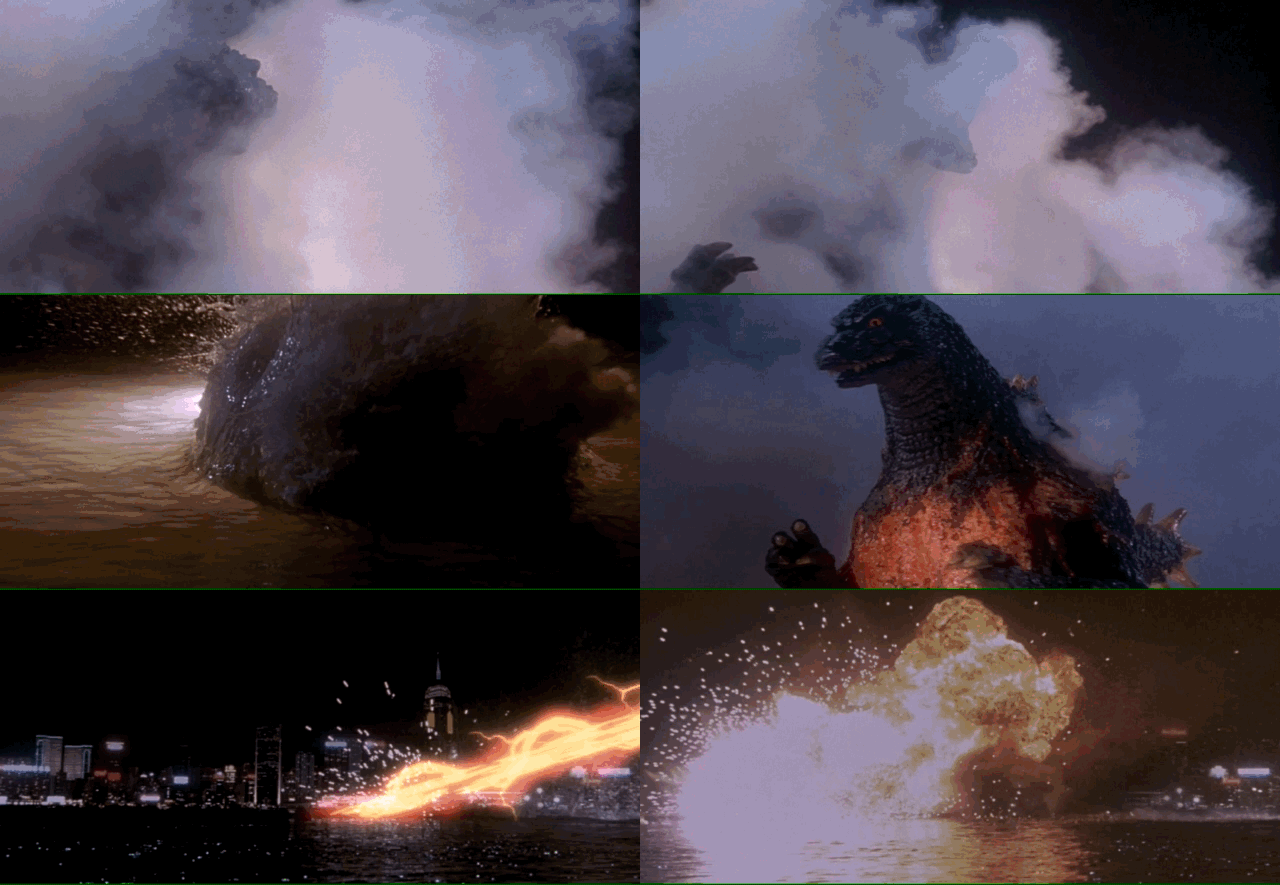
Destoroyah wastes no time in laying waste to miniature models. It opens with a furious attack on…Hong Kong? Is that right? Neat! A lot of the scene is composite shots but we get to see smoke and steam pouring off of Godzilla, buildings exploding as he marches by. His eyes are glowing orange, and large splotches around his body and spine are too. The suit was altered to incorporate LED lights, and used pure carbon monoxide for the steam effects. The steam has an added bonus of looking like he is boiling the water around him in the pool shots. The effects here really give the impression that this creature is on the brink, ready to blow at any moment. Suit actor Kenpachiro Satsuma would pass out several times as a leak filled the suit, so he had to eventually wear an oxygen mask while inside it. It’s amazing how dedicated to the craft he became after initially not respecting suit acting that much.
This being the end of the Heisei era, Ōmori and Okawara just absolutely peppered this movie with callbacks to the original ’54 film. The opposing monster, Destoroyah has a relation to the Oxygen Destroyer used to kill Godzilla 40 years ago, and there’s an animated sequence of it during the credits. The kid who theorizes what’s going on in Godzilla’s body is Kenichi Yamane, grandson of Professor Yamane, played by Yasufumi Hayashi. He’s approached by a representative from the JSDF and asked to join them. While hesitant at first, he is a teenage horndog and when he hears Miki Saegusa is part of the team, he jumps on board immediately. Miki is of course played by the inimitable Megumi Odaka, so yeah I don’t blame ya kid. His sister Yukari, played by Yōko Ishino, is a newscaster interviewing a scientist working on “micro-oxygen.” Takuro Tatsumi plays Dr. Kensaku Ijuin, and insists he’s not a mad scientist way more often than anyone who’s not actually a mad scientist should. In theory micro-oxygen could have many uses, like smaller tanks for divers, and if “fed” to fish, they grow to enormous size. It’s also very close to Serizawa’s research on the Oxygen Destroyer, as she learns from Emiko Yamane. No way this can backfire, right? Emiko was a main character in the original film, and Momoko Kōchi reprises the role; it’s a great cameo!
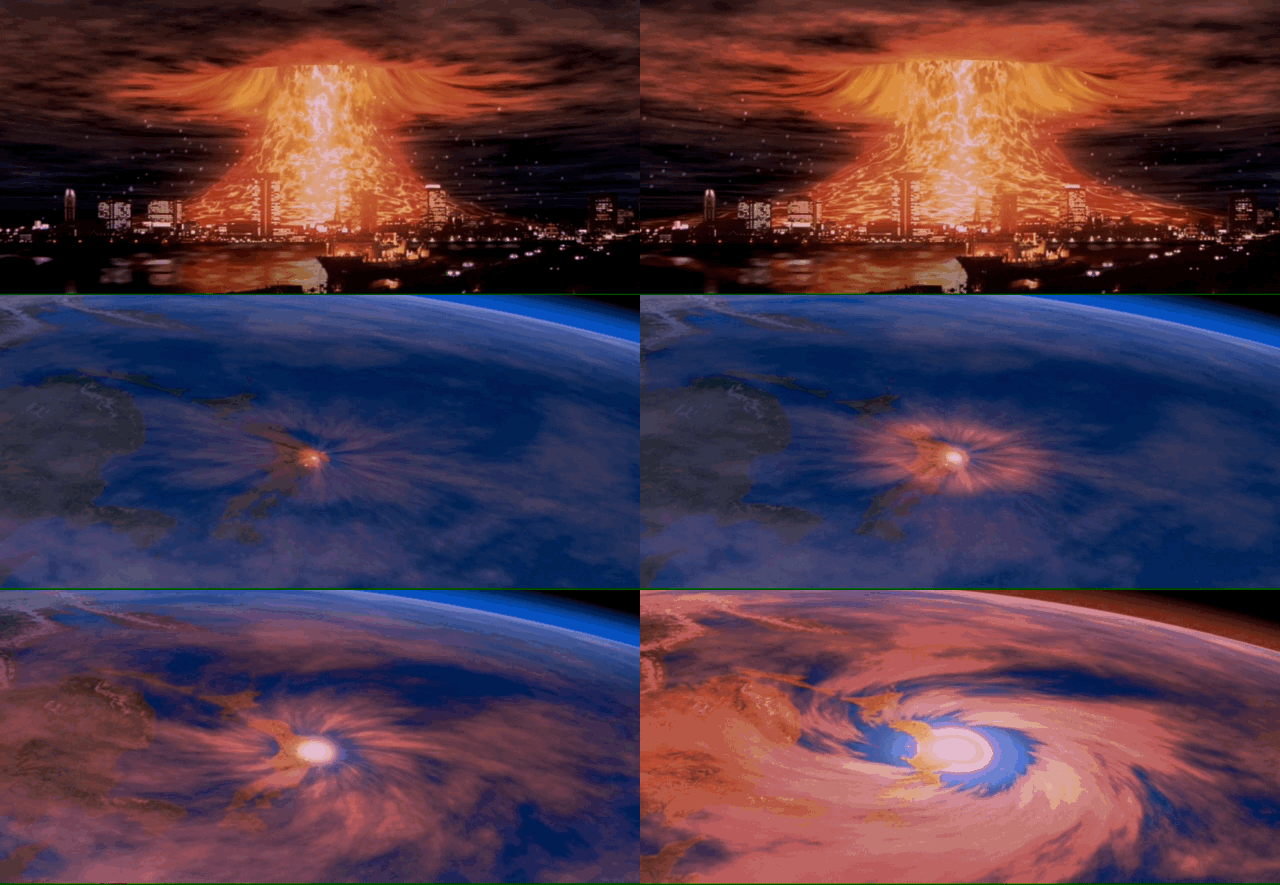
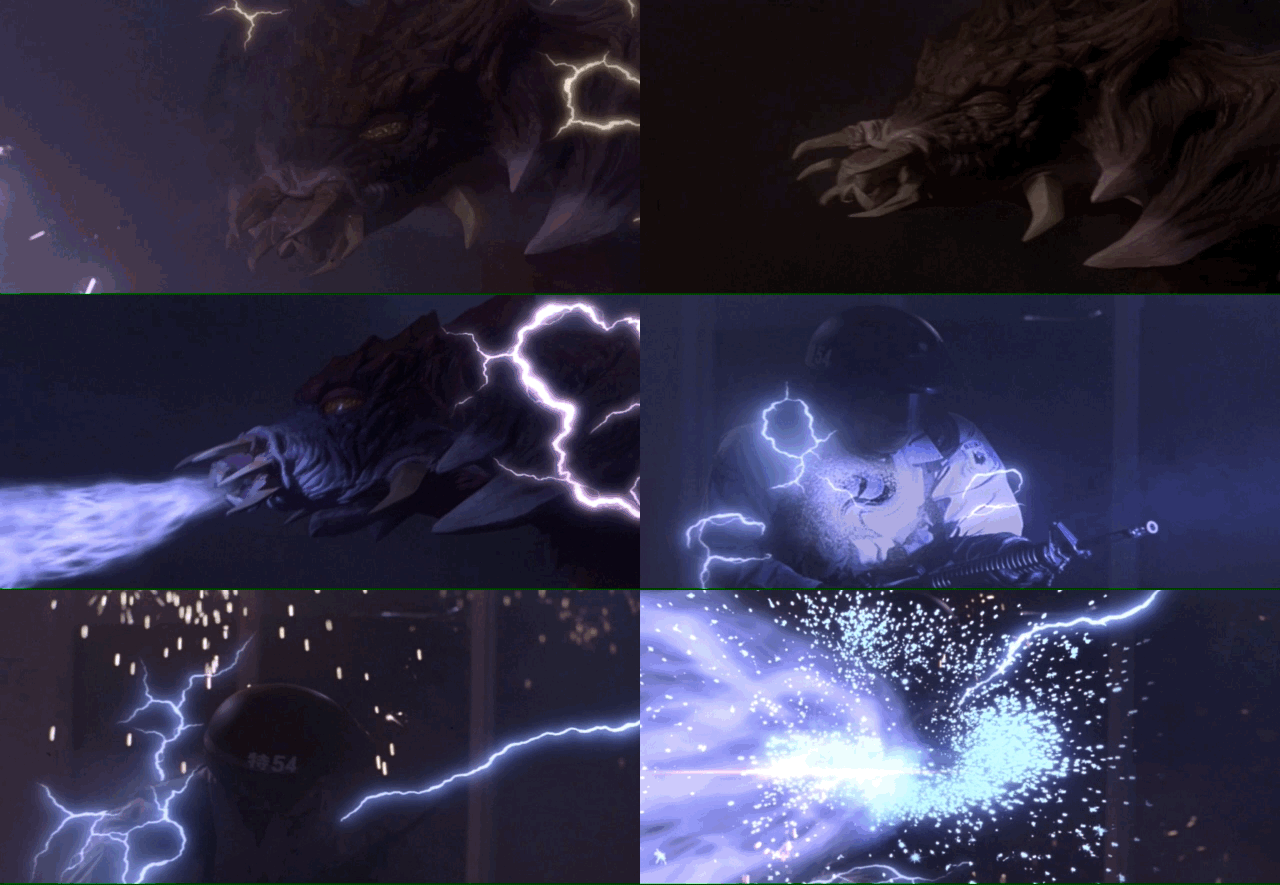
In a possible nod to Akira, we see an enormous explosion as Kenichi outlines how Godzilla’s meltdown could ignite the atmosphere and destroy life on Earth. He suggests using the Oxygen Destroyer, and some black and white flashbacks wake Emiko in the middle of the night. Even after being warned of the dangers, Kenichi uses similar justifications to using the atom bomb: the greater threat of being destroyed if we don’t use it. And like the atom bomb, it turns out there could be alternatives. Meanwhile, Dr. Ijuin is studying some “micro-oxygen” samples from the site where the original Godzilla was killed by the Oxygen Destroyer, and wouldn’t you know, some dang precambrian organisms mutated and broke free! They combine into Destoroyah’s larval forms which are insectile, and about nine feet tall. A SWAT team is called in and they get wrecked by the larvae in an obvious nod to James Cameron’s Aliens, even down to the double-jaws and flamethrowers. Ōmori continues to showcase his love for American cinema! The larvae are pretty cool looking monsters, and have a ridiculous vortex attack.
But there’s still a Godzilla or two to worry about! Miki is trying to track down Godzilla Junior, while a new military craft the Super X 3 plans to use some advanced freezing weapons to slow down Godzilla’s rampage, and delay his meltdown. It works for a while, buying them a matter of hours, and they mix practical effects and computer graphics to show the process. Primitive CGI is used sparingly in the film, and thankfully there’s still plenty of practical effects work to marvel at. There also seems to be a small amount of stop-motion animation with the larvae, something Toho has always shied away from. It’s not in major scenes though, they definitely wanted to save suitmation for big events. Miki does end up finding Godzilla Junior, and Godzilla Senior appears to have been on a course to meet up with his adopted child.
The larvae end up combining and somehow harnessing the power of an Oxygen Destroyer, hence why they name it Destoroyah. Well, that and because Toho couldn’t trademark “Destroyer.” The military can’t believe they have two monsters on their hands, because I guess it’s their first day on the job. And technically they have three, but G Junior isn’t doing much so they decide to use him as bait and have a “Let them fight!” moment, which always rules. Destoroyah of course has an additional flight form, and dukes it out with G Junior, who holds his own pretty well! Gets a building dropped on him, then pinned to the mat, but serves up some steamy Destoroyah King Crab Legs for dinner. Pappa G has woken up from deep freeze, just in time to see G Junior get his chest bloodily ripped open. A gasp from the crowd, but he gets back up! Yes, Godzilla Junior still has some fight left in him!
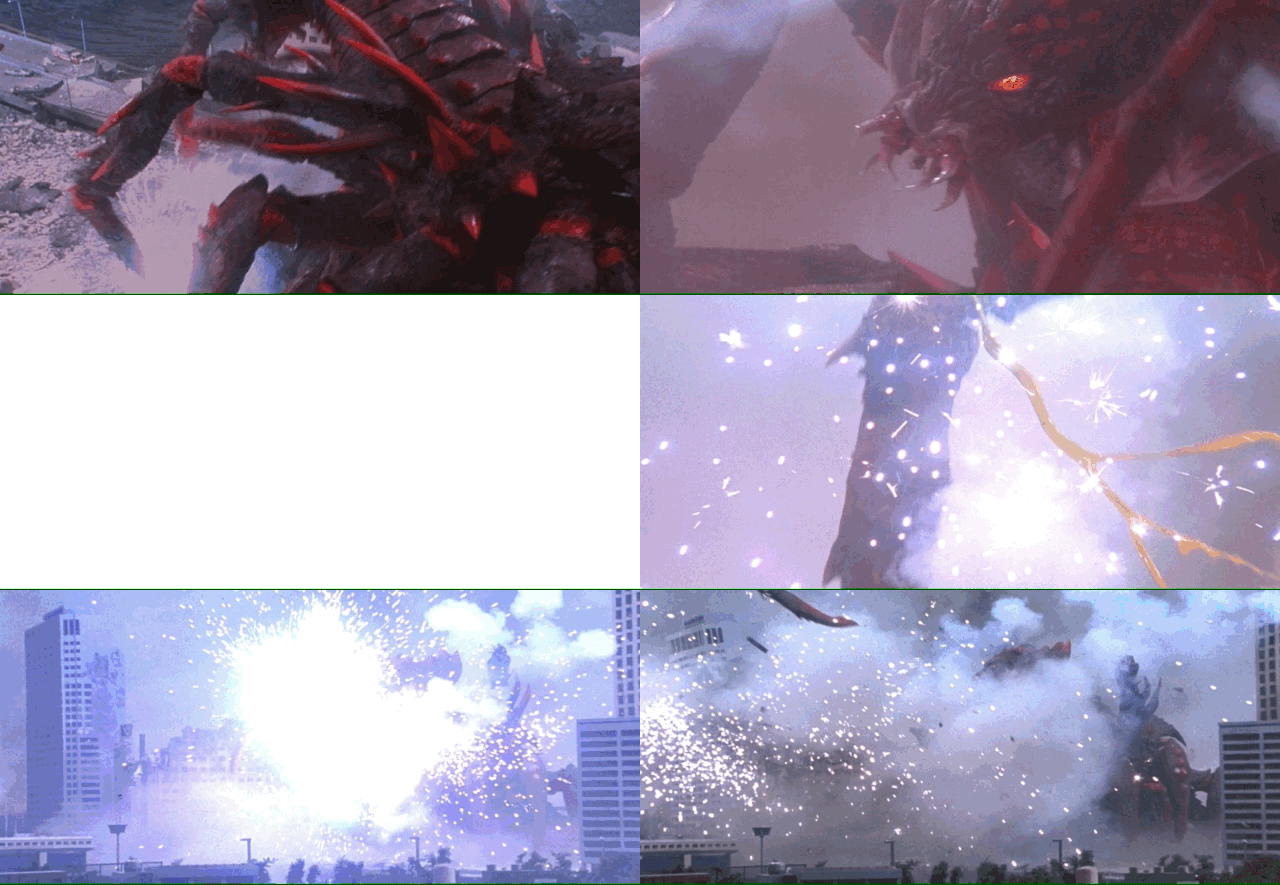
The two Godzillas meet up as night falls, finally reunited, but with Godzilla still smoking with radioactivity, you know the end is nigh. Destoroyah bursts back on scene with his final form in a reveal reminiscent to Chernabog on Bald Mountain in Fantasia. Things do not go well for Godzilla Junior here. Destoroyah attacks, dropping the little one through a building and blasting him with his rays as the larger Godzilla screams in agony, having lost his only son (we don’t talk about that other one, thankfully erased from continuity). A teary Miki Saegusa says “I have a feeling this is going to be Godzilla’s last fight” and you can hear the desperation and nostalgia in her voice. It’s a great part for the bookend of the series. The final battle is one of the most impressive ones yet; they exchange blows and you can feel the anger and fury pouring off of Godzilla.
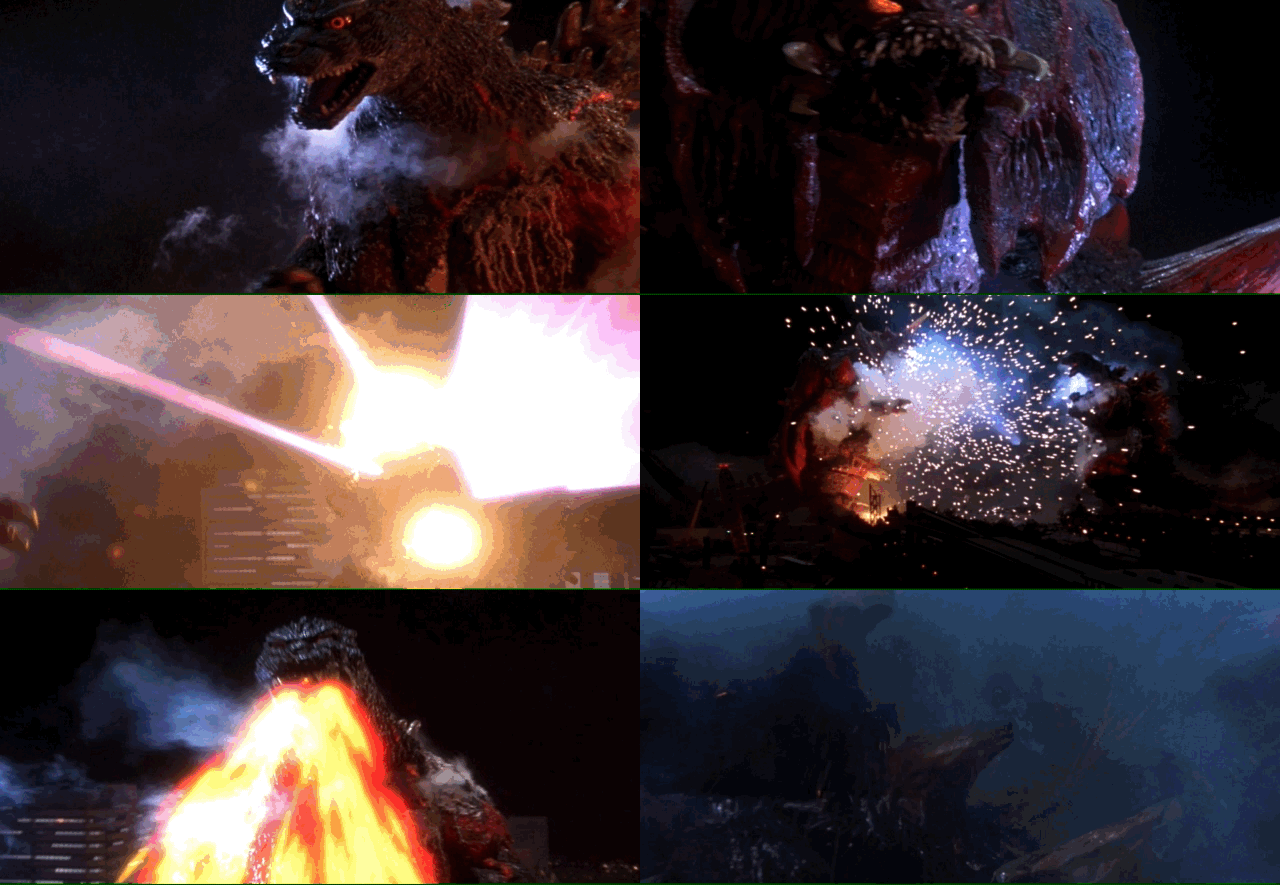
G-Force keeps a close eye on Godzilla’s temperature after he seemingly defeats Destoroyah. It climbs and there’s a touching moment where Godzilla tries to breathe radioactive life back into Godzilla Junior, but it doesn’t work, and he’s distraught. Ifukube’s music really does some heavy lifting, and we’re brought close to tears over a couple guys in big rubber monster suits. But of course Destoroyah isn’t down for the count yet, he comes back to interrupt Godzilla’s reverie, and in one final blast as his temperature approaches critical, flesh starting to melt off his spines, barely able to contain waves of radioactivity, Godzilla lets out his dying salvo. Well, sort of. It would have been a nice way to go out, but G-Force actually delivers the killing blow to Destoroyah. Godzilla, reaching critical meltdown temperature gets hit with all these cold-weapon shenanigans, and Ifukube continues to impress, expressing Godzilla’s anger and confusion of a creature that’s just trying to live and can’t understand why he’s lost his child, his flesh is melting, and he’s getting shot by pesky humans. The radiation levels die down, and out of the mist emerges the silhouette of another full-size Godzilla letting out a muted roar, backlit by spotlights. Godzilla Junior lives on!

The use of CGI here allows them to do a full body meltdown, but the practical effects used on the closeup are phenomenal. I would have loved to see that done with the full body suit, but you do what you can with the budget you have. It was fun to see Toho experimenting with a still relatively new medium, and the death of Godzilla excuses its gleaming otherworldliness. As the credits roll, we see clips from the original ’54 film, then each of the Heisei era films, providing a neat recap of modern continuity. Godzilla vs. Destoroyah is a fitting, emotional end to the series that taps into the fears that gave birth to the monster decades ago. While it has its campy fun, it continues to remind the audience of the threat posed by nuclear power, and remains unfortunately relevant today.
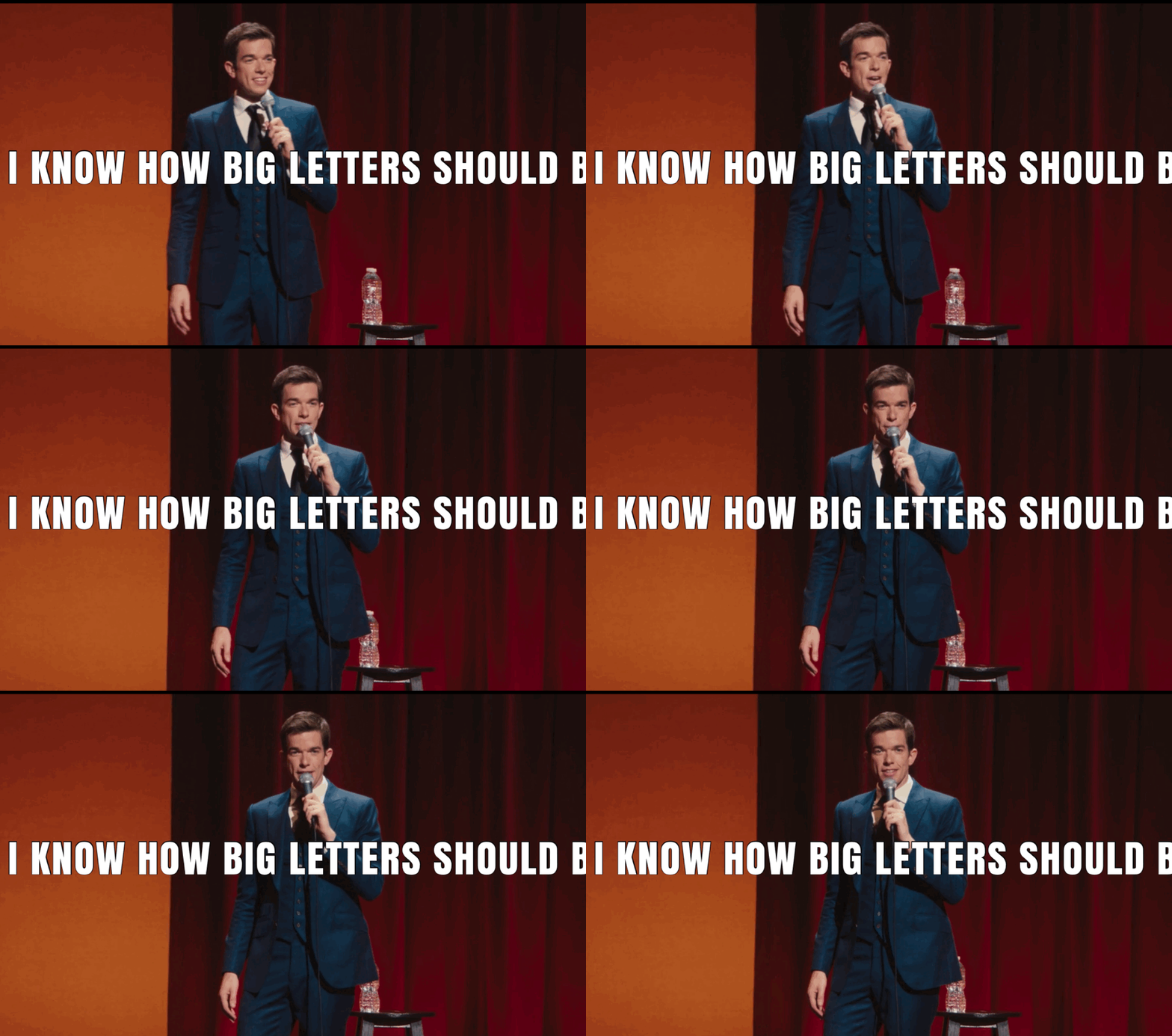
As I finish writing, Russia has attacked and taken control of the Zaporizhzhia Nuclear Power Plant, the largest in Europe. Fires broke out during the attack, and there was a potential for the largest nuclear incident since Chernobyl (also in Ukraine). These events lead us to consider what seemed unthinkable mere weeks ago: what can be done in this kind of situation? According to British Ambassador Barbara Woodward this was “the first time a state has attacked a fueled and functioning nuclear power plant.” Compromising the structural safety of these facilities could amount to nuclear terrorism, and it’s just dumb blind luck that this conflict didn’t result in something horrifyingly worse than it already is. The world is in a position where conventional intervention could possibly trigger the launch of nuclear weapons by Russia, but they also may set off incidents even without that. What can be done? I don’t have the answers. All these years worth of lessons that should have been learned, and we’re still in an insanely precarious spot. I feel like the people who run the Doomsday Clock project grossly underestimated how bad things could get before the end, like John Mulaney writing “Happy Birthday” on a cake and running out room. Ohhhh no.
 Godzilla Vs...!
good godzilla