
The birth of hip hop can be traced back to the 1970s in the Bronx, New York, New York, America. DJ Kool Herc pioneered a turntable technique of isolating and repeating musical breaks. The genre started small, only available at block parties, house parties, and schoolyards. Young people would bring out a boombox and start rhyming, improvising intricate poetry on the fly. By the 80s, the genre became popularized enough to sell records from greats like Kurtis Blow, Grandmaster Flash, Doug E. Fresh, and way more than I can list here. In retrospect it shouldn’t be surprising, but a prevailing casual racist belief among older white people was that it was music for uneducated thugs who didn’t have the best grasp on the English language. It’s an absolutely insane take considering the craftsmanship and grasp of rhythm, cadence, and structure required to spit fire, be it freestyle or pre written. The backlash against “ebonics” or African American English would come to a head in 1996 with Oakland School Board’s resolution to recognize the legitimacy of Ebonics and incorporate that into teaching standard English in the classrooms. As you can imagine, white people lost their friggin minds over this without understanding the actual resolution or its impact on education. Meanwhile, overseas, Japan was picking up on this new musical style, but fans felt that hip hop was more suited to the English Language than Japanese. Japanese generally ends in a small set of auxiliary verbs, as opposed to more common verbs and nouns found in English, lending to a wider variety of rhymes and cadence. But, just as AAE didn’t adhere to the steadfast rules of standard English, rappers in Japan began to bend the grammatical structure to fit into the traditional hip hop flow. This wave of new creative artists gave rise to acts like Buddha Brand, and King Giddra who embraced hip hop’s origin of promoting voices of the oppressed and voiceless. While Japan had an understandably different political climate, these bands would rail against homogeneity and cultural imperialism. What does all this have to do with Godzilla? Well, scoring legend Akira Ifukube was approached for the job of composing for Toho’s latest venture, Godzilla vs. SpaceGodzilla. While he didn’t have as much of a conniption fit as American elders, he did take a look at the project and said “When I read the script for Godzilla vs. SpaceGodzilla, it reminded me of teenage idol films. In addition, the movie was going to have rap music in it. So, I thought, ‘Well, this is not my world, so I better not score this one.'” While there is only one rap song in Godzilla vs. SpaceGodzilla, this move is consistent with Ifukube’s decisions in the past. He declined to write for the original Mothra in ’61 because he didn’t think his style would be a good enough fit to do the the twin singers who played the Shobijin justice. He also stayed away from some earlier Heisei era films because he wanted to avoid the pop synth motifs they were looking for. The man just knows how to step aside and let someone else take the reins for a while.
Speaking of taking the reins, Godzilla vs. SpaceGodzilla introduces a new screenwriter/director duo. Kensho Yamashita would sign on as director with Hiroshi Kashiwabara writing, both coming from the aforementioned teen idol movie background, but both also working a bit on Terror of Mechagodzilla. This plot-heavy entry has a lot going on in it, but fret not: there’s still plenty of bonkers monster action. While it has more romantic subplots than most, and a “love conquers all” theme, Kashiwabara and Yamashita do a few things way better than their predecessors, notably calling back to previous plot points providing a rich sense of continuity, and finally, finally giving Megumi Odaka’s Miki Saegusa the spotlight she deserves. Veteran Koichi Kawakita is back on effects and did a superb job on making SpaceGodzilla a hideous, twisted version of our boy. Unfortunately without previous director Takao Okawara to object, he completely redesigned Baby Godzilla to look cuter and less dinosaur-ish. He wanted to showcase Baby’s transition from young dinosaur into giant monster, and in this film he’s grown quite a bit and has been rechristened as “Little Godzilla.”

The basic premise of Godzilla vs. SpaceGodzilla is that some Godzilla Cells (remember those?) made their way into space from either Biollante dissolving or Mothra accidentally carrying them off with her and fell into a black hole, being mutated and coming out a white hole somewhere else in the universe. He’s been on his way home to Earth to defeat Godzilla and conquer the planet for himself. We’ve seen this trope before, sort of; it’s usually aliens leveraging and controlling monsters for their own end. This is the first time we’ve seen a malicious intelligence from a monster itself. Before SpaceGodzilla’s arrival though, the UNGCC has two plans in flight to counter the Godzilla menace: Project M which has constructed the giant robot MOGUERA, and Project T which aims to control Godzilla with a psychic amplifier. You may recognize the Moguera from Toho’s 1957 film The Mysterians, an alien abduction plot that would go on to influence 1968’s Mars Needs Women.
Pretty much everything about this movie is based on the Rule of Cool: what would make Godzilla even cooler? A crystal-infused outer space version, we aren’t even going to bother naming it anything creative, we’re just gonna call it SPACE-Godzilla! The Moguera has so many drills and buzzsaws it’s ridiculous. There’s even a shootout with the Yakuza in this one. It’s extreme!
Project T starts with fan favorite Miki Saegusa being approached by Professor Chinatsu Gondo and her colleague Dr. Susumu Okubo played by Towako Yoshikawa and Yôsuke Saitô respectively. Gondo essentially tells Miki that if she doesn’t agree to join Project T, they’re going to take one of her students instead. Get in the Kaiju, Miki. If you don’t psychically pilot the Godzilla, one of your kids will. Aboard an ocean liner headed towards Birth Island (yeah, I don’t know) are Lt. Koji Shinjo, sternly played by Jun Hashizume, and Lt. Kiyoshi Sato, more lightheartedly played by Zenkichi Yoneyama. Sato is the one jamming out to the hip hop beats that Ifukube objected to. Once there, Sato falls prey to the old cinematic bait and switch as sketchy character Akira Yuki played by Akira Emoto gets the jump on him with a knife to his neck, only to pull it away revealing he’s actually killed a deadly tarantula. Emoto does a fantastic job of playing a grizzled obsessed loner with a heart of gold. While I don’t like Little Godzilla’s redesign, his dynamic with Yuki is genuinely adorable.
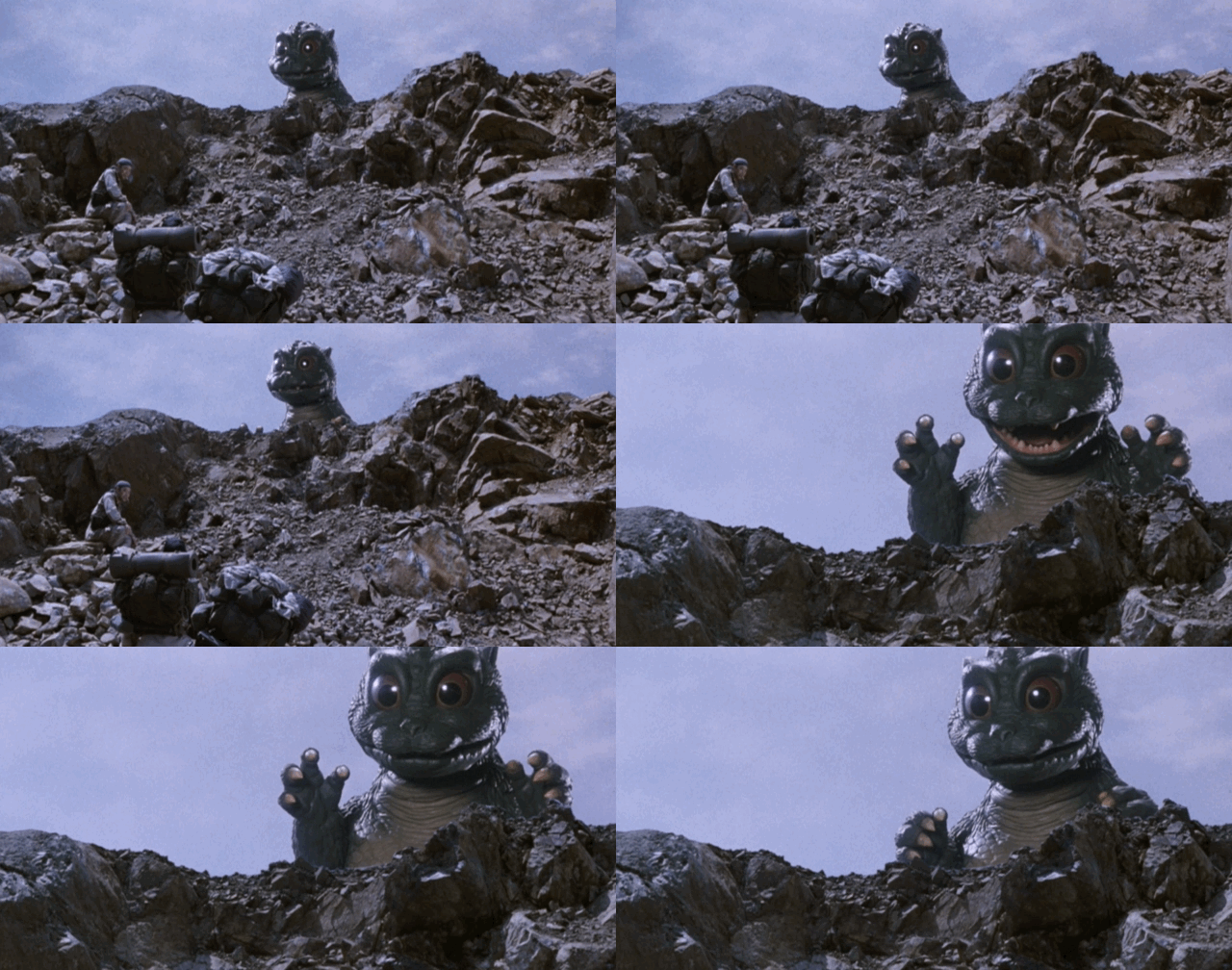
Shinjo and Sato are there to keep an eye out for Godzilla and launch the psychic amplifier, a plan at odds with Yuki’s: he’s developed a handmade bullet full of blood coagulant to kill Godzilla. The antics of the two opposing missions agreeing to operate independently is pretty entertaining, especially since Shinjo and Sato are only halfheartedly on board with Project T. When Miki arrives on the island she gives them a verbal smackdown criticizing them for only wanting to kill Godzilla. This will be a recurring theme with Miki and Gondo trying to tamp down the hyper masculine “shoot first and ask questions later” attitude of the UNGCC soldiers. We find out Yuki was best friends with Goro Gondo, Professor Chinatsu’s brother, who was killed in 1989’s Godzilla vs. Biollante. The two characters, both close to Goro, showcase how differently people can react to the loss of a loved one, Chinatsu allowing herself to mourn and move on, and Yuki being consumed by revenge.
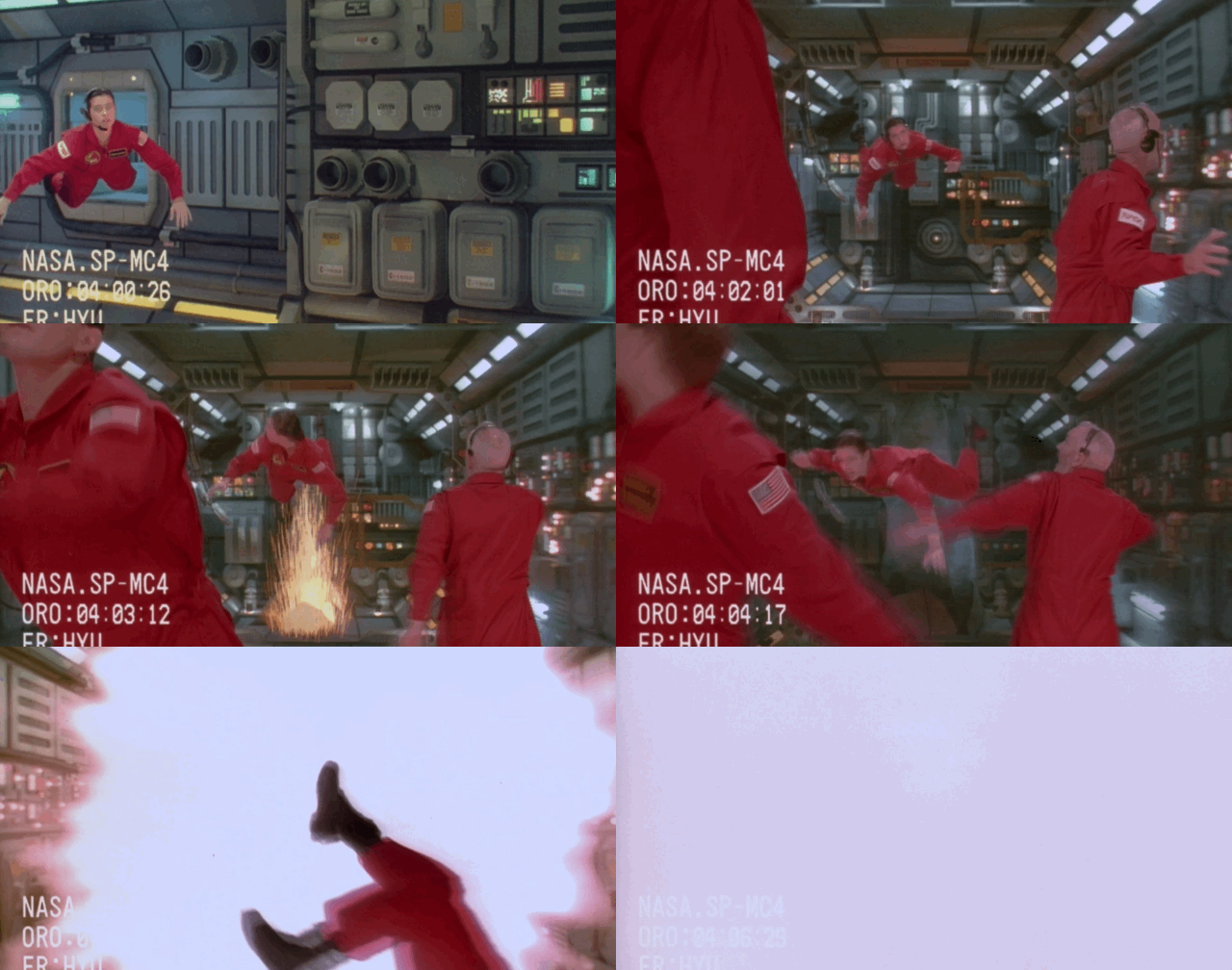
Mothra has a brief cameo in this movie, with the Cosmos appearing to Miki to warn her that SpaceGodzilla is coming and plans to kill Godzilla and conquer the Earth. She’s charged with doing whatever she can to protect Godzilla, and thus the planet. They’re not the only ones with a warning though: NASA representatives contact the Japanese government with this astoundingly bad video of what they say “can only be some sort of monster.” It’s really the only explanation, good deductions NASA.
Godzilla appears on the shore of the island and both missions are sent into motion. Yuki’s motif is a percussive island piece and really works for the character sneaking around trying to get a clean shot off on Godzilla while the UNGCC guys try to find their spot to hit him with the psychic amplifier. It’s one of the more notable parts of Takayuki Hattori’s score and it works so well. Project T prevails over Yuki, though and Miki remotely controls Godzilla down shore with a cerebro contraption, at least until there’s an incident with the equipment. In space, Project M has been deployed to combat SpaceGodzilla, and they get immediately wrecked. This scene was hastily thrown together near the end of production, but I still really dig the models being flown through a sea of asteroids.
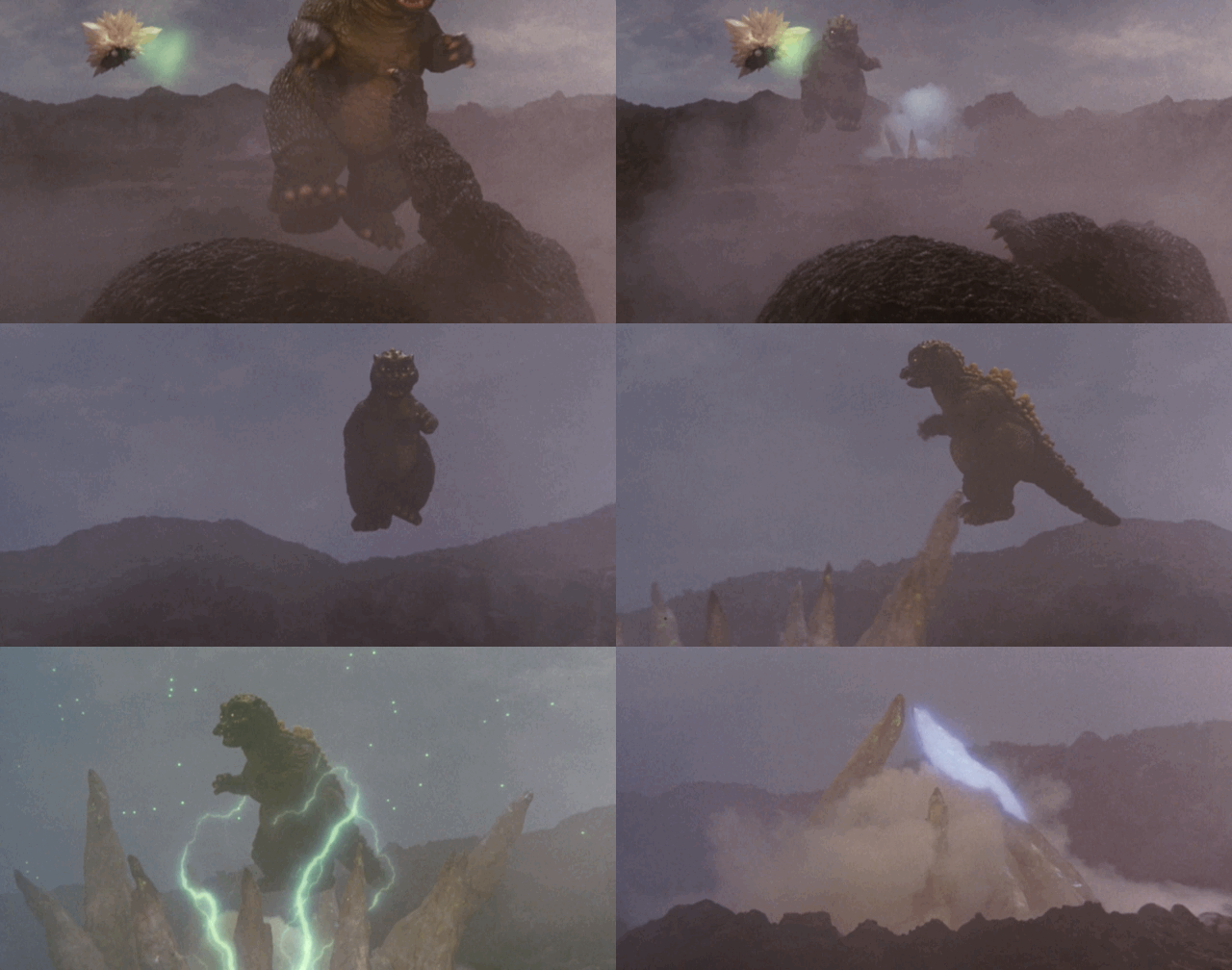
Upon landing, SpaceGodzilla sheds the bulk of his crystals from flight mode, but still retains crystalline dorsal plates and two massive shoulder spikes. Attacking Little Godzilla draws the ire of Larger Godzilla and the two face off. SpaceGodzilla’s design is crazy and lights up from the inside, Kawakita really continues to impress here. In a cunning and heartless move, SpaceGodzilla uses a gravity beam to abduct and imprison Little Godzilla before flying off. It’s equal parts silly and sad, and provides a moment of empathy for our gun toting human characters.
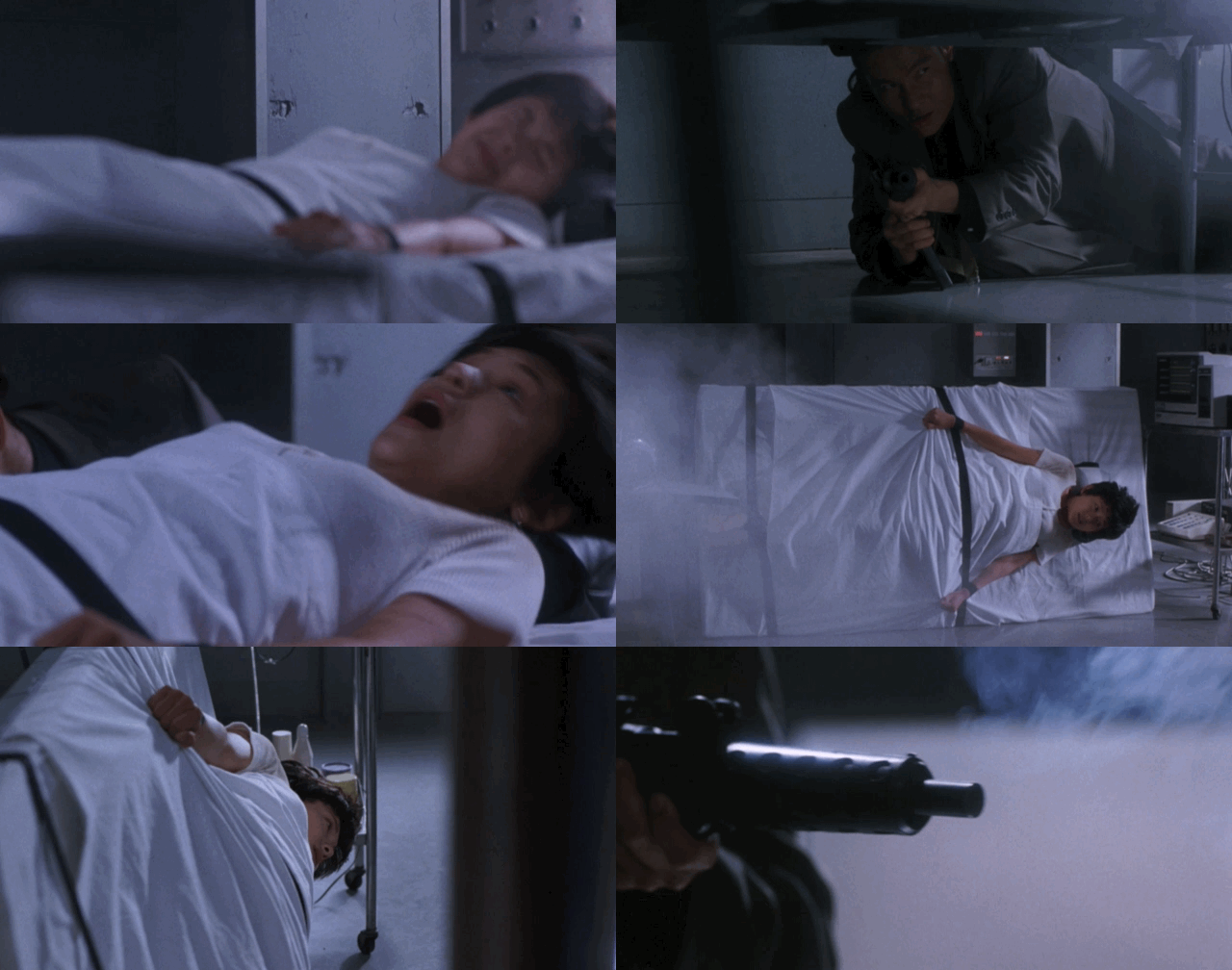
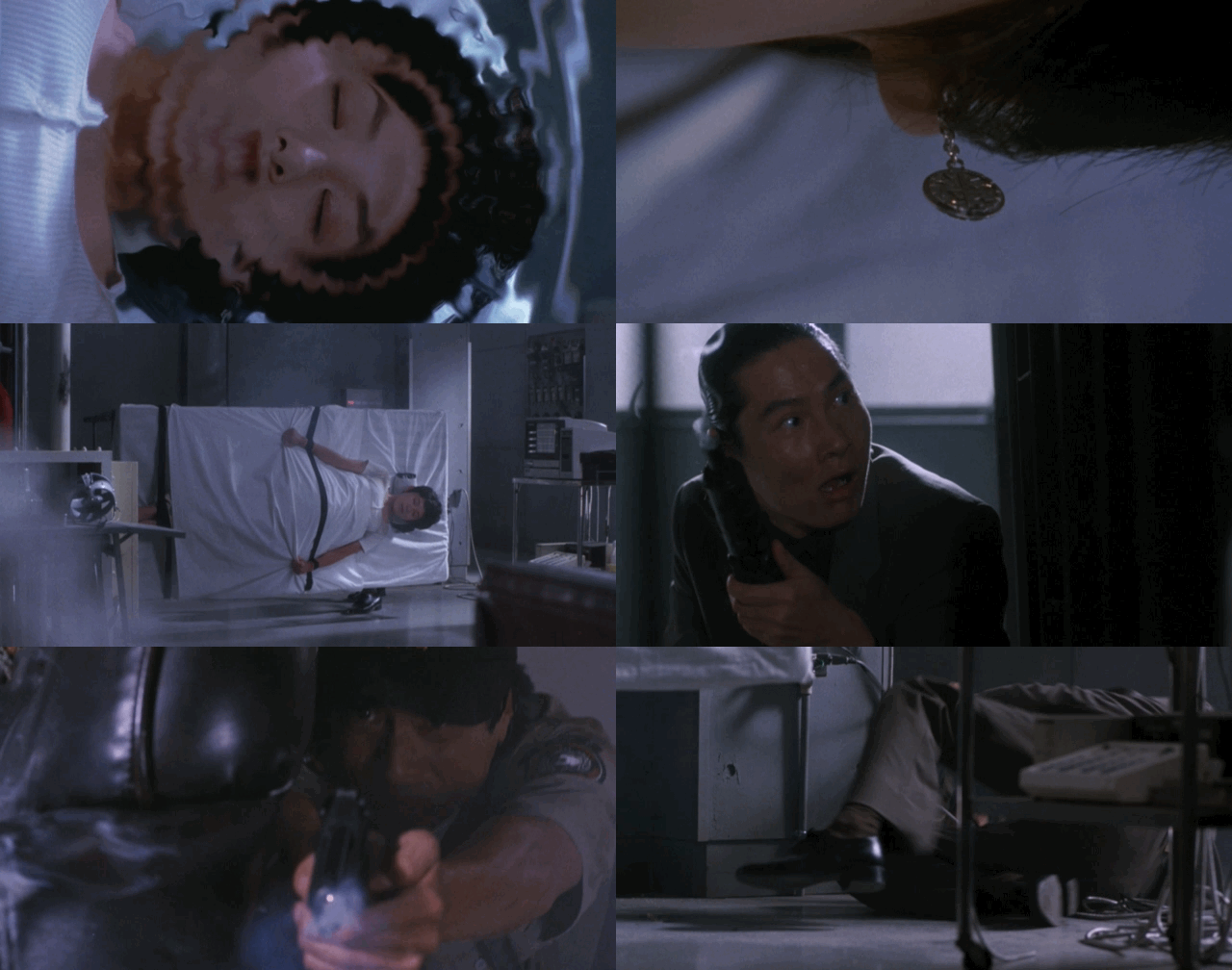
With Project T having failed, the team decides to evacuate, except Miki stays behind to commune with Godzilla. Shinjo and Sato stay with her, and Shinjo tries to hit on her by saying she works too much and needs to leave room for love. Miki’s not having any of that bunk though, calls him a warmonger and storms off saying Godzilla has feelings too. Miki is abducted in the night, and the two lieutenants rejoin Professor Gondo on the mainland. Accompanied by Yuki they track Miki down to a warehouse operated by the Yakuza. She’s strapped to a hospital bed with a cerebro headset hooked up to her, and it turns out Okubo is part of the mob and wants to use the monster-controlling technology for his own ends. The rescue mission is a nice piece of 90s action filming, with Miki caught in the crossfire between the UNGCC and the mafia. At one point a gangster flips over Miki’s bed to use her as a human shield, and the sequence is incredible. Unfortunately for the gangster, Miki in a time of crisis taps into her latent telekinetic abilities and levitates the bed giving Shinjo a clear shot to take out the guy’s kneecaps. I love everything about this scene.
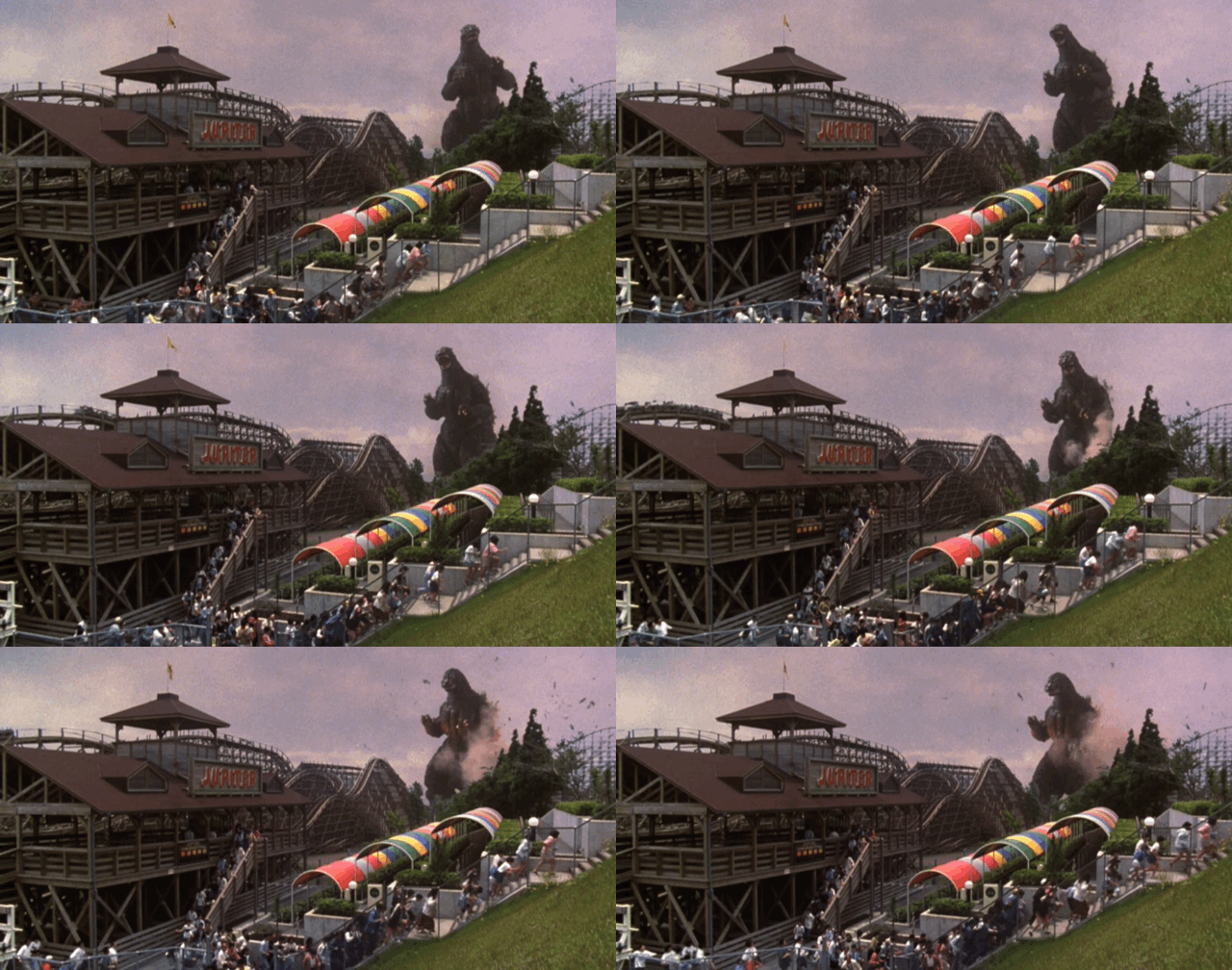
SpaceGodzilla finally touches down in Fukuoka city, sprouting crystals all over the place, and as one reporter describes it “once a peaceful town, is now turning into unimaginable hell on Earth!” SpaceGodzilla transforms Fukuoka tower into his own crystalline fortress, and meanwhile Godzilla marches towards him, hell bent on rescuing Little Godzilla. The matte work is again stellar, providing some great disaster footage, including one shot at an amusement park where everyone’s evacuating, but a roller coaster still starts the ride! Those poor people!
When Godzilla finally gets to SpaceGodzilla’s crystal stronghold, there’s about 45 minutes left in the film, and it’s all monster battle. Yuki tries to kill Godzilla a couple times before the day is done, but does join in to fight the greater evil. SpaceGodzilla derives his power from these crystals, and starts launching them like rockets and if you like sparks and explosions, you’re in for some luck. Moguera being able to separate into two distinct vehicles and recombine comes in handy when Yuki uses the ground unit to burrow under Fukuoka Tower and destroy it. From then on, it’s a more even fight, especially after Moguera shatters SpaceGodzilla’s shoulder crystals. Man, maybe the intro should have been about the New Age “power of crystals” craze in the 90s? Ifukube refusing to score on the grounds of rap music was too good to pass up though.
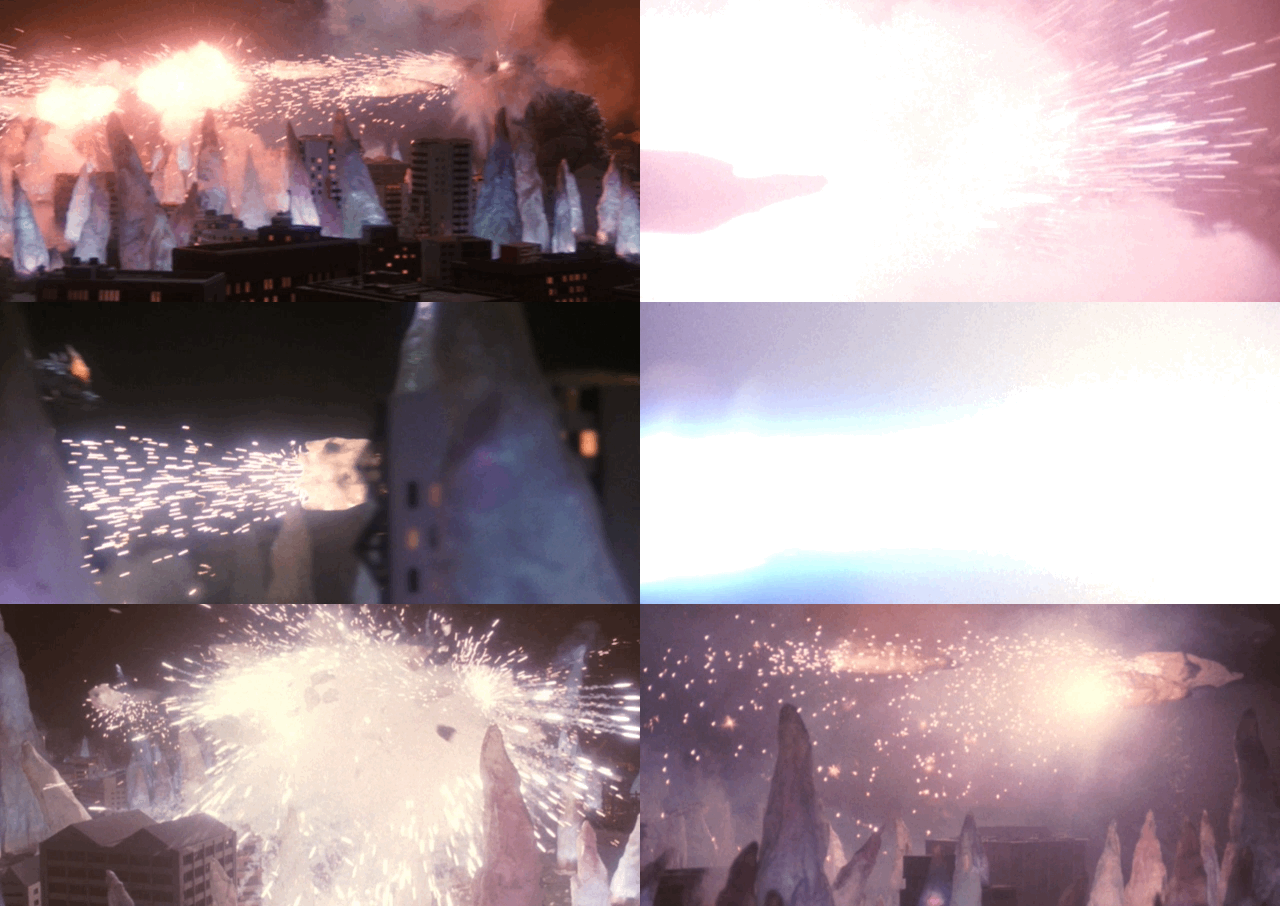
When Godzilla has had quite enough of this shit, he charges his red atomic breath, annihilating both SpaceGodzilla and Moguera. Luckily Miki was able to work some telepath magic to guide the pilots out in time. There’s some thin message about polluting the universe, but it doesn’t make it relative to Earth’s pollution problem; they only theorize that sending crap like G-Cells into space would eventually create more monsters. That’s not really a problem anyone’s worried about in real life though. Miki, grateful for Godzilla defending the planet uses her telekinesis to remove the psychic amplifier for good. Yuki finally learns to let go and have a real emotional connection with Gondo, Shinjo learns to chill out and abandon his bloodlust and connect with Miki, but Sato, for some reason still vows to take down Godzilla. He was the most chill of the three dude characters we saw, but the only one who didn’t get paired off with someone at the end. Yamashita and Kashiwabara’s teeny bopper influence really came on thick at the end, and it’s understandable how Ifukube would pass on the project. For all his fuss about rap, there was just that one song in the background during our characters opening scene, so I’ll leave that up to the viewer whether he overreacted or simply wanted to make way for younger artists more in tune with the vibe of the movie. Next up, with the American Godzilla project still on the brink of being produced, Toho decided to end it all with Godzilla vs. Destroyah. For really real this time. They swear.
While you’re here, enjoy some King Giddra!
 Godzilla Vs...!