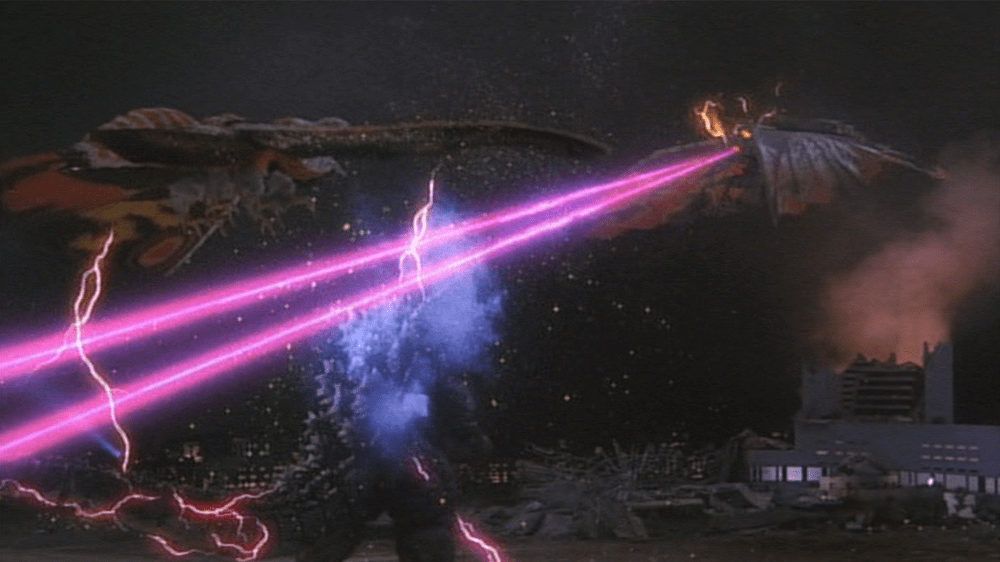
Hot on the heels of 1991’s Godzilla vs. King Ghidorah, Toho wanted to keep the momentum and release another kaiju movie. They had finally found success, despite overseas criticism, and were ready for more. While Kazuki Ōmori wouldn’t be returning in the director’s chair, he did pen the screenplay, and continued to draw on big American action hits, this time Indiana Jones. The Last Crusade came out 3 years prior, and was massively toned down from the previous film Temple of Doom in 1984. This, incidentally, came out the same year as Joe Dante’s Gremlins (released in the middle of summer for some reason?) and the wombo-combo of two supposedly family movies with graphic violence led to the creation of the PG-13 rating. It doesn’t have much to do with the Godzilla films, which largely go unrated in America, but it’s still kinda neat. The other major influence to Godzilla vs. Mothra takes us back to 1987. Like a Godzilla film, our story starts at sea! The barge Mobro 4000, holding over three tons of garbage and tugged by the Break of Dawn set sail on March 22, 1987. The plan was to ship the garbage down to North Carolina, where it would be converted to methane as it decomposed. This was a new concept, and the shipping endeavor was partially financed by mob boss Salvatore Avellino, who would later be imprisoned for killing two garbage haulers. Like some cruel April Fool’s joke, it was denied port when it finally arrived at its destination on the 1st. Someone had spotted a bedpan in the garbage, and surmised that there would be hazardous medical waste that contaminated the entire load. As the story broke, it was framed as the fancy elite of New York City dumping their trash all of the poor working class folks of the South. The Mobro spent two months at sea being chased out of harbors by not only US Coast Guards but the navies of Mexico and Belize as well. It ended up back in New York to be incinerated, and the international incident spurred a renewed awareness of the world’s garbage disposal crisis, and an uptick in environmental activism. In the next few years, recycling programs grew and inspired the series Captain Planet and the Planeteers in 1990, which in turn inspired a foundation to get kids involved with Earth-friendly sustainability projects. So with this newfound focus on environmentalism, who better to return to the Godzilla series than the champion of Earth and the environment than Mothra herself?
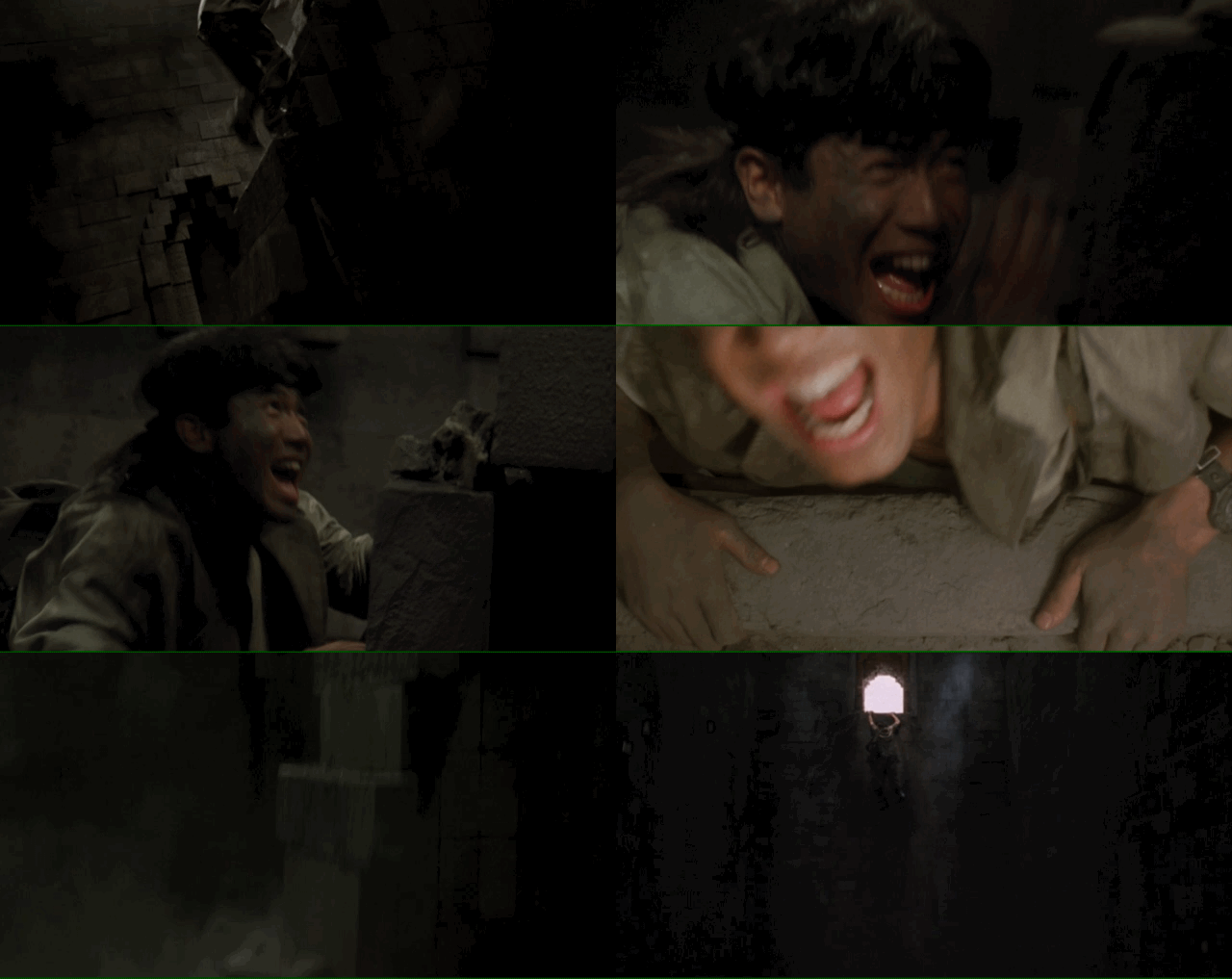
When last we met, Godzilla was tackled by Mecha-Ghidorah and went into deep slumber on the ocean floor. As credits roll, an asteroid slams into the ocean and wouldn’t you know, it’s right where Godzilla’s resting! I guess if it weren’t for coincidences like this, we wouldn’t have a movie. The resulting tsunami waves then unearth a familiar looking giant egg. The credits give way to an ancient temple where a guy wearing a cowboy hat finds a gold statue, but when he removes it, it sets off a chain reaction of collapsing floors and ceilings. This is just oozing Indiana Jones, and the shot of our hero scrambling up a set of quickly crumbling steps is legitimately cool. He reaches the exit with a sigh of relief only to stare up at the barrel of a gun. Yes, Takuya Fujito, the rogue explorer played by Tetsuya Bessho isn’t as honorable as Indy; he scours tombs for relics to sell on the black market. While awaiting trial in jail, he’s approached by a government liaison Shigeki Fukazawa played by Saburo Shinoda, and his ex-wife Masako Tezuka played by Satomi Kobayashi. While investigating the environmental impact of the asteroid, they found Mothra’s egg, and are offering to wipe Fujito’s slate clean if he’s able to find and retrieve the egg. Joining them is Kenji Ando played by Takehiro Murata, a representative from the Marutomo Company, who plans to develop the island (the english dubbing hilariously just says they’re going to exploit the island). While gloating that there’s no job too tough for him, Fujito just straight up eats a whole lemon slice off his tea saucer; this guy is just unnecessarily flexing all over the place.
Akira Takarada of the original Godzilla returns for a bit part as Joji Minamino, a government official who hamfistedly outlines the theme of the movie: “There have been some terrible changes in the climate recently. Men are destroying the very Earth they live on. We can’t go on like this for very long.” The asteroid exacerbates the existing climate conditions, accelerating the planet’s impending doom. When they find out Godzilla’s been awakened on top of everything else, Minamino’s just like “Boy, what a day.” I hear ya, bud. The trio of Fujito, Masako, and Ando embark on their journey to Infant Island, and it’s worth noting Akira Ifukube is back scoring this film too. His work here is an improvement over the last one, and manages to create music that stays true to his classic style while really fitting the modern vibe of the 90s (without any synth pop). The first act is full of some fun antics as Masako and Ando are a bit out of their element fumbling through the jungle, but we also get hints of Masako and Fujito’s relationship. He’s a deadbeat who doesn’t pay alimony or child support, and Masako told their daughter that he’s a cop living far away because she can’t bear to tell her the truth that he’s a common crook.
When they find the giant egg, the Shobijin pop by for some exposition. Now played by Keiko Imamura and Sayaka Osawa, they call themselves the “Cosmos.” The backstory doesn’t really make a lot of sense. Mothra was already a protector of the Earth, but I guess she wasn’t doing a good enough job? Or maybe she was only protecting Earth’s inhabitants from external threats? At any rate, this advanced ancient civilization created a device to control the Earth’s climate and Earth got pissed off and created Battra in response (a portmanteau of Battle and Mothra). Battra pretty much wiped out civilization, had a fight with Mothra, and they both went into hibernation. The Maramuto Company wants to retrieve the egg, saying it will be safer on the mainland, and for some reason the Cosmos just trust them even after Masako voices her concerns.
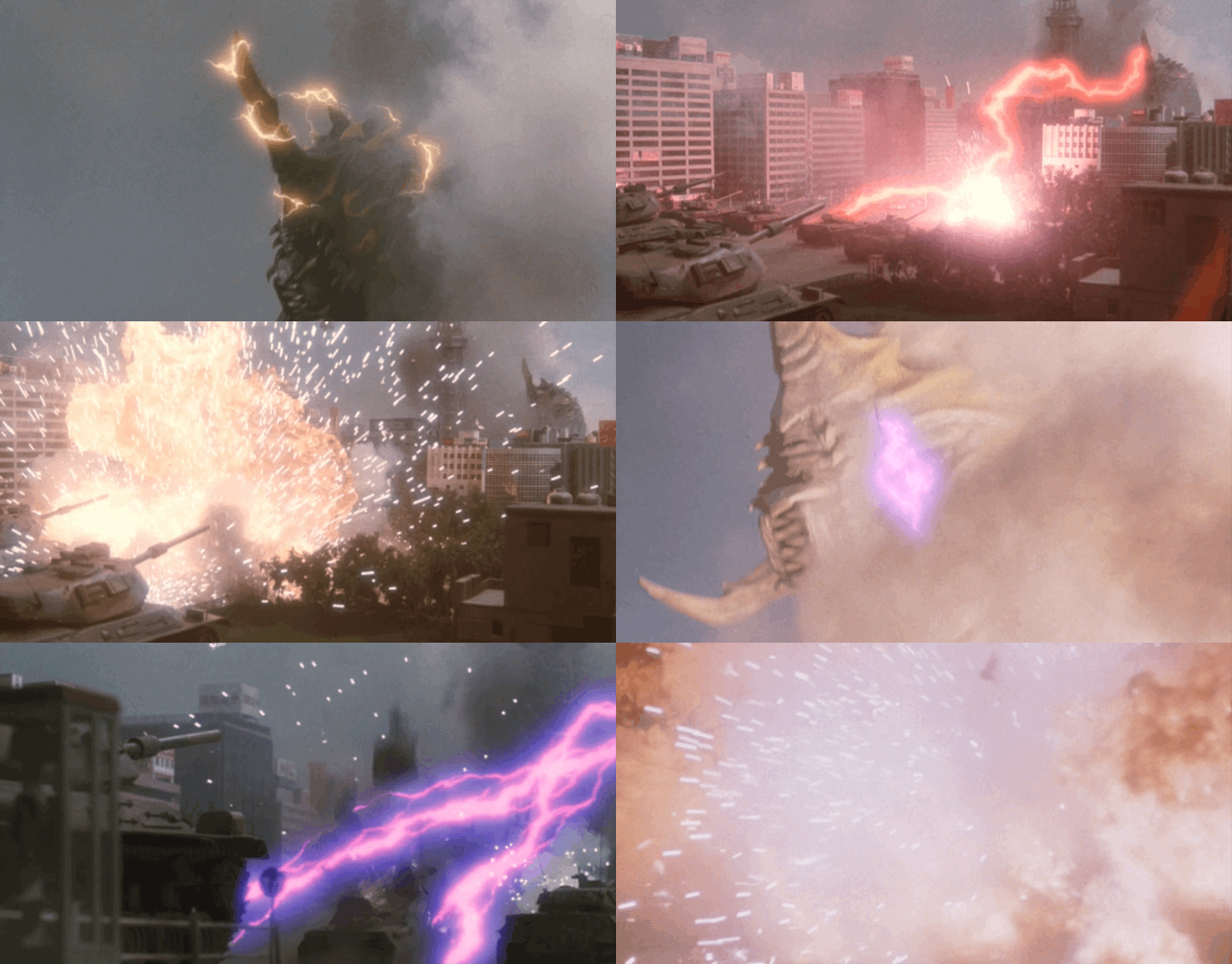
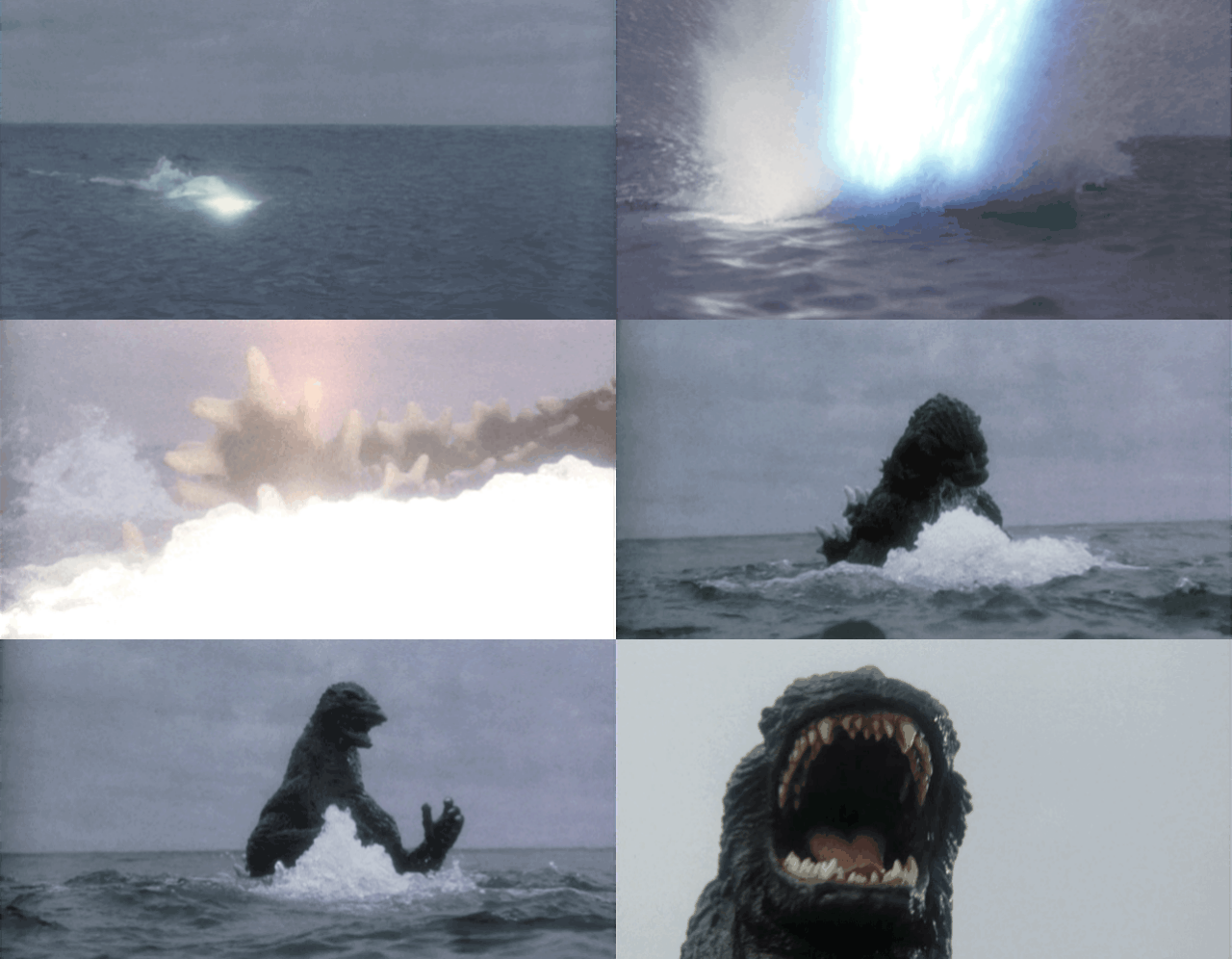
Meanwhile, Battra attacks Nagoya and the scene is incredible. The composite shots are some of the best that have ever been, and Battra fires laser beams from his horn and from his eyes. He is just tearing through this city, and you can’t help but root for the end of humanity just a little. Godzilla’s reveal rocks too, a blast of atomic breath just shoots out of the ocean before you see his massive form rise from the depths. Koichi Kawakita is back on special effects and you can tell he’s having a good time. The man loves lasers and evolving monsters, so having two moths really suits him. The Godzilla suit from Biollante was actually stolen prior to production, so they had to make a new one. The old one was recovered in a lake, and after patching it up a bit, was used for filming some of the water scenes.
The Mothra larva hatches, and dukes it out with Godzilla at sea, at one point biting the tip of Godzilla’s tail, a classic move from the 1964 film. Not one to shy away from a fight, Battra joins the fray. While Godzilla dukes it out with Battra, Mothra peaces out to go rest up and ready herself for a bigger battle. Battra and Godzilla sink into some magma at the ocean’s floor. Ando proves himself to be a giant piece of shit and steals the Cosmos for the Marutomo Company, who plan to put them on display and sell tickets a la the original 1961 Mothra. We all know how this story goes, the Cosmos cheerily sing the familiar lilting tune that will bring death and destruction to their captors. They’re the epitome of Fuck Around and Find Out characters. Instead of trying to free them, Fujito makes a bid to recapture them and sell them to the Americans. This guy is just the worst, but it sets up a decent redemption arc when he finally comes around.
Masako is driving around with her daughter Midori played by a young Shiori Yonezawa, and Megumi Odaka’s Miki Saegusa, who’s still criminally underused, but at least gets to flex some of her psychic powers in tracking down the Cosmos. They find Fujito, and his daughter pleads with him not to steal anymore. Masako’s like “I didn’t tell her, you’re just not that good of a liar.” Mothra’s wrecking shit all over the city and the building they’re in is not long for this world. Midori tells her dad to just get a real job, and the Cosmos are set free, telling Mothra to chill out and not to kill anymore people. Mothra nods in acknowledgement, then immediately destroys two more buildings, inciting attacks by the army and has to go into cocoon mode (delightfully crushing the Capital Building in the process).
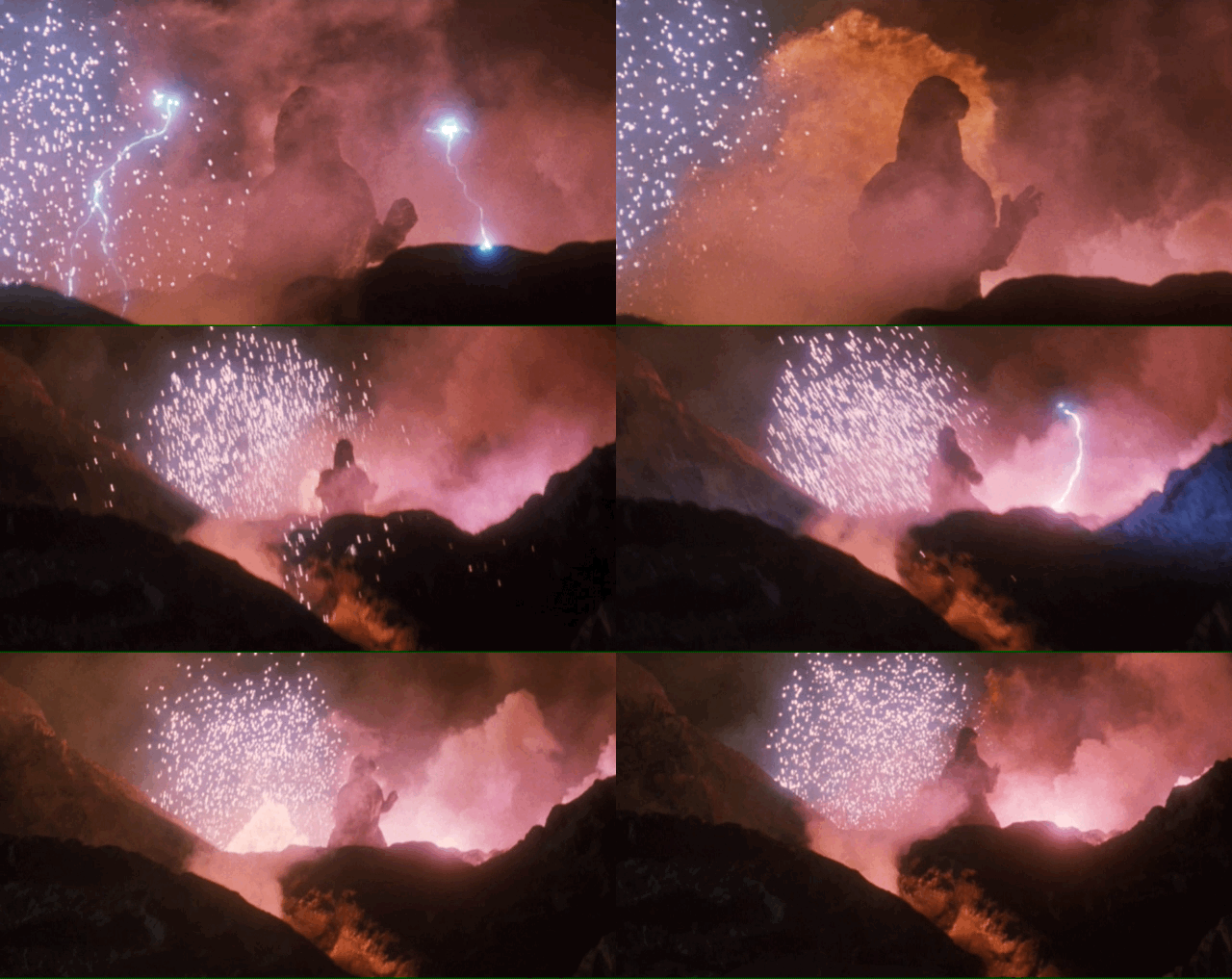
When it’s announced that the latest environmental chaos is Mt. Fuji suddenly erupting, you bet your ass Godzilla shows back up. Yep, he has swam through the magma and came out the other side in the Mt. Fuji eruption. That’s the kind of goofy madness I’m here for. Mothra hatches, emitting sparkling pollen, which she’s done before, but…do the creators know moths don’t create the pollen? It doesn’t matter, it makes for a great visual. The Heisei creature has much more vibrant colors than we’ve seen in the past, and the use of fabric makes her look more like a stuffed animal than usual. Battra returns as well, eschewing the cocoon phase, and opting to just will himself into his final form. It rules so hard.

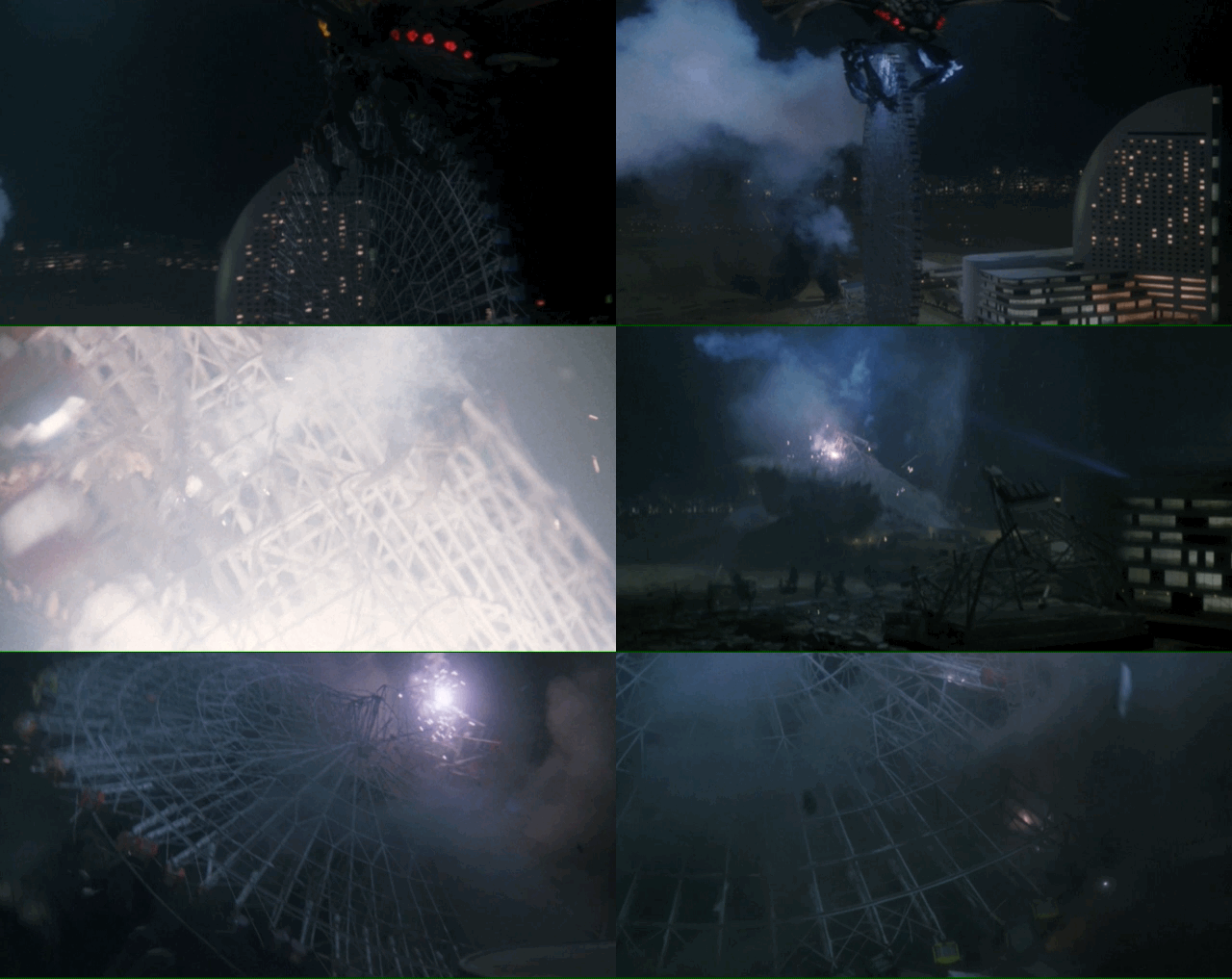
The final showdown is a ton of fun, even though the Mothra model is less articulated than she’s been in the earlier films. The detail on the city miniatures is really impressive and it feels like wrestling match despite Mothra and Battra only being models. They spend some time fighting each other in an aerial monster dogfight, but when Godzilla attacks, they have to join forces to defeat him. At one point Battra picks up a ferris wheel and slams it into the big guy. Setting the battle at night helps mask the wirework necessary for a fight with two flying beasts. Godzilla uses his pulse attack too, which has been a great addition to the Heisei era.
The two moths subdue Godzilla and haul his ass out to sea. Fortunately it’s better to dispose of Godzilla out there than the garbage on the Mobro 4000. Midori asks if they’ll ever see the Cosmos or Mothra again, and the message is maybe, but until then, we’ve got to take care of the Earth ourselves. All in all, this is a pretty decent movie, even if it’s not one of the better Heisei ones. Mothra is such a niche monster, uniquely Japanese, and with that comes some funky spirituality that’s always a good time. Takao Okawara does a reasonable job directing, but doesn’t bring a very unique style. It’s also the final film that Ishirō Honda visited the set on, before passing away a few months later. The heavy handed message doesn’t actually impact the plot much for how unsubtle it is, but if you’re gonna make a Godzilla movie in the 90s, it sure as hell isn’t going to shy away from that environmental statement.
 Godzilla Vs...!