
What does the 90s superhit American sitcom Friends have to do with Godzilla? Absolutely nothing. But in a small coincidence, our story today starts with a man by the name of Matthew Perry. No, not Chandler, but a naval officer around the year 1853. Known as the “Father of the Steam Navy,” Perry advocated for technical education of naval officers and modernization of the US Naval fleet. Prior to 1853, Japan had implemented an isolationist policy, cutting off all trade from the outside world with the exception of the Netherlands and China, and then only through the port at Nagasaki. The reason being was twofold: they saw what had happened in China with the Opium Wars, fought over trade disputes, and how much British traders brought in contraband opium and the corruption of local officials. (The first Opium War was how China lost Hong Kong to Great Britain by the way). The other was to halt the spread of Catholicism, and if you thought Catholics were pushy today, it’s nothing compared to the Manifest Destiny days. By securing the country against outside influence and controlling trade, the shogunate hoped to preserve Japanese culture and prevent any individual governor from becoming powerful enough to overthrow them. That all came to a halt when Commodore Matthew Perry sailed into what would become Tokyo Bay on his badass upgraded steam-powered battleship, insisting a letter be delivered to the leader of the country at the time, the shogun Tokugawa. After being told to piss off and head to Nagasaki, Perry shelled some buildings and the letter was delivered, outlining demands for Japan to open up trade with the US. Perry returned the following year to sign a lopsided treaty ensuring favorable terms for the US, a result of the “gunboat diplomacy.” Seeing what had happened to China, and following this aggressive strategy from the US, Japan knew it had some catching up to do or else it would be weakened or destroyed by the West. Looking to the global powers of that time, they sought to emulate their models of advancement which included imperialism fueling industrialization. Still with me? Hang in there, this pales in comparison to the plot loops of Godzilla vs. King Ghidorah.
So a bunch of island takeovers and two Sino-Japanese wars later, atrocities like the Rape of Nanking and bombing of the USS Panay in the Yangtze River lead to a US trade embargo on Japan. How the tables have turned. What started as an overhaul to conform with the policies of global powers ended up with the alienation from those very same countries, putting them in a tight spot when World War II started. Diplomat Matsuoka Yōsuke once described it like this: “The Western Powers taught Japan the game of poker but after acquiring most of the chips they pronounced the game immoral.” Well, speaking of immoral, having squandered global goodwill, and seeing Hitler and Mussolini carve up Europe, Japan entered the Tripartite Pact to respect each country’s sphere of influence and agree to help economically and militarily should some other parties *cough cough* the United States *cough cough* decide to support Great Britain either in the Atlantic or their Pacific colonies.
While they weren’t directly involved in the holocaust, they still pledged support to modern history’s greatest monster, and short-sightedly bombed Pearl Harbor in an attempt to deter the US, a detail Godzilla vs. King Ghidorah conveniently leaves out. On its release, King Ghidorah incited controversy for its nostalgic depiction of Japanese soldiers of World War II, and the brutal deaths of US troops. There were statements from survivors of Pearl Harbor saying the movie was made in bad taste, and that it was continuing an anti-American trend of the prior two. While the latter is inarguably true, when you see the scenes in question the “bad taste” allegations smack of the pervasive moral panic of the late 80s and early 90s, and an undercurrent of anti-Japanese racism fueled by fears of Japan’s booming economy. A representative from Toho even responded “I realize it may be unpleasant for Americans to watch, but I think it’s not as bad as those Hollywood war movies that portray Japanese soldiers with buck teeth.” Returning director Kazuki Ōmori said “I am not anti-American. I love American movies, and I’ve always watched American movies. Most American movies are, in the same sense, made the way I made my movie. I just wanted to make a movie with American army people in it, and to put the rumors to rest, I am not anti-American. I love American war movies, but looking at all the ones I’ve watched over the years, Americans never lose. And so I thought they should lose at least once! Why don’t the Americans ever lose?!” Well Ōmori, the US has its faults, has done plenty of shady shit as demonstrated by Commodore Perry, and every military engagement since WWII, but in this particular conflict…we were unequivocally the good guys! C’mon, man! At the end of the day, it’s just a freakin movie, and a completely loony one at that. I hope you enjoyed that journey through the ages because there’s plenty more time-travel in 1991’s Godzilla vs. King Ghidorah!
In what should be a familiar theme by now, 1989’s Godzilla vs. Biollante didn’t do as well as hoped at the box office. It seems like Toho has been chasing those numbers from the 60s forever, and it’s never been great, but always good enough to make just a few more, and for that, I’m grateful. One of the theories was that Biollante was going up against Back to the Future 2 in the same season, so of course Toho took that to mean that audiences just craved time travel movies. So that’s what we have here! As mentioned, Kazuki Ōmori is back at the helm directing, Koichi Kawakita back on special effects, and hey, who’s that in the opening credits?!? Akira Ifukube, back to score a Godzilla movie! Apparently his daughter didn’t like how they incorporated 80s synth rock into the last two and pressured him to accept the job. I dunno, I thought it SLAPPED. Some of what he does here is great stuff, per usual, but there’s a few moments where it just does not fit the scene at all. It’s always good to have the legend on board though.
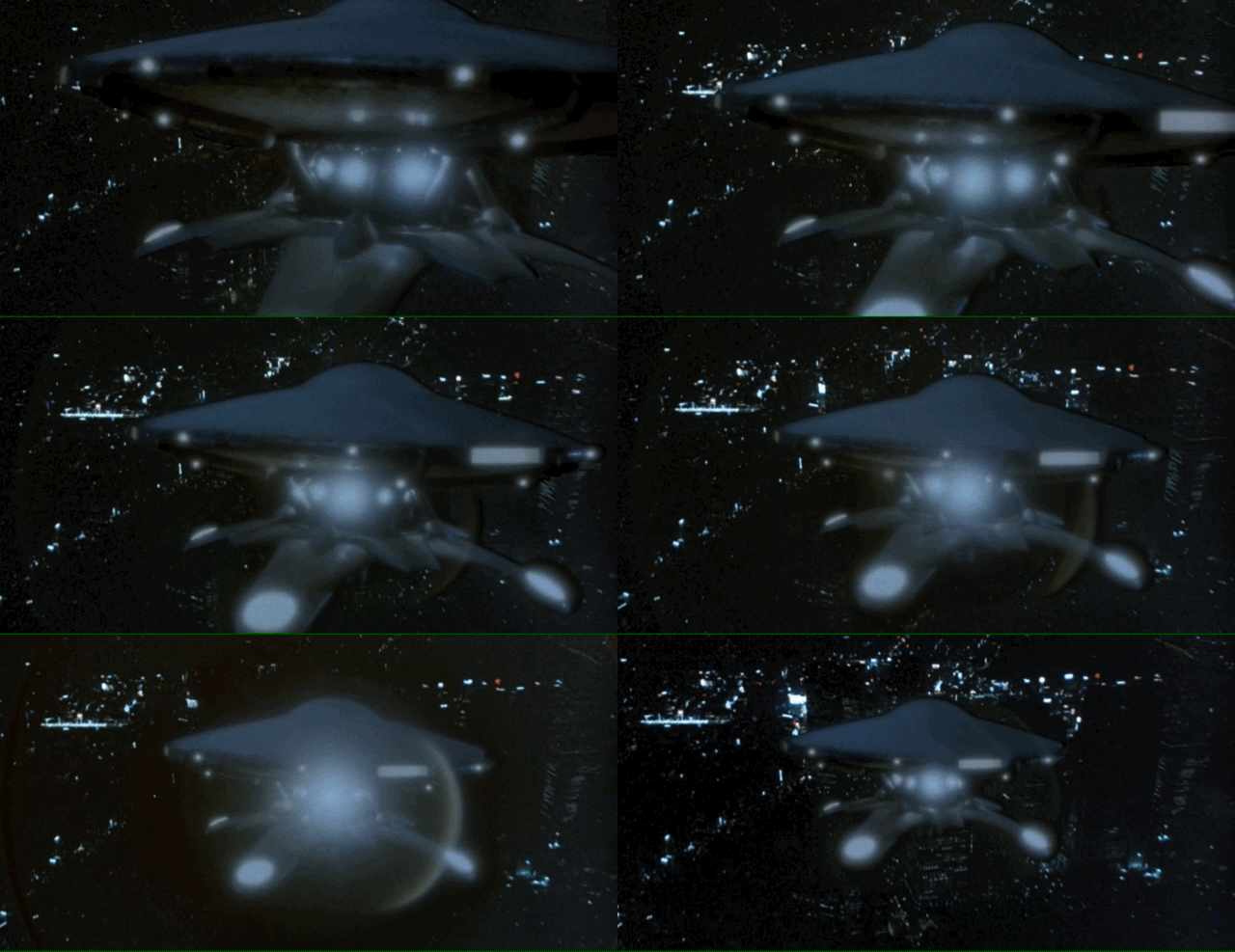
When this movie opens, you can already tell that there’s going to be nonsensical shenanigans throughout. A team of people in the year 2204 have found the remains of King Ghidorah at the bottom of the ocean, missing one head. If you’re one to bet, put some money on this whole thing coming full circle later, because it will. They say Godzilla fought Ghidorah way back in the 20th century, but keep in mind all of the Showa era was erased from continuity, so they’re referring to what’s going to take place in this movie. Another welcome callback is this weird flying saucer approaching Japan, hearkening back to the goofy alien invasion plotlines.
The story revolves mostly around writer Kenichiro Terasawa, suavely played by Kōsuke Toyohara who had a minor part in Biollante. A Weekly World News-esque publication is asking him to write about the UFO, but he says he wants to focus on non-fiction like, uh, a guy who saw a real live dinosaur. The guy in question is at a dinosaur exhibit at a museum ranting on a bullhorn about how he saw one and it protected him on Lagos Island during World War II, and gets escorted out for disturbing the peace. Terasawa nabs an interview and we enter a flashback swelling with solemn and prideful military music as he describes how the dinosaur saved his platoon from the Americans.
While researching this dinosaur story, Terasawa finds one Professor Mazaki, played by Katsuhiko Sasaki, who believes they could still walk the earth in some remote areas. Terasawa’s working theory: the dinosaur was on Lagos Island during the war, got hit by H-bomb radiation, and turned into Godzilla. Terasawa discovers from his girlfriend/former boss Chiaki Morimura played competently by Kiwako Harada, that Yasuaki Shindo head of the Teiyo Group was also a commander on Lagos. Terasawa also recognizes him as the head of “Dinosaur World” as if that’s just a thing everyone knows about. When meeting with Shindo, he first denies the claims, but after hearing the Godzilla theory comes around and gives them some photos from the war. Yoshio Tsuchiya plays Shindo, and he’s been in a few other films including Godzilla Raids Again, and Invasion of Astro-Monster. When approached with role, billed as a character who had a deep emotional connection to Godzilla, Tsuchiya said “I’ve been waiting my whole life to play this role” and he knocks it out of the park. It’s worth watching for his performance alone.
The movie kicks into gear when Japan receives a message from the UFO saying conventional weapons will be useless against them, and they just want to talk! Three humans appear and inform the government that they’re from the future, so the UFO is actually a time machine. They’ve come with a warning: Godzilla will destroy Japan in the 21st century, and they want to help. Government representatives are incredulous, asking “Would Godzilla do that to us? Unimaginable!” and it’s like, how long have you been on the job my dude? Are you somehow cursed with memory of the Showa era, now an alternate timeline? Is this a Mandela Effect situation? As proof that they’re from the future, they bring Terasawa’s published book, the one he’s working on now, so they bring him on board, as well as psychic paranormal expert Miki Saegusa played once again by Megumi Odaka. The plan is to go back in time to Lagos island and teleport the dinosaur away before the H-bomb tests cause him to mutate into Godzilla. Why they don’t just straight up kill the dinosaur with future tech is beyond me. Joining the expedition is android M-11 played by Robert Scott Field, and one of the “Futurians” Emmy Kano played by Anna Nakagawa who brings on board three mini golden dragons with Eddie Munster chia-pet hairstyles called Dorats. The Dorats are genetically engineered and attuned to human emotions through “microwave impulses.” Emmy jokes that they’ll cheer them up if they get lost, but never actually says why they’re coming along, and the rest of the team doesn’t question it further.

A small recon ship makes the trippy journey through time and buzzes past a US Battleship where two Americans who are ostensibly “acting” discuss hopes for the war’s end. All the Americans were played by people who the production team scooped up off of American military bases. The lines of dialogue are delightfully awful, including the response to seeing the recon ship blaze by. One sailor wonders if it could be aliens, and his commander’s like “No one would believe us, but you can tell your son about it when he’s born…….MAJOR SPIELBERG!” You can tell they’re both eating it up. The ship’s controls are also a blatant ripoff of the Back to the Future console, and when M-11 goes to scout the location, there’s this tremendously bad effect of him “running” super fast. There will be another “running” scene later that homage’s the T-1000 from Terminator 2, which should assuage anyone’s doubts of Ōmori’s love for American cinema.
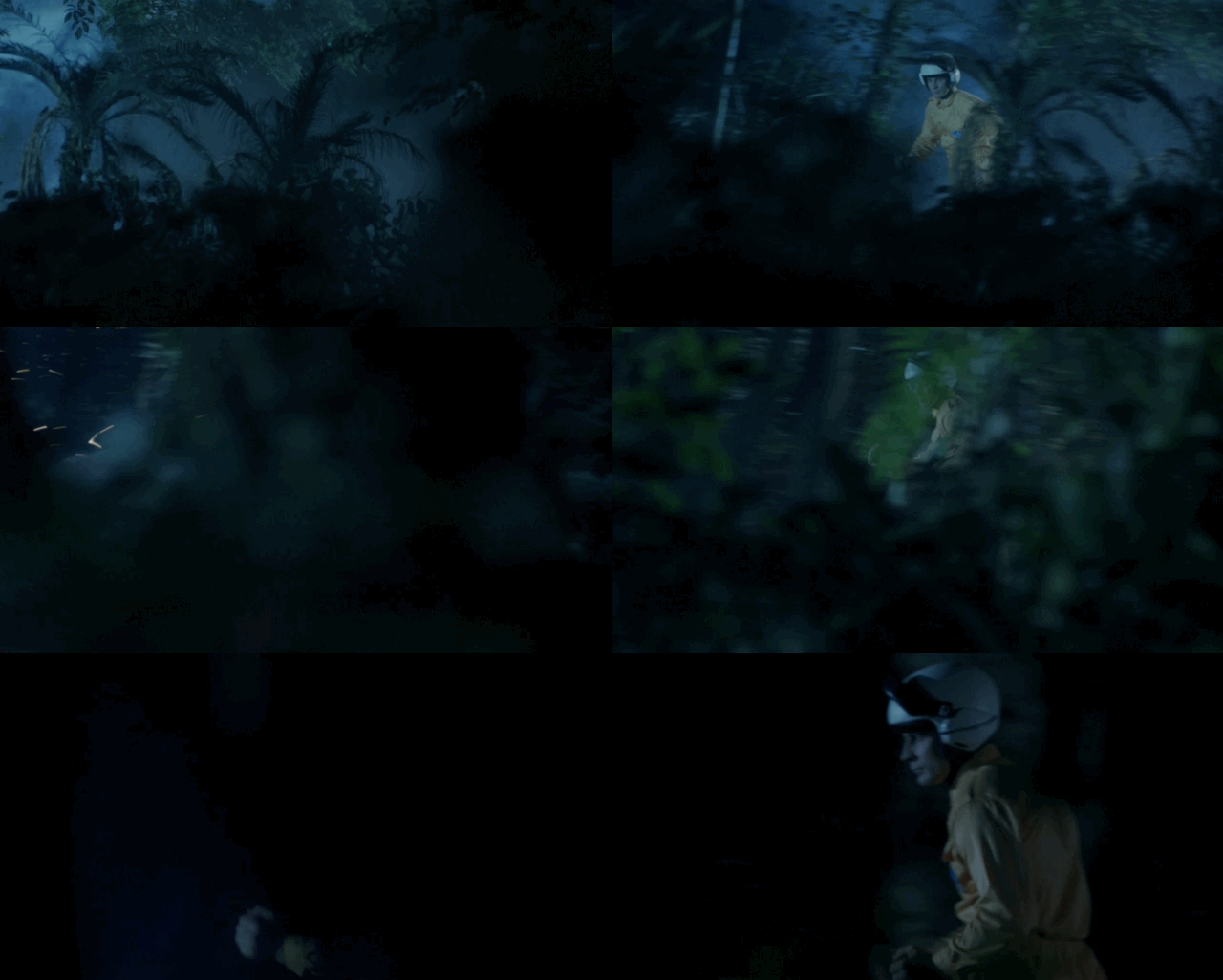
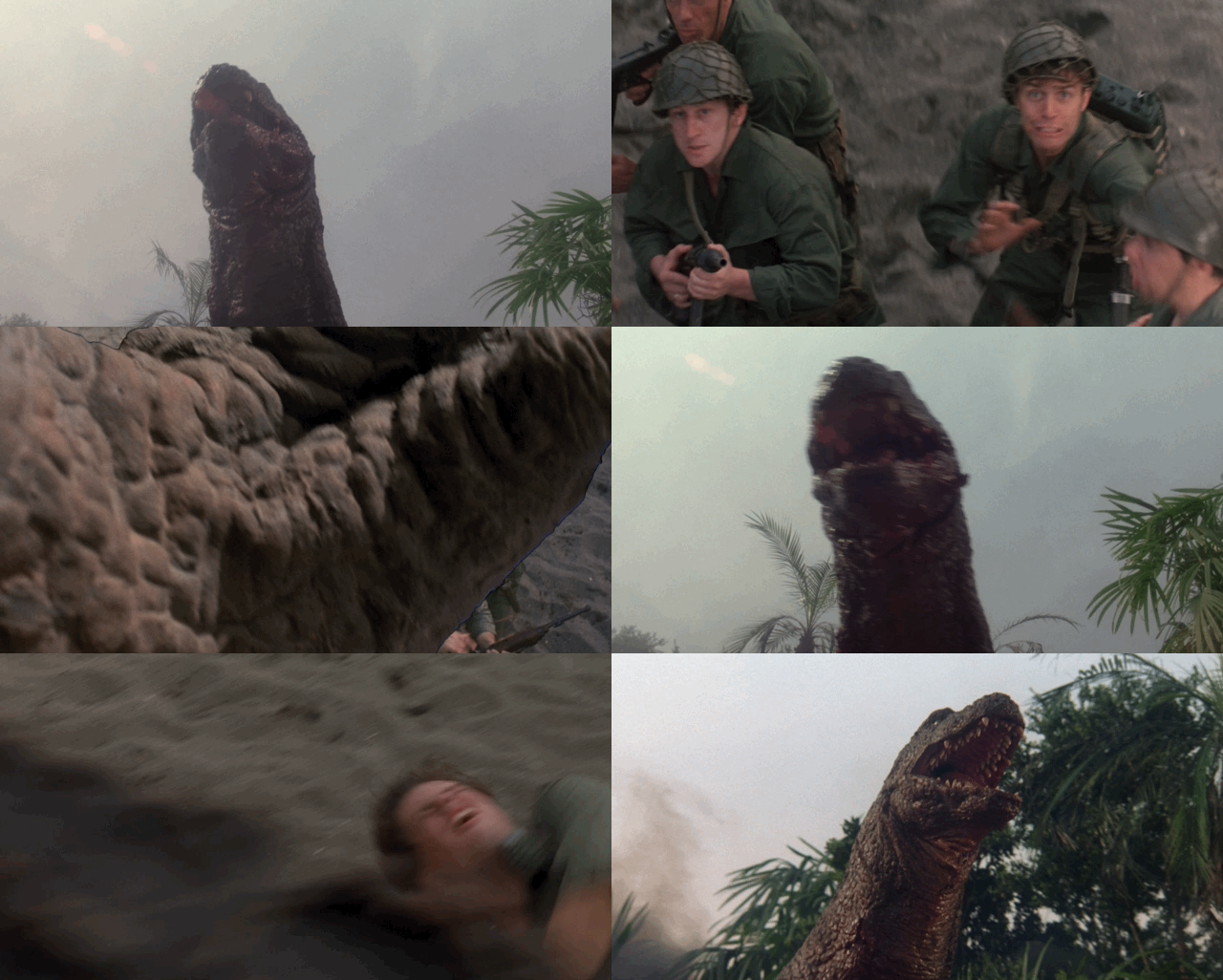
The Americans invade Lagos Island when the dinosaur shows up, not quite a T-Rex, but something with more ‘zilla-like features so the team has named it the Godzillasaurus. The dino is trampling through the jungle, knocking trees over left and right, crushing soldiers beneath them which makes you wonder how there are any trees left on this island. A graphic shelling of the creature from the boat puts him down for the count and the Americans are briefly triumphant (“Take that you dinosaur!”). Godzillasaurus still has some life in him yet and trounces the remaining forces. Ōmori has said that the American crew had a grand old time getting crushed in this cheesy B-movie, and it shows.
Past Shindo gives a moving speech to the injured Godzillasaurus, saying how they can’t carry it or help it, but hope its wounds will heal and that they’ll never forget its sacrifice and bravery. With Godzillasaurus injured and immobile, M-11 teleports the dinosaur far off into the sea. We see Emmy releasing the Dorats, and when Miki asks where they are, Emmy’s just like “M-11, time-warp!” Ya know, for someone with ESP, Miki really isn’t picking up on the nefarious motivations here. The leader of the Futurians, Wilson, played by Judo champion Chuck Wilson informs us that Godzilla has been erased from history, but King Ghidorah has taken his place. Shocking! Yeah those little gremlins Emmy set loose got bombarded with radiation and combined into the iconic monster. But for some reason, she looks surprised, even though she’s the one who set them loose. We can see King Ghidorah wreaking havoc, and his design hasn’t been updated much for the Heisei era. You can see a lot of wires in this film, but that’s due to all of these shots being filmed in the day, as opposed to night where they’re easier to hide.
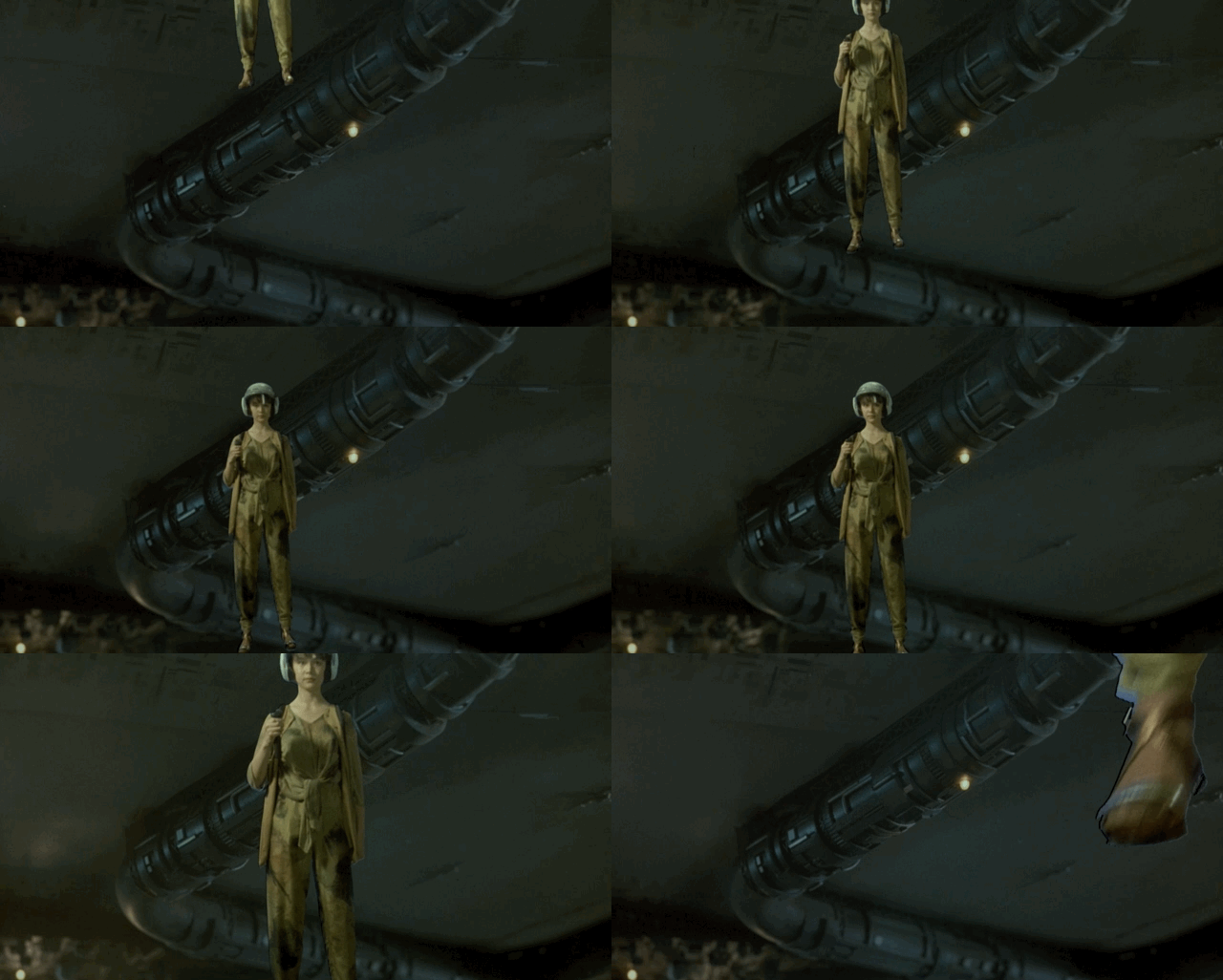
When Wilson reveals that they’re going control King Ghidorah and head north destroying the entire country, Emmy freaks out and acts betrayed. But like…what did you think was going to happen, Emmy? You let the Dorats loose! Best not to think too much about it, or pretend that someone else let the Dorats loose. She takes a jetpack and leaves the UFO to warn Terasawa, and the effect is green screen cheese. We see Terasawa in his apartment and there’s a call that goes to voicemail from Chiaki asking about the Godzilla book…but Godzilla was erased from history so how do either of them know about him? Again, just best not to think about it.
Emmy explains the political makeup of the future: Japan becomes an economic juggernaut, and all other nations join forces to balance power between themselves so each nation is equal, but Japan refuses to join this Earth Union. She says the plan is to destroy Japan before they can buy up a ton of other nations and become bigger than the US, China, and South America combined, and to take Godzilla out of the picture. An interesting point here is that Emmy says they can’t defeat Japan in the future, because all nuclear weapons are banned, making it sound like nukes should be a viable option. The Prime Minister asks if they can use nuclear blasts to turn the relocated dinosaur back into Godzilla. Mr. Shindo just so happens to have a secret nuclear sub, kept outside of Japanese waters. Apparently the original plan was that the Japanese government created this secret sub, but the JSDF strongly suggested that even in fiction the Japanese military should never own or develop nuclear weapons. It’s pretty bonkers how they’re setting up atomic missiles to save the day in this one.
It turns out Miki can still feel Godzilla’s presence, and that an old Russian submarine sank right near the Godzillasaurus, mutating him. It seems Godzilla’s existence in time is entirely inevitable. When Shindo’s sub encounters him, he destroys it, absorbing the nuclear energy and becoming even larger than before. For those keeping track at home, in the Showa timeline the original Godzilla was disintegrated by the Oxygen Destroyer, and Godzilla Raids Again introduced a new Godzilla that was just another mutated dinosaur of the same species, and that’s the Godzilla we see until 1984. In the Return of Godzilla they just ignore that the Oxygen Destroyer disintegrated Godzilla, and what we see in that movie and Biollante is the original. From this point on, the Godzilla we see isn’t from 1954, but the dinosaur at the bottom of the sea mutated by radiation from both Russian and Shindo’s subs in 1992. This time-travel retcon is kind of bullshit, but it’s something that I don’t think will come up again so if you don’t like it, you can safely ignore it.
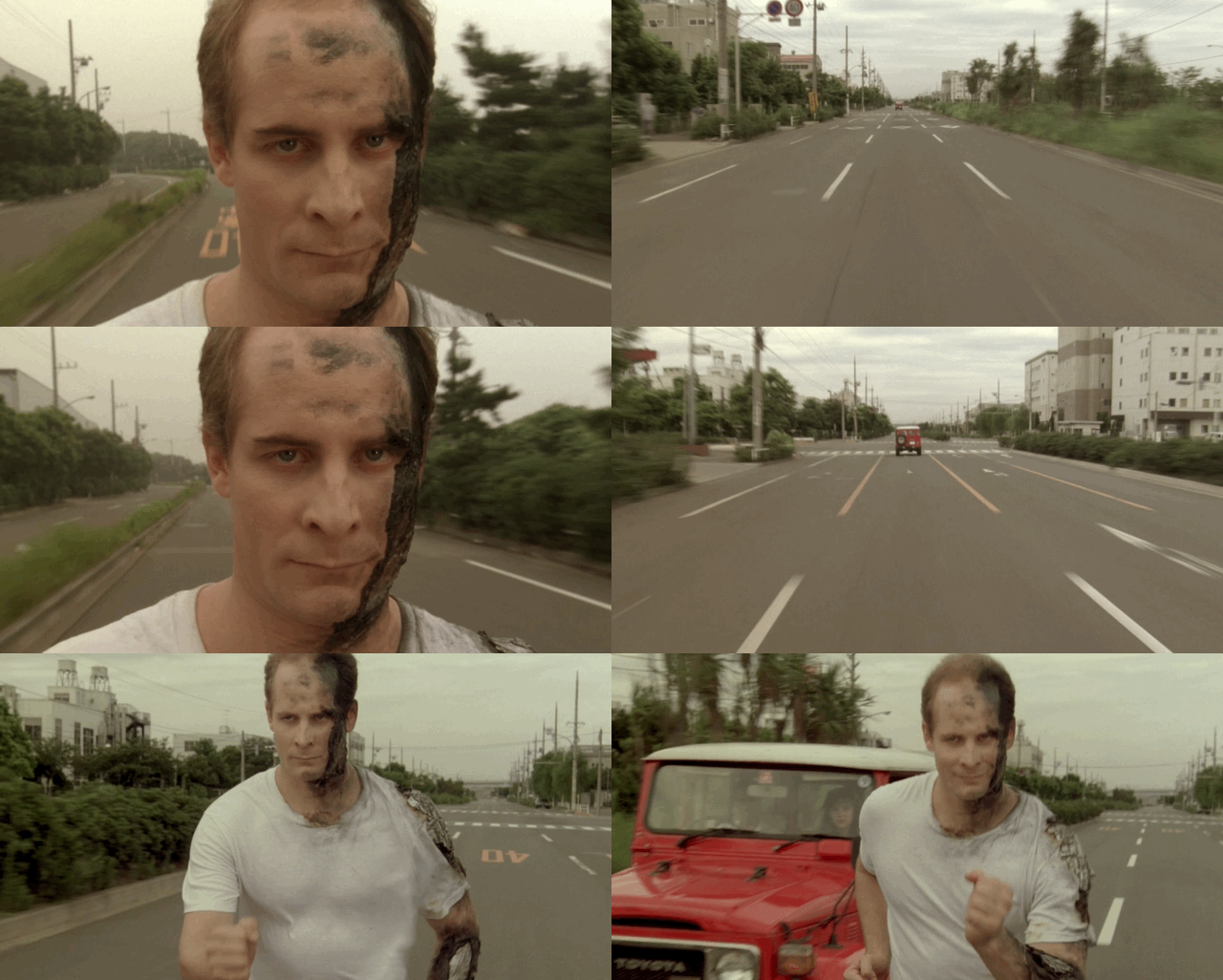
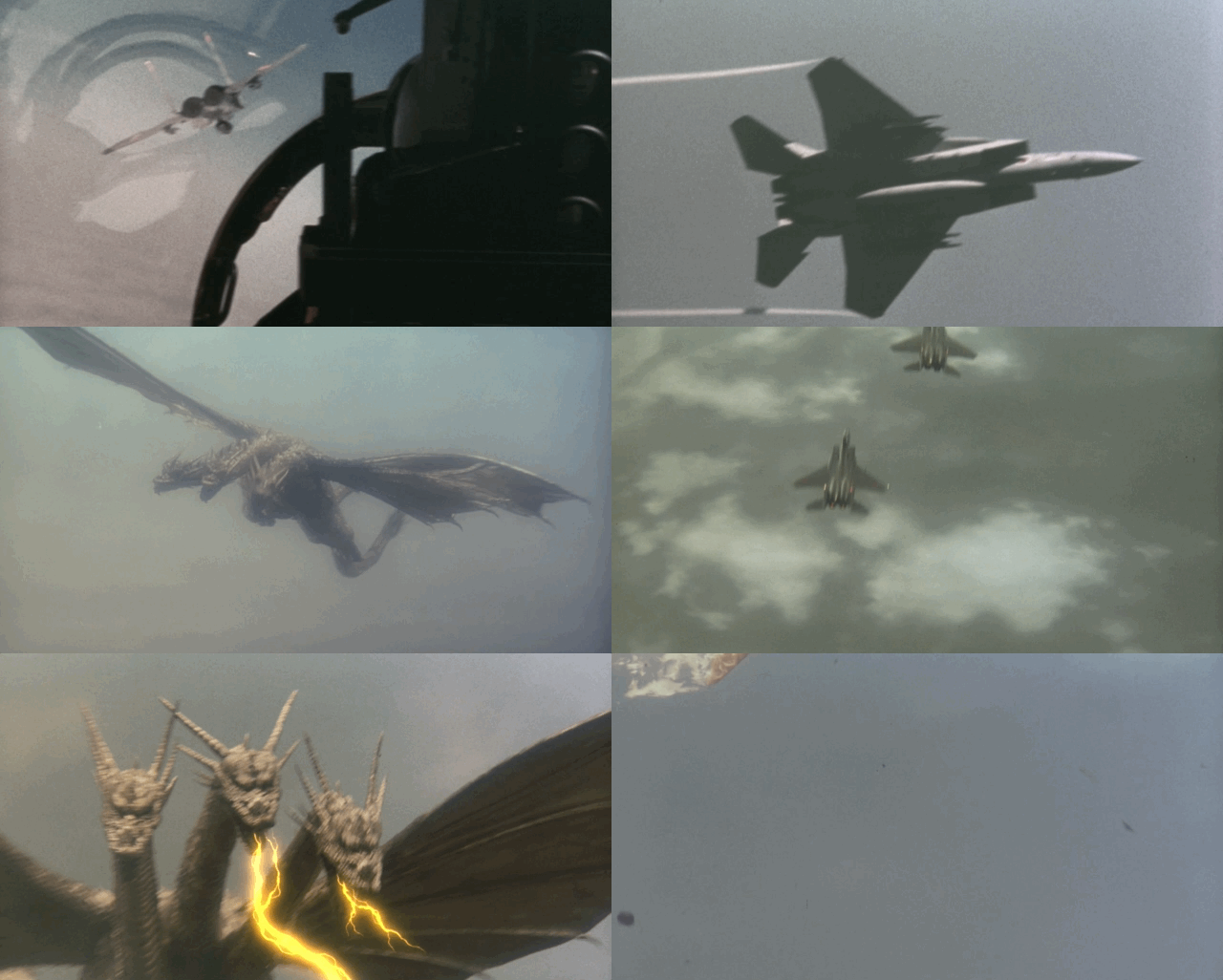
M-11 finds Emmy and Terasawa driving around town and after a bit of a struggle with some out of place discordant piano music, he has his dollar store T-1000 moments and chases their Jeep on foot. Ifukube’s score has been pretty good, but does not work at all in this scene. M-11 brings Emmy back to the UFO, but she manages to replace some chips in his brain with ones that give her control. Godzilla proper will finally emerge from the deep, and when he does, there’s some gentle harp music that immediately transitions into the classic Godzilla theme. The fact that the harp only lasts for a couple seconds is kind of hilarious; I have no idea why it’s there. Before engaging with Godzilla there’s a great aerial battle between King Ghidorah and the Japanese air force with some great stock footage provided by the JSDF. We some incredible point of view aerial shots that haven’t been in a Toho film since Rodan.
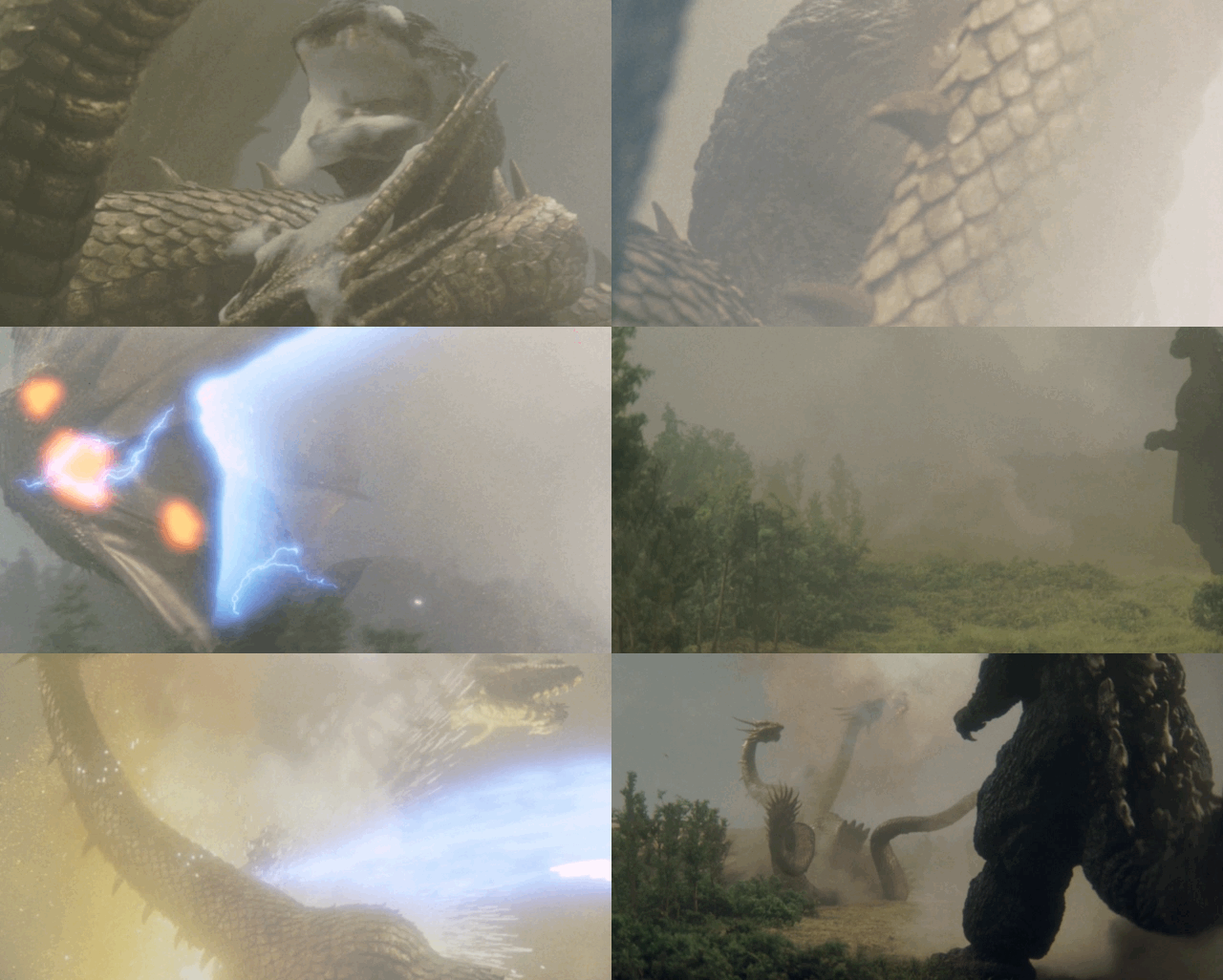
The Futurians send Ghidorah to attack Godzilla, and the fight is mostly in a field saving costs, but also has a nostalgic feel to the original 60s film. While the battle rages on, Emmy dons her black pleather demolition jacket to plant explosives on the King Ghidorah control unit on the UFO. Thrown off by the shock of the control unit being destroyed, Ghidorah lets his guard down just long enough for Godzilla to grab his tails and slam him against the ground. M-11 kills like 40 people while tossing out some lighthearted quips, which in a sense really does feel like a Schwarzenegger move. When Ghidorah comes to his senses, he wraps his center head around Godzilla’s throat, causing him to foam at the mouth. This visceral choice makes Godzilla’s escape extremely satisfying as he uses his nuclear pulse to shrug off King Ghidorah and blast that middle head clean off his body. The scene is one of the best mixtures of special effects and visual effects that we’ve seen in the series so far.
The Futurians’ get their comeuppance when Emmy and M-11 in the recon ship teleport the UFO right into Godzilla’s path and he annihilates their ship before blasting the wounded King Ghidorah into the ocean. In the Showa era, the film could have ended here, but the team wanted to keep Godzilla a villainous force of nature, so he continues inland to attack the city. There’s some fantastic shots of Godzilla stomping through Tokyo at night where his eyes are shrouded in darkness, only showing small glimmers reflecting the flames around him. Shindo and Godzilla have heartfealt stare-down as they both contemplate their relationship to each other, before Godzilla eventually destroys the building with Shindo inside.
All hope seems lost, but Emmy has a brilliant plan: go back to the future and use 23rd century technology to bring King Ghidorah back to life as a cyborg, then come back to the past to finish off Godzilla. The whole premise at this point is completely insane but entirely worth it as we get to see Mecha-King Ghidorah when Emmy returns piloting it with M-11 as MKG’s onboard computer. This design is so friggin cool, and it’s a travesty that it isn’t used in any other film (though the remains are). King Ghidorah’s wings are replaced with metal ones, a robotic chest, and a very slick angular middle head that shoots purple and teal beams alongside the other heads classic yellow ones.
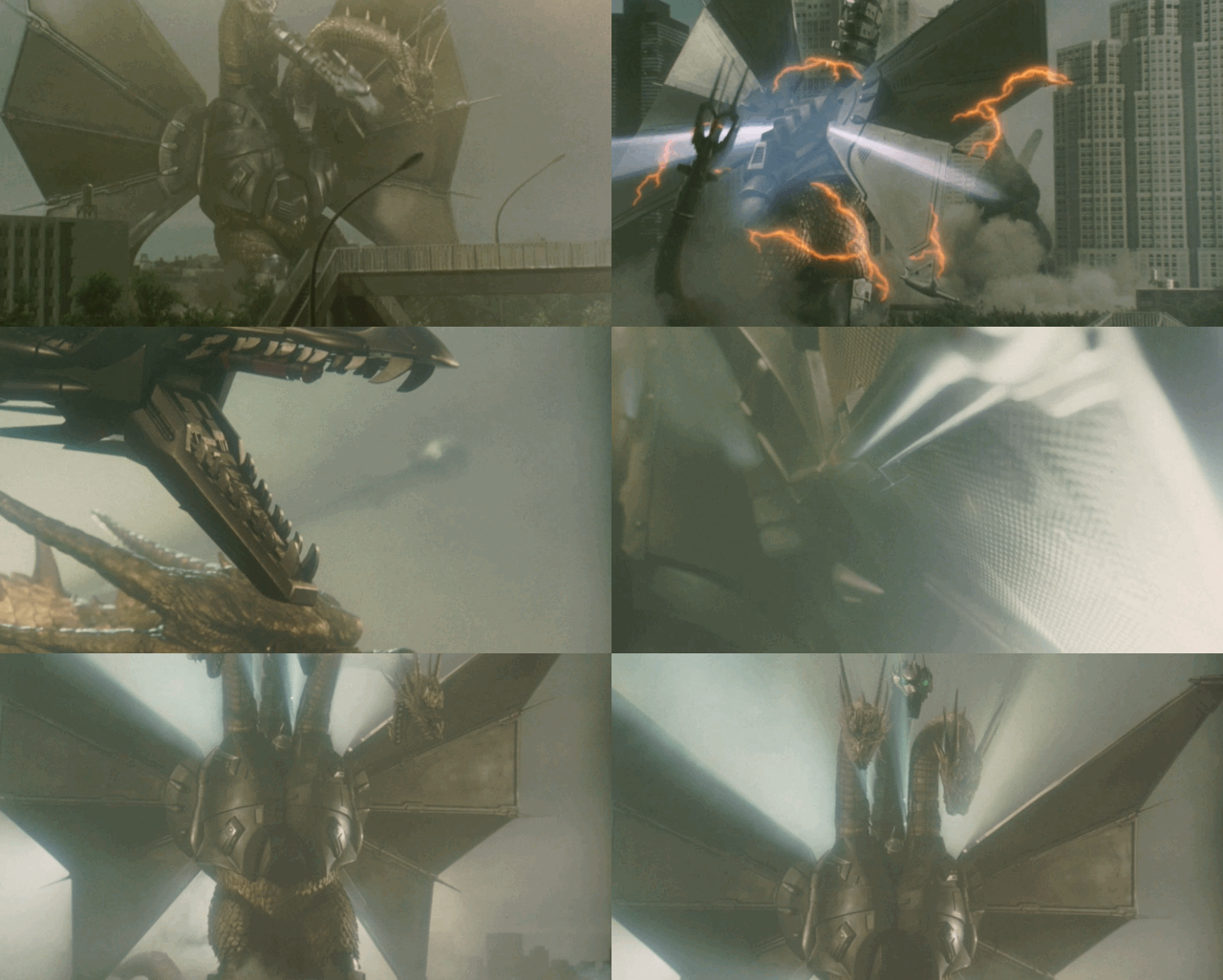
Mecha King Ghidorah exchanges blows with Godzilla for a while before firing a set of grappling hooks and flying off out to sea where they both crash. Emmy is able to eject an escape pod and travel back to the 23rd century, but not before informing Terasawa that she’s his grandmother, because there just weren’t enough time travel shenanigans to begin with. Finally, Godzilla awakens on the sea floor, implying he’ll be back soon! Thanks for sticking through another long post, this one was just too silly not to cover in detail. Who would have thought the dominos would start falling with one Commodore Matthew Perry forcing Japan to open trade relations and end up with a time-traveling cyborg space dragon?
 Godzilla Vs...!
One comment