
Long time readers will know how much I dig Norman Borlaug and genetically modified crops. His work on the Green Revolution using genetic engineering to increase crop yields has saved hundreds of millions of lives. By the 1980s, there were plenty of critics, and GMOs became, and still are, a cultural boogeyman. Critics derided it as “unnatural” and deemed it “Frankenfood.” As Borlaug once said “They’ve never experienced the physical sensation of hunger. They do their lobbying from comfortable office suites in Washington or Brussels. If they lived just one month amid the misery of the developing world, as I have for fifty years, they’d be crying out for tractors and fertilizer and irrigation canals and be outraged that fashionable elitists back home were trying to deny them these things.” He did take critics seriously though, as some claims held merit. The use of antibiotic resistant genes is used heavily in engineering, and if antibiotic resistance spreads into the biome, it could pose a major public health crisis. The fear of unexpected consequences in the field of genetics has been a common trope in science fiction from The Island of Dr. Moreau and The Boys From Brazil, to Jurassic Park and Gattaca. In updating the Godzilla series for the modern age, tapping into these fears was a logical choice, and fit the original anti-nuclear themes to a tee. While I personally feel the fears are overrated, Godzilla vs. Biollante is hands down my favorite of the series.
In 1985, The Return of Godzilla wasn’t the slam-dunk hit that it should have been. Producer Tomoyuki Tanaka announced a sequel, but was hesitant to put out a new film until he felt audiences were ready. In America, there was one film that convinced him to pull the trigger: the 1986 comedy-musical-creature feature Little Shop of Horrors. If you haven’t seen this film, do yourself a favor. It’s based on a 1982 musical, which was based on a 1960 Roger Corman film (featuring a young Jack Nicholson) about a plant that eats people. While the plot had not been decided for this new Godzilla production, Little Shop may have planted the seeds for choosing the Biollante plotline. If Return of Godzilla felt like it had a foot in both worlds technically being produced at the tail end of the Showa Era, Biollante is a great launching point for films actually made during the Heisei Era. Most of the cast and crew had never worked on a Godzilla film before, and this one more than Return really sets the stage and lays the groundwork for the next decade. It’s the first to reincorporate the “vs” format, and we’ll see some long-running plotlines and actual returning characters (not just returning actors playing new parts).

Tanaka hired director Kazuki Ōmori, who had to overcome some animosity, having blamed Tanaka for Godzilla’s decline. Ōmori would pick the Biollante story as the winner of yet another public contest and flush out the script from there. The original story was written by a dentist, Shinichiro Kobayashi, imagining the grief of what it would be like to lose his daughter. Ōmori further wanted to explore themes of femininity, embracing the flower as an equal but opposite force to Godzilla’s masculinity. The original concept even had a human woman’s face on the plant monster, and while that could have been some crazy John Carpenter-level shit, the final product is much more in line with the series style.
Kazuki Ōmori hadn’t been shy about how he would have rather directed a James Bond film, and if that’s your thing, you’re in for a treat because there’s SO much espionage in Biollante. Similar to Ghidorah, the Three Headed Monster, there’s plenty of secret agents and shootouts. I really love Ōmori’s structuring of the film around these digital alerts explaining the threat levels of the Godzilla monitoring system. We’re immediately introduced to a breakdown of levels 1 through 4, the first being issued when any “scientific, geological, meteorological, or psychological evidence” of Godzilla has been confirmed. Foreshadowing! It also puts in perspective how much of a massive force of nature Godzilla is, being able to exhibit geological and meteorological signs of his activity. The next is actual physical evidence such as voice and movement, the next when he visually appears, and lastly when there’s a high probability of him attacking a specific site. These digital alerts printed across a late-80s computer screen will appear throughout the film to punctuate the scenes and ramp up tension, and it works so well!
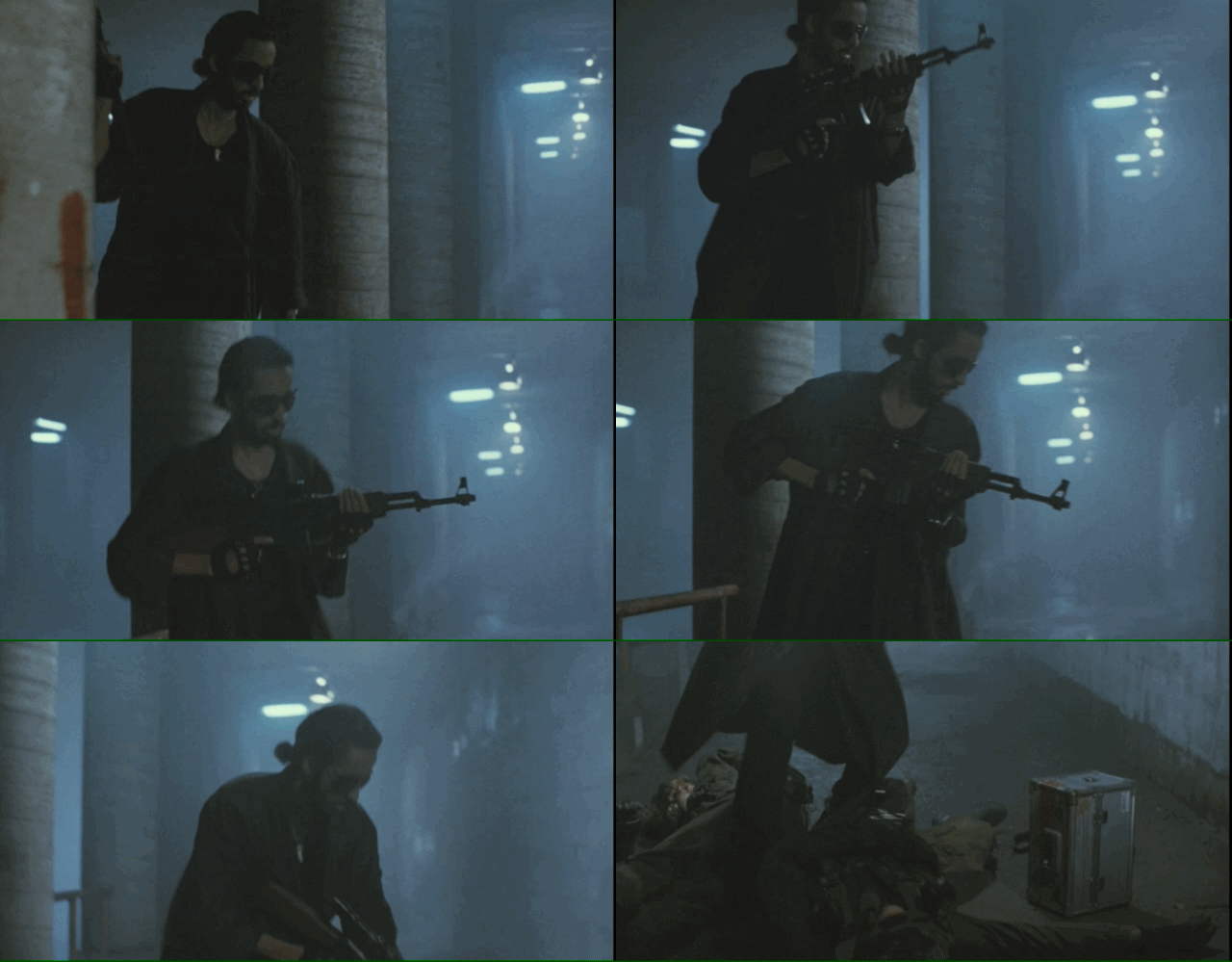
After a recap of Return of Godzilla, Biollante picks up right where the former left off. Tokyo is still in ruins, and scientists comb the debris for samples of “Godzilla cells.” Some suspiciously white soldiers get their own sample before being recognized and chased down by the Japanese military before eventually getting killed by a mysterious middle eastern assassin played by Manjot Bedi, who steals the cells for himself. This dude is the epitome of late 80s cool. He’s wearing his sunglasses at night, he’s got slicked back hair, a ponytail, fingerless gloves, dressed all in black, wearing a duster, and a lion-tooth necklace. Jesus christ, this guy oozes radical badass. The music in this scene accompanies him perfectly; it’s a remix of the original Godzilla theme, but all 80s-pop’ed out with bitchin guitar riffs, thrumming bass, and some high-pitched violin and trumpets to round it out. After the hitman takes a short boat ride to “Saradia,” a fictional country standing as a paper-thin metaphor for Saudi Arabia, we meet Dr. Shiragami, played by Kōji Takahashi, and his daughter Erika, played by Yasuko Sawaguchi. Yasuko, who played Naoko Okumura in Return of Godzilla is the only returning cast member, and she doesn’t last long. There’s an attack at the Saradian research facility she and her father work at, and that’s it for Erika…or is it?
Western audiences may assume that because this takes place in the middle east, the attack was conducted by some insurgent group, but no: the real enemies of Biollante are American; specifically agents of a company called Bio-Major. It doesn’t put the US in a good light at all, and it’s kind of hilarious. The director of the research institute jokes about how pissed off the US will be when they use the Godzilla cells to engineer their super-grain that can grow in the dessert and unseat them as the largest exporter in the world. Death-for-profit is the name of the game for all the American characters.
5 years later, we meet Miki Saegusa, played by newcomer Megumi Odaka, and she does such a great job that they bring her and her character back throughout the Heisei era, a rare bit of continuity we haven’t really seen before. Miki’s character is fantastic. She’s the number one psychic at the Mental Science Exploitation Center, and working with plants which have their own fields of mental energy. I told you shit was gonna get weird! This is just the tip of the iceberg. Showing Dr. Shiragami around is Asuka Okochi, played by Yoshiko Tanaka. In making small talk, it comes out that her father’s project is trying to preserve Nobel Prize winner’s semen for the future production of geniuses. Uuuhhh, that’s eugenics you nazi bastard! It’s no big deal to Dr. Shiragami though, as he mentions that he was previously driven out of the country for his unorthodox ideas. Spying on the three are a pair of American agents from Bio-Major, and spying on them is none other than our Saradian assassin, known only as SSS9.
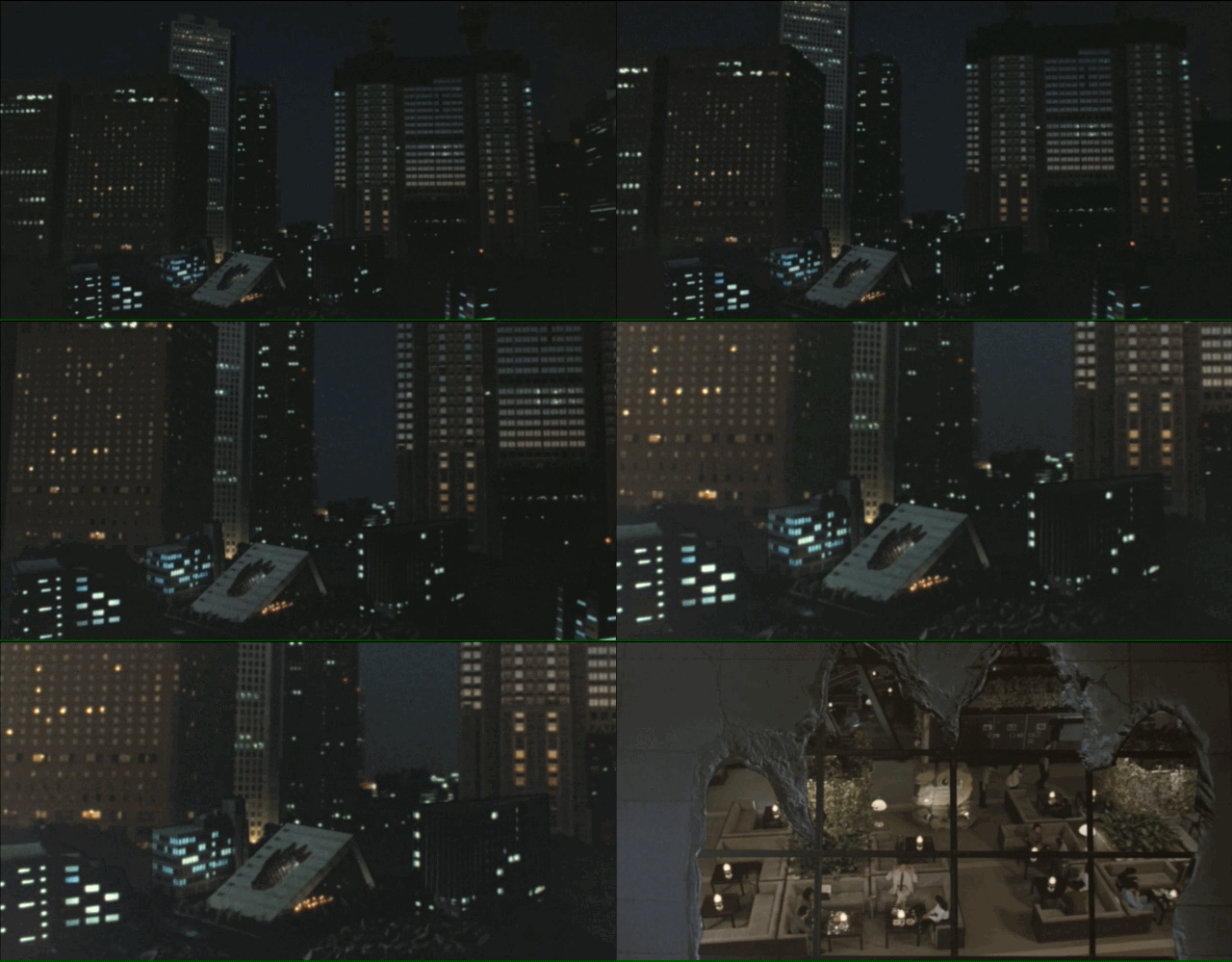
The transition to the next scene had my jaw dropping. There’s an external shot of some apparent wreckage from Godzilla’s last attack, and there’s a cartoonishly perfect footprint through the it, and we see that it’s the Godzilla Memorial Lounge where Asuka is meeting with her boyfriend Kazuhito Kirishima, also a geneticist, but with some misgivings about her father’s work, fearing like the atom bomb, we may be opening a new Pandora’s Box of unknown horrors. So to recap, we’ve now got a plot about corporate espionage chasing Godzilla cells, a psychic research center, and some rival geneticists. I wish I could say this is it, but watch out, there’s more!
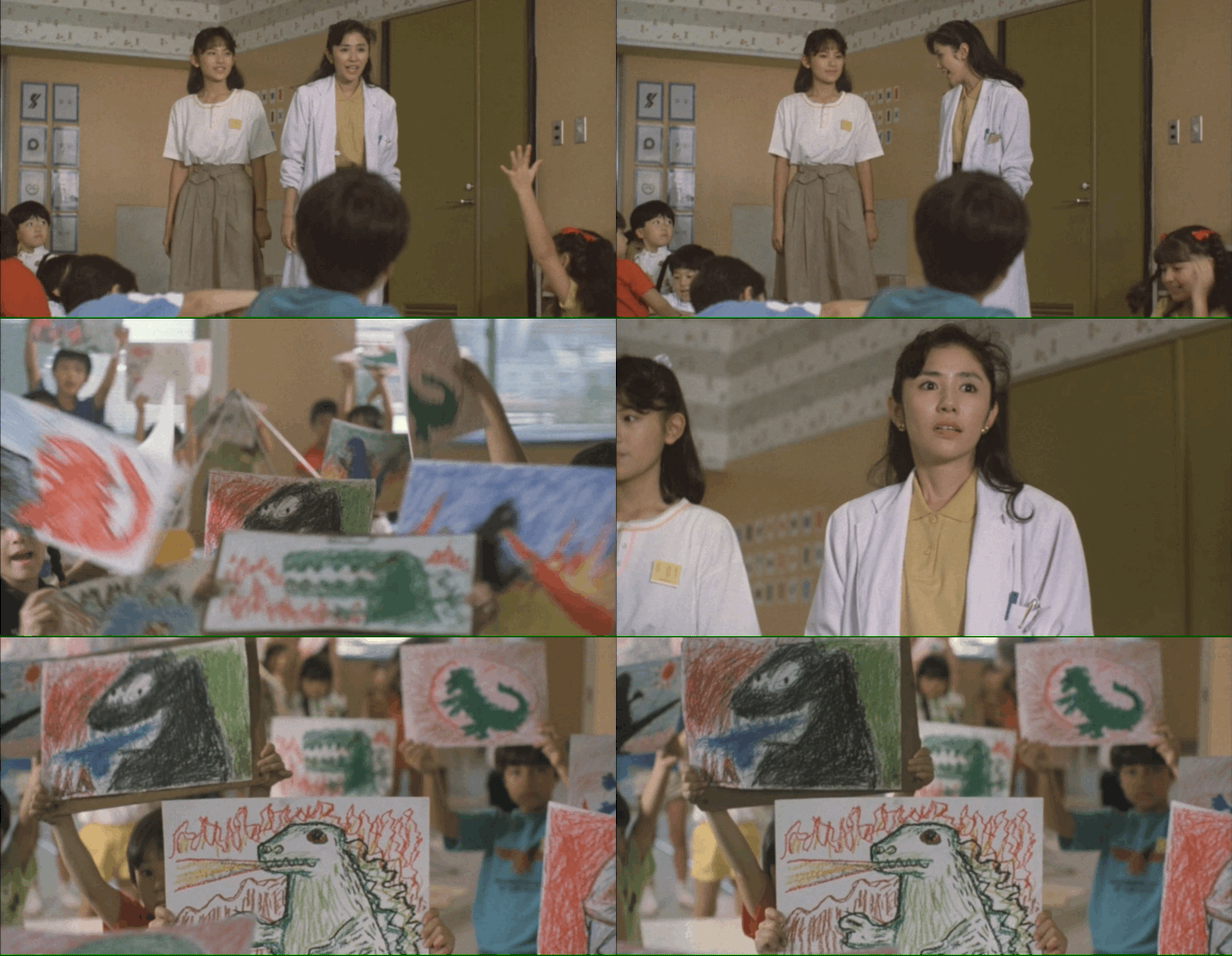
Another amazing scene follows when Asuka finds out from Miki that the school children at the Japan Psyonics Center have all had the same dream. Miki asked that they draw it out and we get the classroom full of kids gleefully holding up these crayon renditions of Godzilla wreaking havoc and cities on fire! This is a common trope across movies and literature, but the fact that they’re all cheering here makes it so damn funny. In yet another plot thread, Asuka approaches Colonel Goro Gondo, head of the National Land Bureau’s Godzilla unit, apparently to monitor and respond to Godzilla activity. There’s a couple of neat easter eggs here: Gondo has a 3 foot statue of Godzilla in his office, and the design is distinctly the suit from King Kong vs. Godzilla. Leaning against the wall is an Oxygen Destroyer prop too. Toru Minegishi plays Gondo pretty well, he’s a grizzled veteran with a carefree nihilistic sense of humor, joking at one point how he hopes Godzilla will show up; otherwise he’d be out of a job. He’s on the phone with our last main character, Major Sho Kuroki, played by Masanobu Takashima who’s chosen to command the Godzilla response task force, and control the Super X 2, an improved military airship. They all bring Miki along on a geological survey, and she picks up that psychological evidence that Godzilla’s awakening, and the Alert 1 text is typed across the screen, kicking the movie into first gear!
While Gondo discusses strategy with Kuroki, it’s revealed that the Japanese government has been working on an Anti-Nuclear Energy Bacteria, but there’s just one catch: they need DNA from Godzilla cells to splice in the nuclear-digesting genes. Man, everyone wants their hands on these cells! In order to get the cells, they talk with Asuka’s weirdo eugenics-project father, and if you’re watching the English dub, he keeps ridiculously pronouncing it “Godziller.” They try to recruit Dr. Shiragami, but he’s vowed never to work with Godzilla cells again. They try pulling the patriot card and he’s like “Dude, my daughter was more important to me than my country, and she’s dead now.” But, after doing some Night Science, he decides that joining the project will be the only way…to save his daughter! Seriously love that he starts splicing Godzilla cells into plant cells during a lightning storm at midnight. Like is he self aware about how much of a mad scientist this makes him look like? Not at all.
Alert 2 passes with little fanfare, but still gets your pulse elevated. We get a tour of the Super X 2, now with a “Fire Mirror” designed to reflect Godzilla’s atomic breath back at him. The American Bio-Major goons are raiding Dr. Shiragami’s lab in Japan, and have a brief shootout with agent SSS9, presumably also after the G-cells and/or Anti Nuclear Bacteria. The thugs are not long for this world, and we see our first real groovy effects magic. Koichi Kawakita, who had assistant directed effects under Teruyoshi Nakano most notably in Hedorah puts together some incredible shots of these guys getting attacked by Biollante vines. It’s so schlocky, and if you haven’t fallen in love with this movie yet, this scene is sure to win you over.
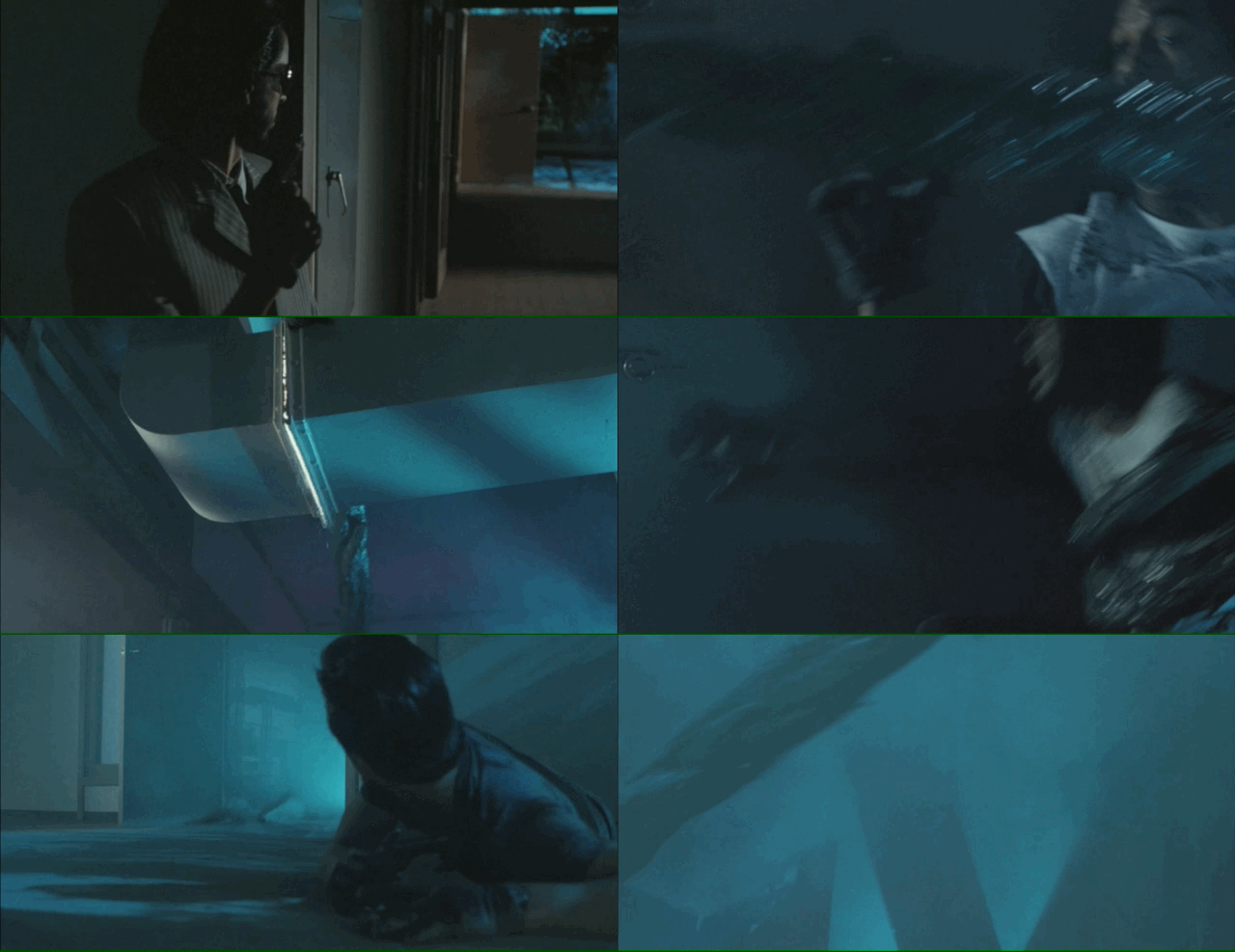
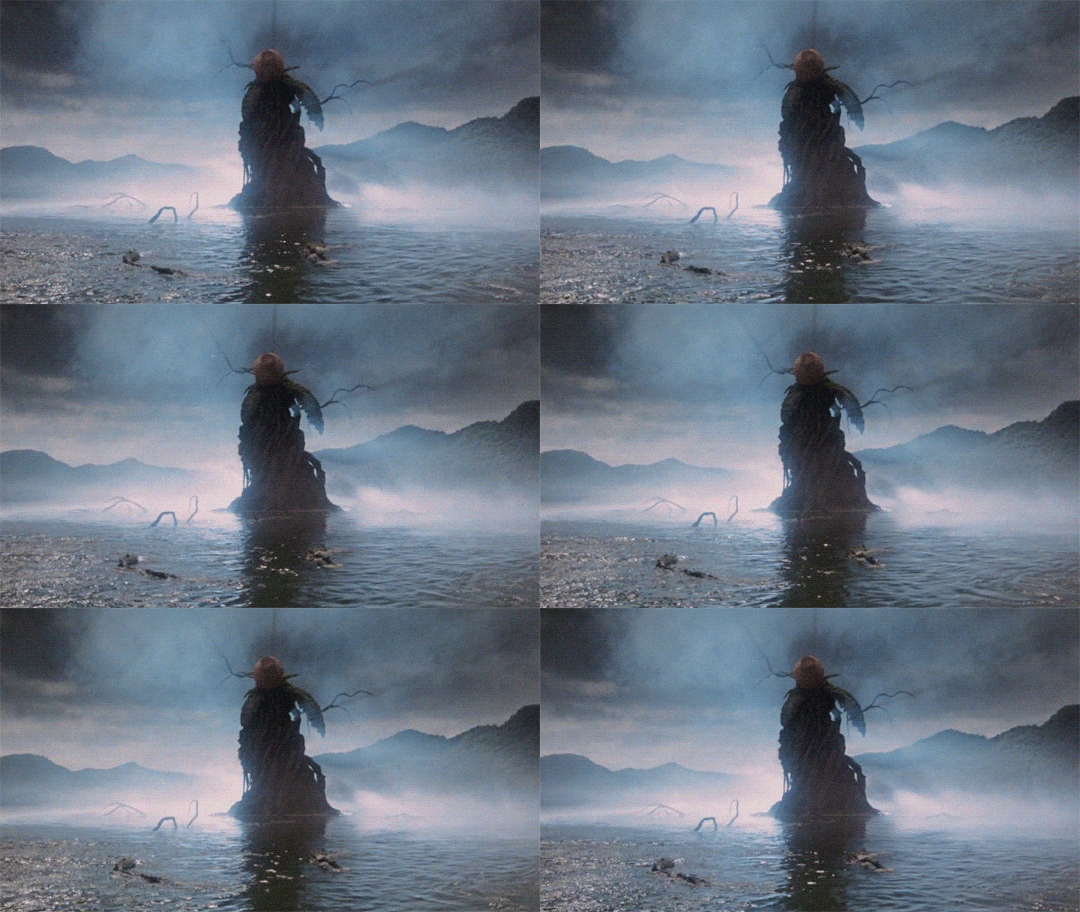
When Shiragami and Kirishima discover the destroyed lab, complete with giant Kool-Aid Man sized hole in the wall, Shiragami admits to splicing the Godzilla cells into his rose, and says “Yes I thought… I think now I may have made a mistake…” YA THINK, DOC?!? Bio-Major sends a threat demanding the bacteria, or else they’ll set off an explosion and wake Godzilla. It’s so incredibly funny that the middle east features prominently, yet the Americans are the terrorists in this film! It’s quite the reversal from all of western media from the past 40 years. When they discover Biollante, now towering over 80 feet tall in the middle of Lake Ashi, it has a cute little rosebud for a head. The shot is actually something special for Japanese cinema; being the first to composite 35mm and 70mm to create a scaled perspective between the onlookers and the monster. Koichi Kawakita masterfully blends matte backgrounds in this movie, and in the lake in particular also uses reflector lights to make the waves in the pool look more realistic and add depth.
Our main team observes Biollante, and Dr. Shiragami takes some creative liberty saying it’s named after a plant spirit in Norse mythology – no such spirit exists. But this one, he adds, has a human soul! Yes, you guessed it, the soul of his daughter Erika is in the creature, confirmed by Miki and Asuka. During the ransom handoff of the bacteria to Bio-Major, SSS9 comes in and screws everybody’s day up. Goro and Kirishima try to stop the countdown, but if they did we wouldn’t have the rest of a movie! And Godzilla hasn’t even shown up yet! Goro is notably nonchalant about the whole thing, just saying “Amen!” before the bombs go off and Godzilla struts his stuff into the film in spectacular explosive fashion. Queue Alert 3!
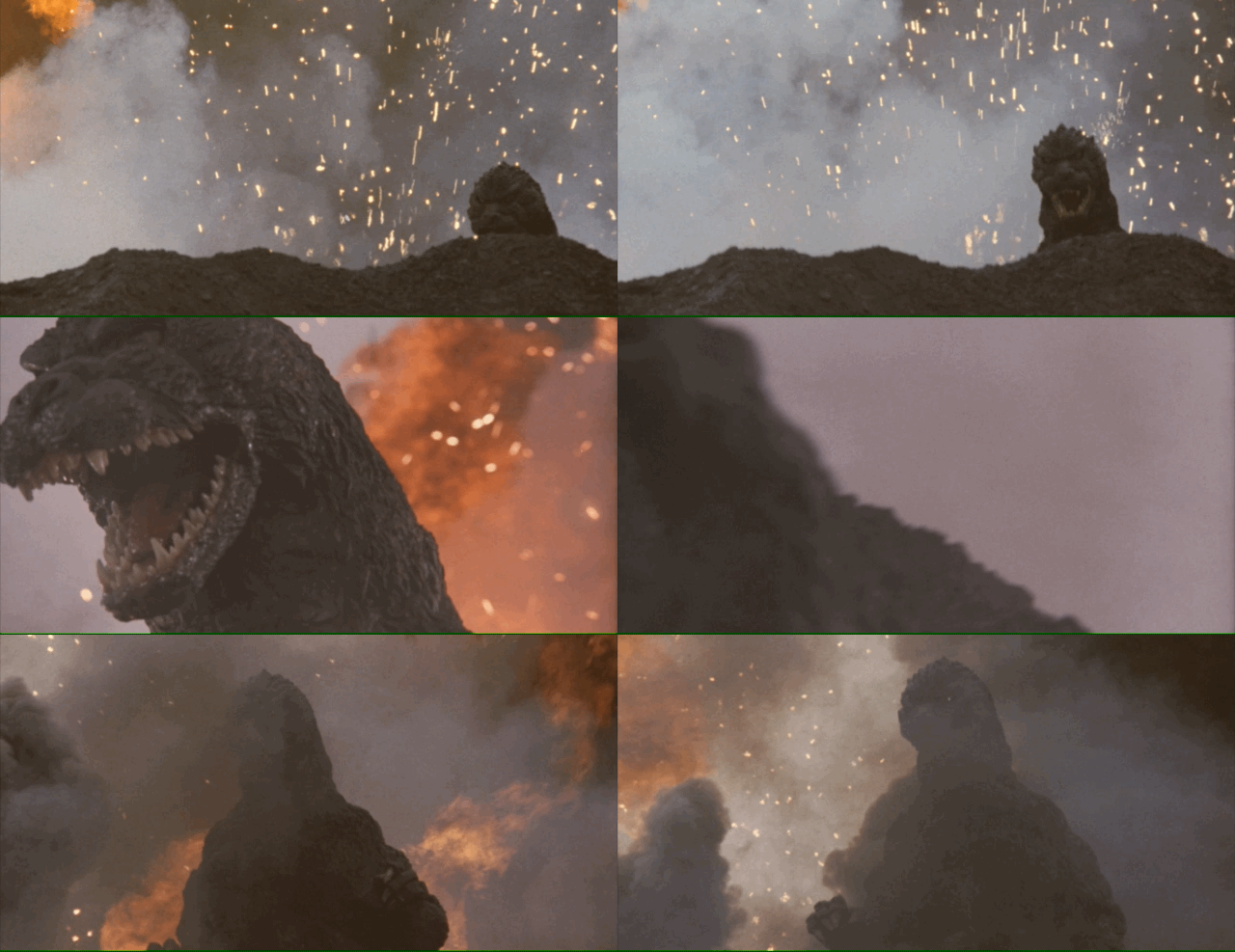
This suit was designed new, and would cement Godzilla’s look for the rest of the Heisei era, with some small variations. The neck is a bit longer, and the whites of the eyes have been eliminated. He has a much more feline snout and facial structure, drawing from the lion-like look of Japanese dragons. The suit and the cybot were built to the same scale using the same molds making far and close-up shots much more consistent. Another improvement was that actual lights were used inside the dorsal plates, though they electrocuted suit actor Kenpachiro Satsuma the first time it was tried. The life of a suit actor was a dangerous one, because the suit clocked in at 176 pounds, it would have been dangerous if Kenpachiro fell over into the water. They also used real explosives and model rockets so he had to wear survival goggles even inside the suit. What a champ!
Making a guest appearance is heavy-metal vocalist Demon Kogure in full satan costume hosting an Elvira-esque television show that gets interrupted by news of Godzilla’s appearance. It’s so fun that they brought him in! The JSDF tries to combat Godzilla, and the naval battle is a great use of effects, showcasing the new suit, and containing some really dynamic shots using cameras held on rafts. The cameramen had to hold cameras above their heads to get the point of view shots from the Super X 2, which hovers above the water instead of at sea level. One of them fell off the raft into the pool trying this maneuver, which really makes you appreciate everything these folks did to put together quality practical effects.
A reporter confronts Dr. Shiragami grilling him like “yo, what were you thinking combining Godzilla cells with plant cells?!?” and he’s completely nonrepentant! Just complaining about how people criticize science without looking to the future. As if to say “shut your mad science hole, doofus” a very Little Shop looking toothy mouth on a vine destroys the edge of the pier to make the reporter’s rebuttal. Miki can’t recognize Erika’s soul in Biollante anymore and the flower blooms to reveal a gnarly mass of teeth in the center. Miki picks up that Biollante is calling out telepathically to Godzilla, and this ESP theme is just so nutty, but doesn’t end there. After busting up the Super X 2, Miki’s plan is to have a psychic showdown with Godzilla, and she nearly wins!
Godzilla’s first battle against Biollante takes place at night, and the combination of the darkness, water, and tendrils makes for an amazing fight. He wins this one, and Biollante dissolves into spores, with a brief glimpse of her final form hidden in flames. Godzilla heads to Osaka, bringing us to Alert Level 4!

The trail of destruction he leaves in his wake is impressive, leaving Osaka in flames behind him. It echoes the original ’54 film pretty well. The Super X 2 is still busted, but is able to lure Godzilla to a team of bazookamen who shoot drill-ordinance at him containing the Anti-Nuclear Bacteria. Before it can take effect, Godzilla smashes the building Gondo was firing from, and he died as he lived, spouting cavalier quips in the face of annihilation: “All this intravenous stuff’s no good for you…stick to smoking!” The bacteria isn’t working though because apparently Godzilla is cold blooded, and they have to “heat him up” for the bacteria to spread. OK, sure fine movie. It’s an excuse to bring in some sci-fi tech, the Thunder Control System. It’s only mildly effective but will come in handy later. For now, Biollante returns from the heavens!
Spores rain down, vines grow from the ground destroying tanks and trucks, and she emerges in her final form: this hideous massive crocodile plant beast, and the design is just wild! Her entire mouth is full of rows of teeth, she’s got a leafy version of Godzilla’s dorsal plates, and the vines are writhing all around. It took over 20 people to operate this beast, more than King Ghidorah. If you thought that being a plant and having roots would make Biollante fairly immobile, you’d be in good company. Nobody on the crew except for Koichi Kawakita knew that this thing was going to rush Godzilla; and it’s such a perfect unexpected delight. He just showed up to the set one day and decided “we’re putting this thing on rollers, let’s go people.” After closing the distance, Biollante spears Godzilla through the hand! Throughout the scene there’s green bile spewing everywhere. Having been shot in the mouth one too many times, Godzilla flips the script and shoots Biollante in her gaping maw with his radiation beam, which would have blown her brains out if she weren’t mostly plant. Eventually the bacteria kicks in and Godzilla passes out like a drunk. Biollante dissolves once again into spores, and an image of Erika features prominently among them as she peaces out to the stars.

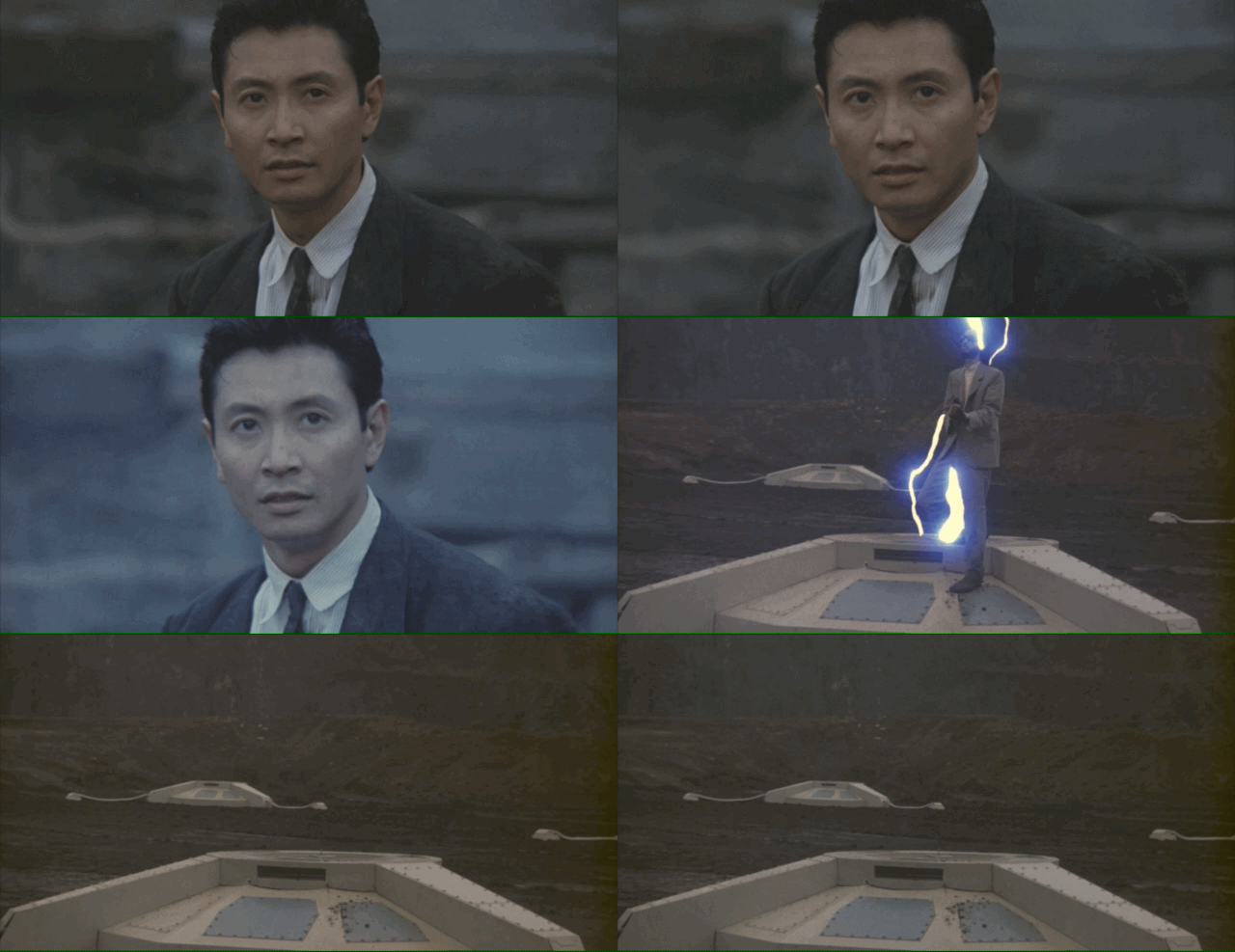
Upon orders from the Saradian government, SSS9 kills Dr. Shiragami, and after a chase and struggle with Kirishima he dies the funniest death in Godzilla history. A quick, understated burst of lightning from the Thunder Control System just completely disintegrates him. It only takes half a second and sounds like when you try to plug something in that’s built up a little static electricity. ZAPPP, and he is gone! Godzilla recovers from the bacteria and wanders off into the sea as he’s wont to do, and the credits roll.
So that’s Godzilla vs. Biollante! A cautionary tale against the terrors of genetic engineering. There’s so many plot threads in this film, you could knit a sweater out of them but goddamn it’s good. In a way, a truer start to the Heisei Era with a bold design that would last, the “versus” format returned, and a mostly brand new cast and crew with no prior Godzilla experience. It introduces psychics and ESP to the series, which will be continued with recurring character Miki Saegusa. And above all else it’s crazy fun that asks the viewer to accept its insanity at face value, and I’m more than happy to oblige.
 Godzilla Vs...!
I think this is the first godzilla movie I saw. I don’t know if it would hold up for adult me, but it got me hooked for sure.
You know, I don’t actually remember which was the first I saw. I think Godzilla 1985 (American) was the first I really enjoyed, and Biollante the first I just absolutely fell in love with. But I probably saw Megalon or Ebirah on MST3K before those. As an adult the production quality in Biollante is still incredible, and I appreciate the shift to the more animalistic design. Revisiting Return of Godzilla got me realizing how goofy the white eyes look sometimes.