
The fall of Saigon in 1975 saw an official end to the Vietnam War. Congress and the American people were fed up with the long, bloody, and futile war riddled with atrocities. The Soviet Union was in dire straits due to the inefficiency of their planned economy and heavy military spending. Leaders of both countries were ready to try something new: detente, a reduction of tensions. The US and Soviet Union had negotiated the SALT I treaty a few years prior, and were working towards SALT II, both of which would cap or limit ICBMs, launch sites, and submarine ballistic missile launchers. This period didn’t last long, however. While various treaties capped the number of missiles that each nation could hold, both sides developed new technology that could launch missiles with multiple-independently targetable re-entry vehicles (MIRVs). In essence, a single missile could carry multiple nuclear warheads, each with the ability to strike different targets. The global superpowers rekindled efforts to spread influence throughout the world, from insurgencies and counterinsurgencies in South America to the strategically located Afghanistan. After the Soviets sent troops in to Afghanistan in 1979, it killed the prospect of the US ratifying the SALT II treaty, and the US instead committed itself to supporting the “Brave Mujahideen Fighters of Afghanistan,” as dedicated in the end credits of Rambo III. We’d see how that decision would pan out 22 years later. All these tensions culminated in 1983, one of the most critical years in the re-heated Cold War. The KGB launched Operation RYAN, an intelligence gathering mission which indicated the US was planning a pre-emptive attack on the USSR. This wasn’t alleviated when the US conducted its most realistic war games to date which simulated a nuclear end scenario. The Soviets were unable to tell if it was just part of the war games, or if the games were used to disguise an actual attack. And in September, Korean Air Lines flight 007 was shot down after entering Soviet airspace. The flight happened to be carrying US Representative from Georgia, Larry McDonald. With all this, the world seemed on the eve of destruction at any moment, inspiring two 1983 classics: the feature film War Games, and made-for TV production The Day After. Now, more than ever, was the perfect time to bring back the ultimate paragon of atomic armageddon: Godzilla.
Though Emperor Hirohito would not abdicate the Chrysanthemum Throne until 5 years later, 1984 marks the dawn of a new era for the Godzilla series, and let me tell you, the Heisei Era friggin RULES. Being a child of the 80s, these were the films I had the most access to, so part of it may be nostalgia-lenses, but also: they’re just really good. With the commercial flop of 1975’s Terror of Mechagodzilla, the series was put on ice. But that doesn’t mean producer Tomoyuki Tanaka gave up on it. There were scrapped plans to release a colorized version of the original 1954 film. The character was licensed to Marvel comics and Hanna Barbera, keeping the public interest on the back burner. In 1982, Toho was celebrating the company’s 50th anniversary and re-released some classic kaiju movies at a festival that did better than expected. The following year, there was a Symphonic Fantasia tribute to Akira Ifukube’s work on Toho films. Having proof of a market, the fuse was officially lit. Tanaka had a story on hand, just waiting for the opportunity to bring back the radioactive behemoth. He lamented how the character had gone from a nightmarish warning against the atrocity of nuclear weapons to a children’s matinee hero. I wonder who was responsible for that? In addition to the unexpected popularity of the re-releases, there was an organization of 10,000 fans called the “Godzilla Resurrection Committee,” who were demanding a new film. On top of all that, there were some great horror/sci-fi blockbusters being produced, like Alien, Jaws, and the ’76 King Kong that encouraged Tanaka to produce his gritty reboot. Welcome to the 80s, folks. Godzilla’s back!
A huge part of the impetus for The Return of Godzilla was getting back to the roots. Even though Tanaka himself was largely responsible for Godzilla’s change in direction from horror to hero, he wanted to recapture the feel of the 1954 original, even inviting back the dream team of Ishirō Honda and Akira Ifukube, who both declined. The script he had on hand called for Godzilla battling three different forms of a shape-shifting monster, but even a substantially higher budget couldn’t justify that, and it’s just as well. Tanaka wanted Godzilla to be a fearsome enemy again, and having him battle another monster would take the focus away from that. And so Tanaka hired screenwriter Shuichi Nagahara to put together this fantastic script. In keeping with the original theme, Nagahara paints a grim picture of a world on the brink of radioactive annihilation. Both US and the Soviet Union are portrayed as morally bankrupt, selfish countries who try to pressure the only nation to be a victim of an atomic strike into allowing another assault. 1979’s Three Mile Island meltdown also influences a new concept for Godzilla: he feeds off nuclear reactors, demonstrating the incredible dangers inherent in even non-weaponized nuclear technology.
Unfortunate as it is that Honda and Ifukube passed on the film, bringing in fresh talent did wonders for the project. Koji Hashimoto had actually assistant-directed under Honda for a few Showa films, but you can see his cutting-edge pop style at work. Paired with the score from newcomer Reijiro Koroku, this has the distinct feel of an 80s action movie. The two pay tribute to the giants whose shoulders they stand on, as well as adding their own unique styles. The start of the film features a fishing boat caught in a storm and attacked, the Yahata Maru No. 5, a nod to the original ’54 film and the Lucky Dragon No. 5 incident it referenced. Ifukube’s motifs feature prominently throughout, alongside Koroku’s original synth works to let you know we are unquestionably in the 1980s.
The basic premise in the film is that a volcanic eruption has somehow awoken Godzilla from decades of unconsciousness. It’s a direct sequel to the 1954 movie that completely erases the rest of the Showa Era. It doesn’t really say how Godzilla is still alive after we saw his corpse disintegrated by the Oxygen Destroyer. They could have done some hand-waving like Godzilla Raids Again and say it’s just another creature, but as long as we’re ignoring thirty years of film, we might as well ignore another ten minutes worth of footage. Ken Tanaka plays Goro Maki, a reporter who happens to be sailing and discovers the remains of the Yahata Maru. There, he finds the sole survivor Hiroshi Okumura, played by Shin Takuma. There’s a bizarre fight with a giant radioactive “sea louse,” which is apparently a real and disgusting species. Here though, it doesn’t quite fit with the rest of the movie and could have been left out. We’ll find later that the sea louse was feeding on Godzilla and grew in size, but the lice are never seen or mentioned otherwise.
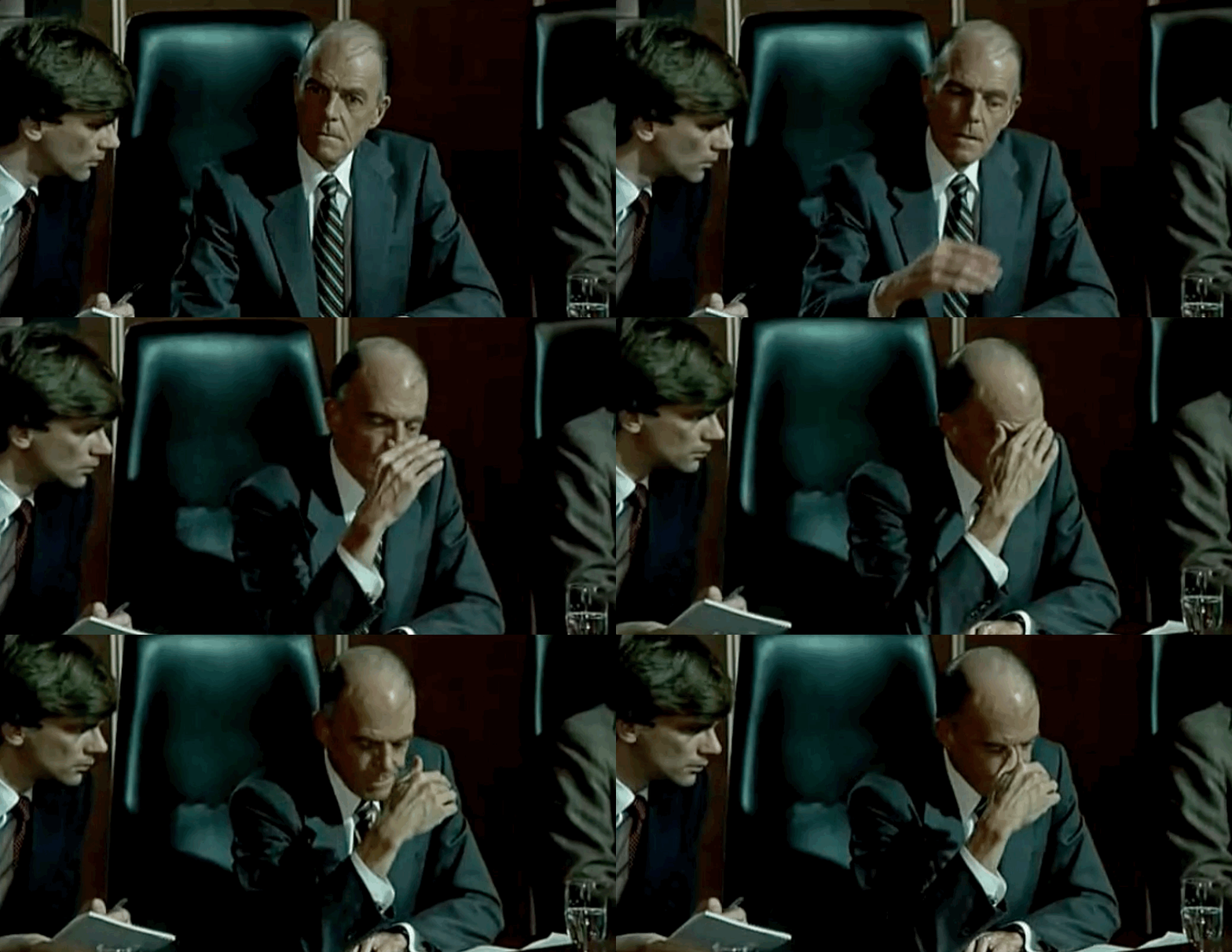
Okumura is confined to a hospital, and the government puts a gag order on the story, hoping to prevent panic. Prime Minister Seiki Mitamura, portrayed by Keiju Kobayashi, can’t keep a lid on it for long though. Godzilla attacks a Russian nuclear submarine, inciting an international panic. Mitamura then comes clean to prevent all-out war between the US and Russia. Japan invites ambassadors from countries around the world, with both global superpowers chiming in wanting to nuke Godzilla. During a recess, the Prime Minister consults his cabinet, and they warn that nuclear weapons have only been used in warfare once, and limited to tests. Both sides could see this as an experimental opportunity, with little regard to the lives of the Japanese people. He returns touting the three principles of Japanese nuclear policy: non-possession, non-production, and non-introduction of nuclear weapons into the country. The Soviet ambassador calls it egotism, the American says that this is no time to be discussing principles. Prime Minister Mitamura responds that just one use would open a can of worms and compromise the mutual deterrence of atomic bombs which would end the world as we know it “that is the nature of nuclear weapons.” The response of the US ambassador is a hilarious facepalm. Both nations agree to stand down in the end, and a Soviet operative shuts down a missile control panel on a boat in the harbor. After Godzilla attacks, this control panel gets hit with a power surge, accidentally arming a countdown to launch a nuclear missile from space, and the operative is shown as heroic, getting his crew to safety while sacrificing his life to try and stop the accidental launch. He fails, but the Americans step in to intercept the missile later in the film. Return of Godzilla doesn’t involve itself in the ideology of the Cold War, and recognizes heroism and antagonists on both sides. The enemy isn’t Communism or Capitalism, it’s the end of all life on earth threatened by radioactive fallout.
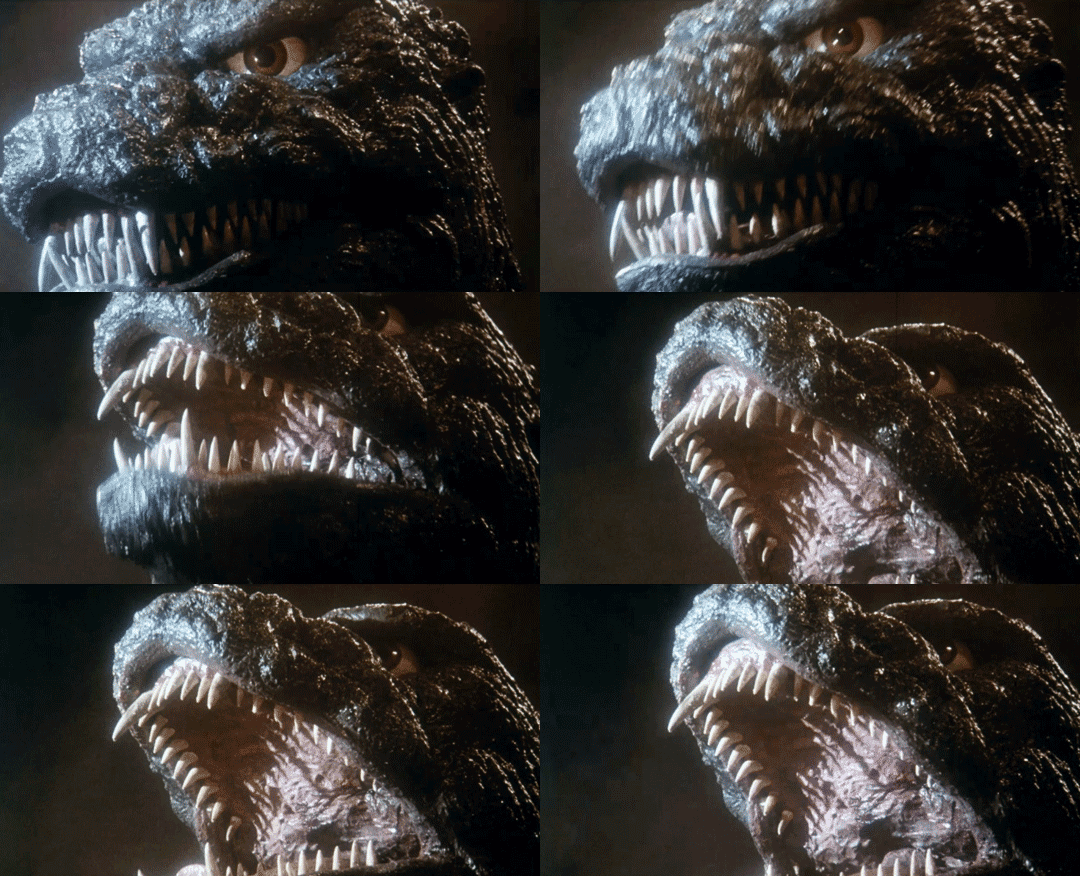
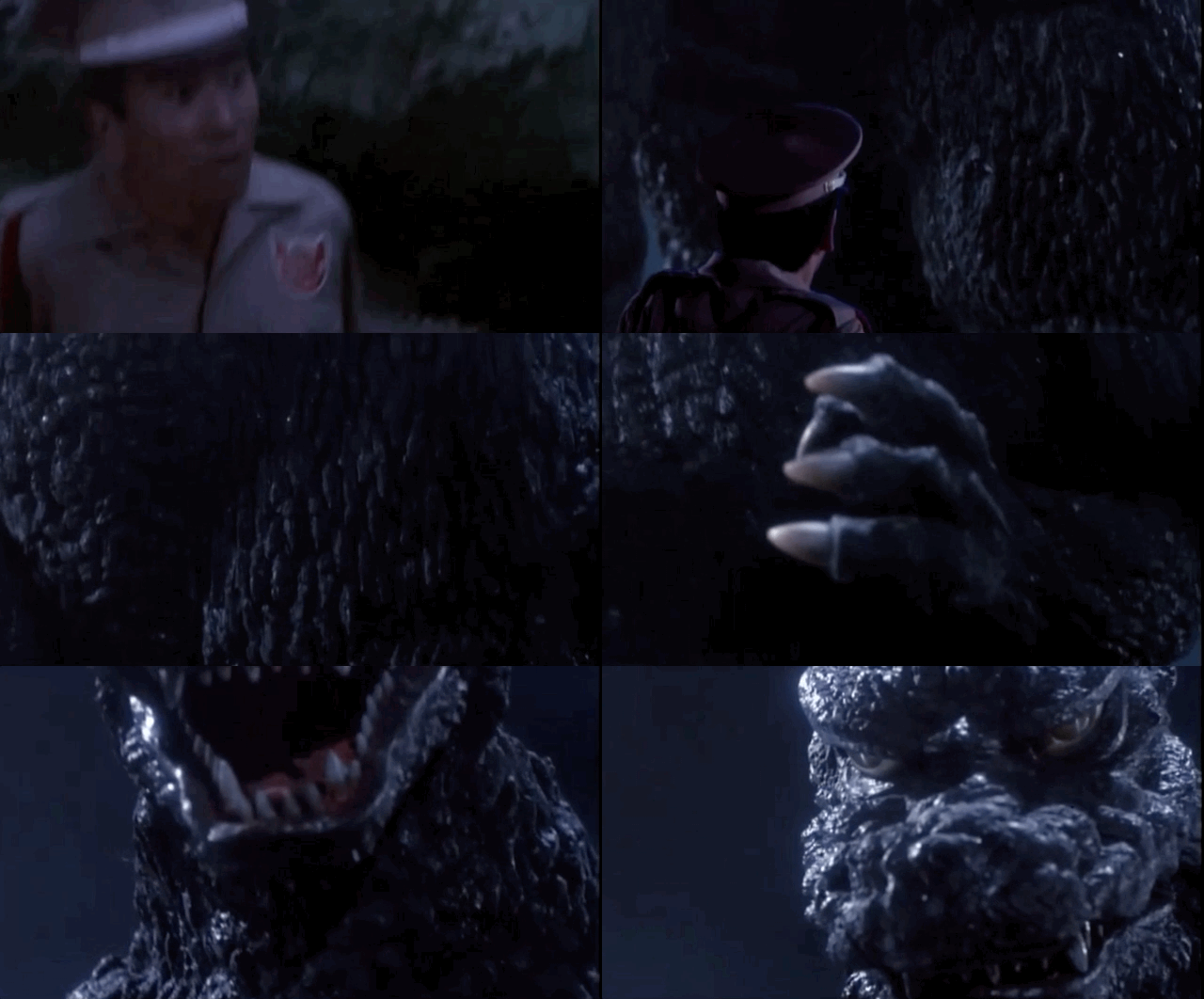
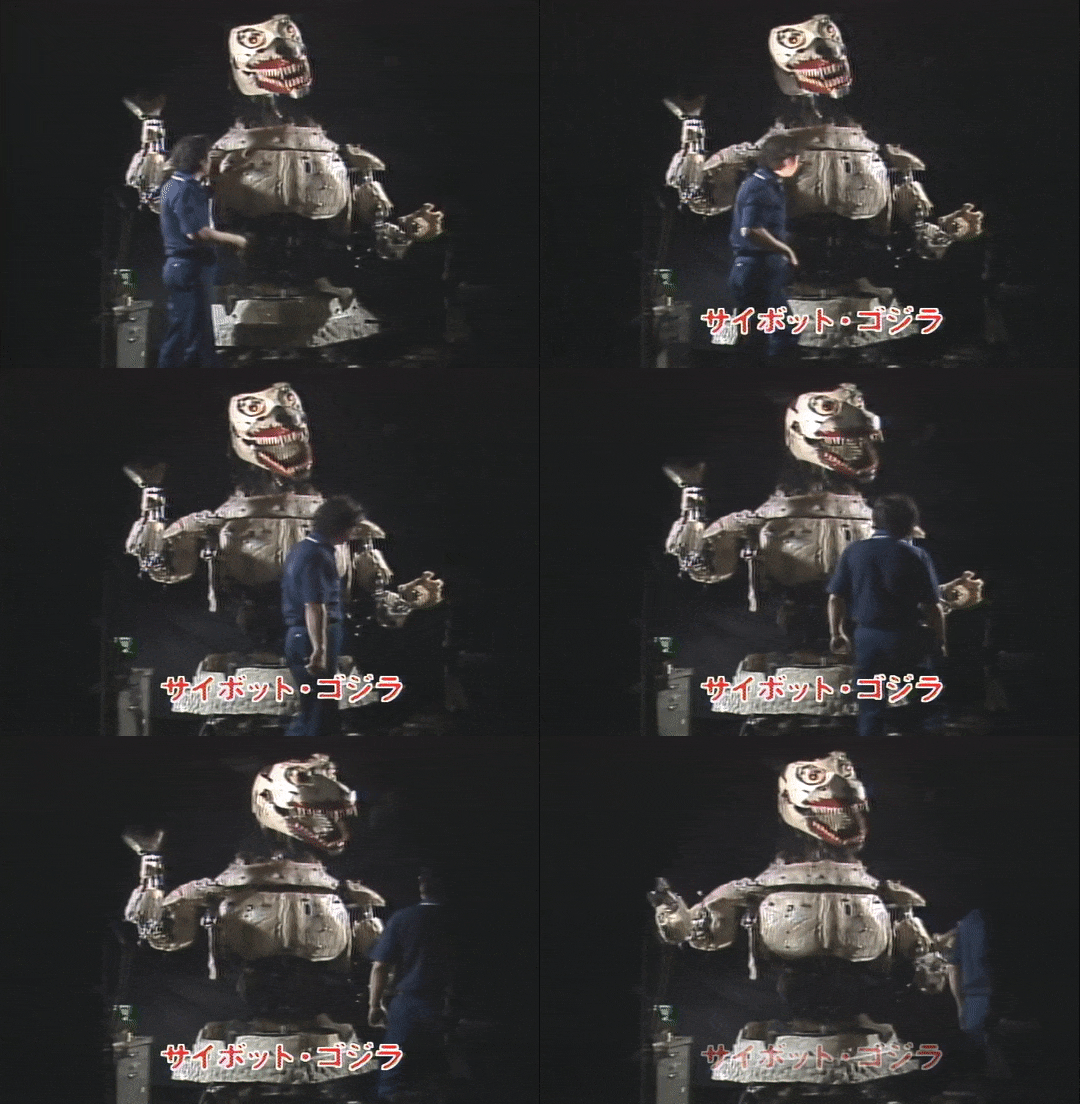
Returning special effects director Teruyoshi Nakano came in ready to blow your socks off with a budget five times what he’s been used to. The suit design is incredible, and each subsequent suit from here on out will be as well. Kenpachiro Satsuma who brought Hedorah and Gigan to life does an impressive job inside it, especially considering it was designed for the much taller Hiroshi Yamawaki who backed out of the project. Satsuma lost 12 pounds filming this in an inadvertent homage to original suit actor Haruo Nakajima who shed 20 pounds during the ’54 filming. The new ’84 suit also featured pneumatic tubes and electronics to move the mouth and eyes, and was stolen shortly after production, never to be seen again. Supplementing the suitwork was a 16 foot “cybot” that you can see in most close ups where the head is more articulated. The buildings are on the whole a little less detailed, being on the whole built to a smaller scale. With actual skyscrapers being built higher as architectural technology advanced, Godzilla’s size was increased from 50 feet to 80. Nakano did take care to vary the lights in each building, as he noted “there’s no building in real life that has identical lighting in every room.”
On the other side of things, Maki meets up with Professor Makoto Hayashida (Yosuke Natsuki) and his assistant Naoko Okumura (Yasuko Sawaguchi), Hiroshi’s sister. Godzilla movies always take place in such a small world! They’ll work out a way to lure Godzilla into a volcano using magnetic waves that effect some kind of migratory sensor in Godzilla’s brain while the Japanese government mobilizes the army to try and slow him down, including a new flying fortress the Super-X. After a brief victory from the Super-X, Godzilla is reawakened but the volcano plan prevails in the end.
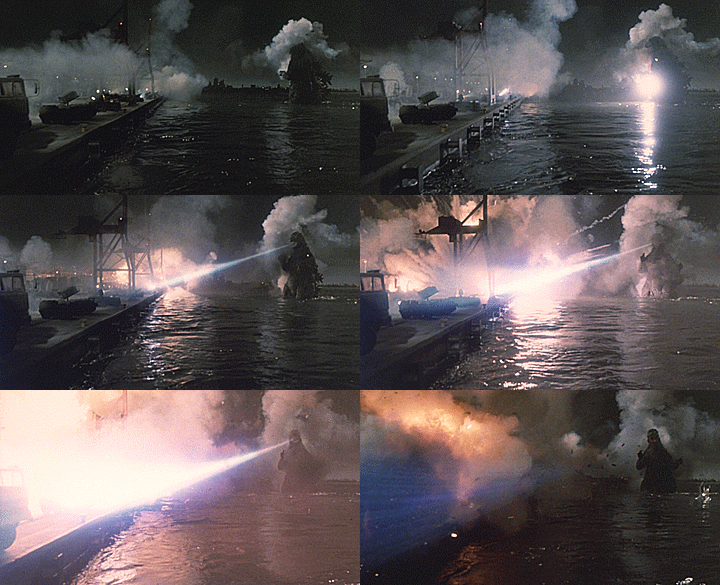
Like the 1954 classic, there was a heavily recut American version too, also starring Raymond Burr reprising his role as “Steve Martin.” Because the comedian had gained so much popularity, he’s only referred to as “Mr. Martin” in this version. And, like the 1954 film, the ’84 recut also watered down the message quite a bit. Deliberations between Japan, US, and Russia are reduced and instead of the Russian operative acting heroically, he’s actually trying to fire the missiles. New World Pictures couldn’t release a movie where the US and their mortal enemies the Soviets were on equal moral footing.
From start to finish, Return of Godzilla amazes in both effects and messaging. The sheer lunacy of the Showa Era is something to behold, but it’s understandable why this film skips over it. Hashimoto brings menacing animalistic destruction back to the series and sets the tone for the films to come. Godzilla is less of a character, and more a force of nature from this point onward. Those who loved the bonkers “anything goes” attitude of the Showa Era shouldn’t be disappointed by the new direction though: there’s still plenty of insanity to come.
 Godzilla Vs...!