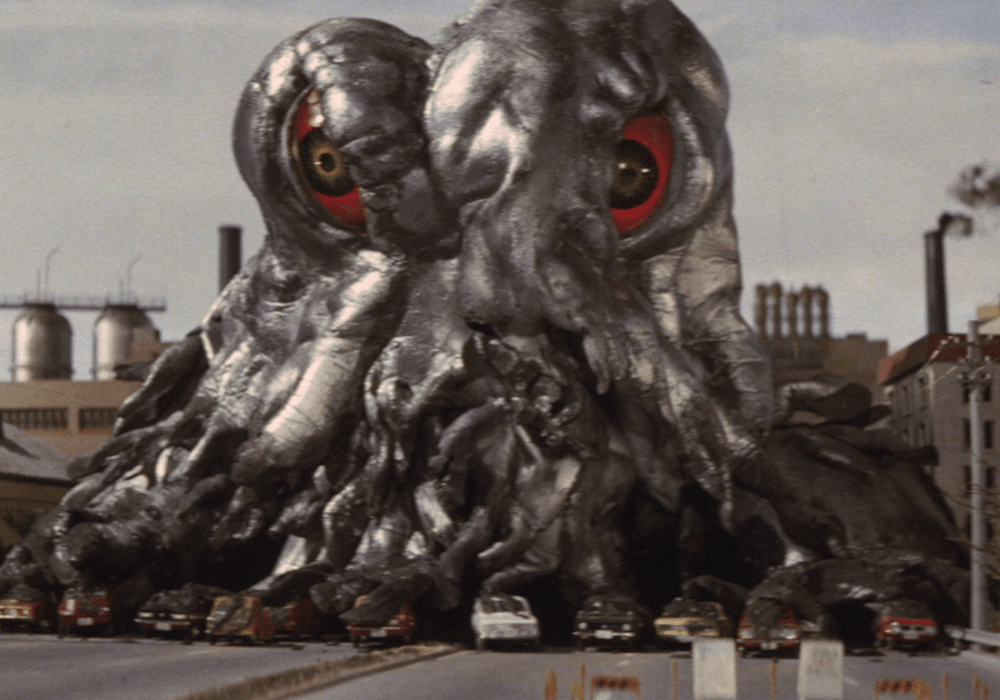
Godzilla vs Hedorah (1971)

Wow. Just… holy smokes. If you like how goofy the Showa Era Godzilla movies are, you’ll love this one. Even if you think these films are a little too cheesy, this is a must watch because it is absolutely, jaw droppingly insane. It’s one of my all time favorites, and a major reason I started this blog was to fervently share my love for Godzilla vs Hedorah with anyone who will give me the time of day. Everything about this one-off from director Yoshimitsu Banno is bonkers, including one of the most terrifying behind the scenes tales in the whole franchise. It’s so out there that producer Tomoyuki Tanaka promptly fired Banno, interrupting the planned sequel which was to take place in Africa. A mix of psychedelic surrealism, animation, environmentalism, phenomenal practical effects, and off the wall antics, enjoy it or not, you will be forever changed after watching the incomparable Godzilla vs Hedorah.

Read More

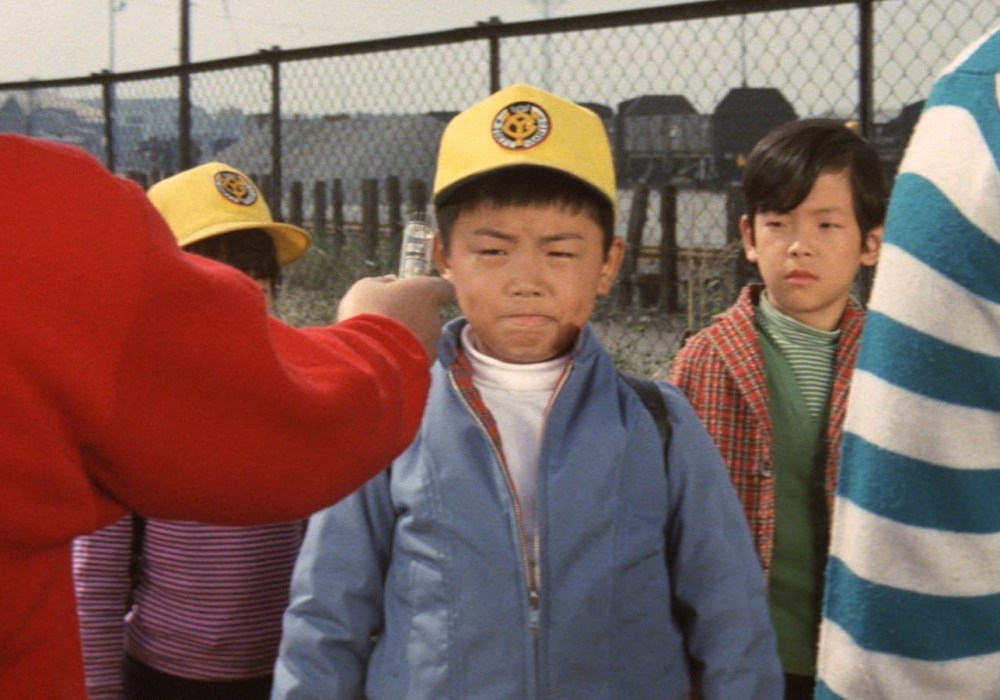
All Monsters Attack (1969)

All right haters, bring on the tomatoes! All Monsters Attack is good, and you should all feel bad about hating it. In 1969, Japan was in the midst of an economic boom. Long since merely recovering from the war, government policy had been focused on, and succeeding at, doubling the size of their economy. Industrialization and social safety nets transformed Japanese life from just getting by to having more disposable income to spend recreationally, and the US’s partnership offered an enormous market for exports. Would they have been so successful if the US hadn’t been trying to combat communism? Foreign aid and trade deals were given as a way to ensure that Japan was a success story in spreading democracy, and that its citizens did not become disgruntled, impoverished, and susceptible to Soviet influence. With all this though came a social epidemic: the latchkey kid. Many families became two-income households, and children were often left to their own devices after school. All Monsters Attack is a meta-film that uses kaiju as an escapist backdrop while wrestling with feelings of loneliness and anxiety, and learning the importance of self-reliance.

Read More

Godzilla Singular Point (2021)

I thought I’d mix it up a little and review Godzilla Singular Point, Netflix’s new anime. I’ll add the caveat that I used to watch a bunch of anime in the 90s/00s, but I really don’t like much of it anymore. Mostly because of how many common tropes and pitfalls just ruin the genre for me. Singular Point definitely employs a lot of them, but there’s some fun stuff and it will be good to knock this one out while it’s still on Netflix. The series is definitely too long for its own good, and suffers from chronic cases of Cutesy Bullshit and Pretentious Exposition. It would have been better if they had boiled the plot into 4-6 episodes like the first season of Castlevania, but the animation has a unique style, and the monster action is pretty cool. Godzilla himself seems to be following the Shin concept of evolving forms, the final two are good looking if criminally underused. Be patient while watching this series, dear viewers. For a series built around Godzilla, he’s barely in it.

Read More

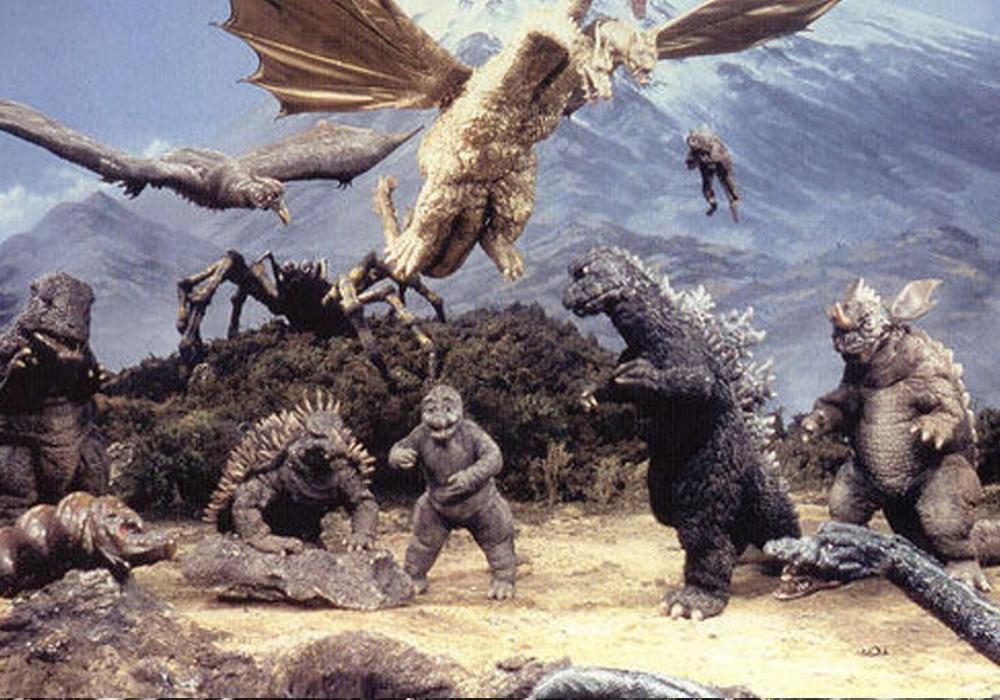
Destroy All Monsters (1968)

The end. Video, that mad killer, was at it again. Not content with the Radio Star, it set its sights on the kaiju eiga genre. With an expansion of variety and programming broadcast directly into people’s homes, Japan’s film industry was on a decline. And an obvious place to cut costs were special-effects heavy films like the Godzilla franchise. Props, sets, models, costumes, and post-production effects all add up, no matter how cheesy they may seem in retrospect. And so rang the the death knell for Godzilla. Deciding to go out with a bang, producer Tomoyuki Tanaka got director Ishiro Honda back together with composer Akira Ifukube and special effects supervisor Eiji Tsuburaya for 1968’s monster melee hit Destroy All Monsters. Sporting a total of eleven monsters, this film showcases all of Toho’s other creatures that never found their way into a Godzilla film like Varan, Manda, Gorosaurus, and Baragon. The team definitely went all-out for this last hurrah.

Read More

Son of Godzilla (1967)

Well. It had to happen sooner or later. If you ever wanted to simulate taking edibles while having a fever as a toddler begs for your attention, Son of Godzilla is your movie. It’s kinda trippy, and not in a good way. There are some emotional notes, and some of the creature designs are pretty mint, but overall this movie is a pain in the ass. Mystery Science Theater 3000 lampooned a couple of Godzilla movies, notably the A+ previous feature Ebirah, Horror of the Deep, but this should have been at the top of their list.

The film is, however, predicated on a team of scientists researching weather control in order to solve global food shortages. In 1967, the Great Chinese Famine of 1959-1961 was still part of recent memory. The planned economy of China’s Great Leap Forward saw local governors over-reporting harvests, which were confiscated and redistributed at the State’s discretion, and rationed to the newly founded people’s communes. The ensuing famine was the largest in history and resulted in tens of millions of deaths. In contrast to that, in India in 1966, there was a famine induced by drought, but it was not nearly as bad. Government aid, as opposed to forced quotas, helped alleviate the situation, as well as sizeable donations of crops from the US. The United States sent an entire fifth of their wheat production to India at this time.

The food shortage threat was very real, but instead of controlling the weather, there was another alternative: genetically modifying crops to thrive in harsh conditions. Enter Norman Borlaug, whose research on wheat in Mexico led him to South Asia in the 60s, and helped India double their wheat production between 1960 and 1970. Borlaug won the Nobel Peace Prize in 1970 and is credited with saving over a billion people worldwide from starvation. So the next time you hear about how awful GMOs are, remember Norman Borlaug, his efforts, the tens of millions who died of famine in China, and just how utterly stupid the scientists are in this Godzilla film in particular.

Read More