The room is dimly lit, with no windows. It’s a hot summer night, and the rumbling murmur of 600 or so separate conversations fills the air. It’s an eclectic crowd that’s gathered here in front of the downstairs stage at the Middle East in Cambridge, Massachusetts. Aging townies with bandannas, young punks with patches covering jean vests, old punks running out of places to get new tattoos, middle aged moms out for the evening. Sipping a ten-dollar rum and coke out of a plastic cup through a drink stirrer, the lights dim, and people cheer. Low, loud guitar with thick reverb pulses through the air, through your very bones. The Lebanese-American legend and surf rock pioneer Dick Dale has captivated yet another audience in the tail end of a long, successful career. You’ve definitely heard him, if from nothing else then from “Misirlou,” the iconic tune in 1994’s Pulp Fiction. After learning the trumpet and ukulele, he bought his first guitar from a friend for just $8 – spaced out over multiple payments of 25-50 cents each. Even after gaining fame and traveling the world, Dick called Quincy, MA home for decades and I’m fortunate enough to have seen him live a few times. He was one of the first to use heavy reverb that defined a genre and inspire movies like Beach Party, and Muscle Beach Party (both of which featured Dick playing himself as well as the guitar), Endless Summer, Beach Blanket Bingo, and of course Horror of Party Beach. This twangy new sound leant itself to the James Bond theme too, and both surf rock and 007 homages are slathered all over Ebirah, Horror of the Deep like a thick layer of SPF 30.
Are there better Showa-Era Godzilla flicks? Yes, probably. Certainly some are more iconic, featuring familiar monsters like Ghidorah, Mothra, and Rodan. But Ebirah easily stands out in the top three. Departing the series temporarily are Ishiro Honda, Eiji Tsuburaya, and Akira Ifukube. The new fresh crew sees Jun Fukuda directing, Sadamasa Arikawa as special effects director, and that sweet surf music by Masaru Sato. Eiji Tsuburaya did supervise, but was busy with his own studio at the time, but his protege Arikawa crafts an incredible design for Ebirah and handles ocean scenes with a deft hand. Screenwriter Shinichi Sekizawa pens a script unlike any other we’ve seen so far. He’s been with the franchise since Mothra vs Godzilla, but in the previous films, you can still see Honda’s influence. Stop me if you’ve seen this one before: a reporter and a scientist team up to investigate a strange monster attack, and thwart a greedy antagonist to save the day. What can I say? The formula works.
Ebirah starts with a tonal shift by tickling our ears with tantalizing surf riffs emblematic of fun times by the ocean in the 1960s. The basic premise of the story is completely insane. Ryota, whose brother was lost at sea, and being snubbed by local authorities, meets some friends at a dance contest to try and win a boat to find his brother. They fail, and think he just “wants to see a yacht” so they wander onto one in a marina, where they’re jumped by a guy with a gun. The old “we were only looking around, my friend just really likes boats” excuse isn’t quite believed but the dude lets them stay the night anyway. The next morning, Ryota says “whoops, was this rifle a toy? It broke when I picked it up.” Man, is this what I sounded like when I was trying to cover my tracks for doing dumb shit in middle school? These are supposed to be grown men! The now unarmed “owner” of the boat tells them to bug off but it looks like Ryota has set sail! They hear about a bank robber on the radio and notice the boat’s “owner” has a briefcase he’s being very protective of.
All this happens in the first ten minutes, and we’re still just getting started. Jun Fukuda’s breakneck speed already contrasts to the usual slow buildup of Honda’s style. It looks like Ryota is the only one who knows how to sail, so they’re stuck looking for his brother. The bank robber, Yoshimura (played by series regular Akira Takarada), keeps dodging questions about the robbery but insists on making some lockpicks to kill the time. This is a very different role for Takarada, but he knocks it out of the park. Yoshimura is a lovable rogue, playfully denying his past while cooperating with our heroes to escape a greater threat. In previous films, we don’t see any anti-heroes, only clear villains. The criminals who escaped from prison in Godzilla Raids Again are portrayed as selfish and meet a grim death as a form of poetic justice.

In the next ten minutes, the story is set up proper: our heroes are attacked by Ebirah, and wash up on an island, the millions in the briefcase lost to sea. They discover a paramilitary group importing enslaved natives from Infant Island, the captain sporting an eyepatch, played by Akihiko Hirata, who also played the eyepatched Dr. Serizawa in the original Godzilla. Our final team member is Daiko, played by Kumi Mizuno of Invasion of Astro-Monster, escapes and joins up with our valiant misfits. In the Showa era, there’s a lot of casting crossover, the same actors playing a myriad of different roles, even though it all takes place in the same universe. It makes for a fun dynamic that would surely irk some modern nerds today.
The rest of the film follows this group as they try to escape this evil organization, the Red Bamboo, who are manufacturing nuclear weapons. They find and wake up Godzilla to wreak havoc, and try to free the enslaved Infant Islanders. In a scene when a pair of Islanders try to escape on their own, Ebirah brutally spears and devours them. It’s incredibly dark, and juxtaposed with some rockin surf guitar. Friends, this is exactly what why this remains one of my favorite Godzilla films of all time.
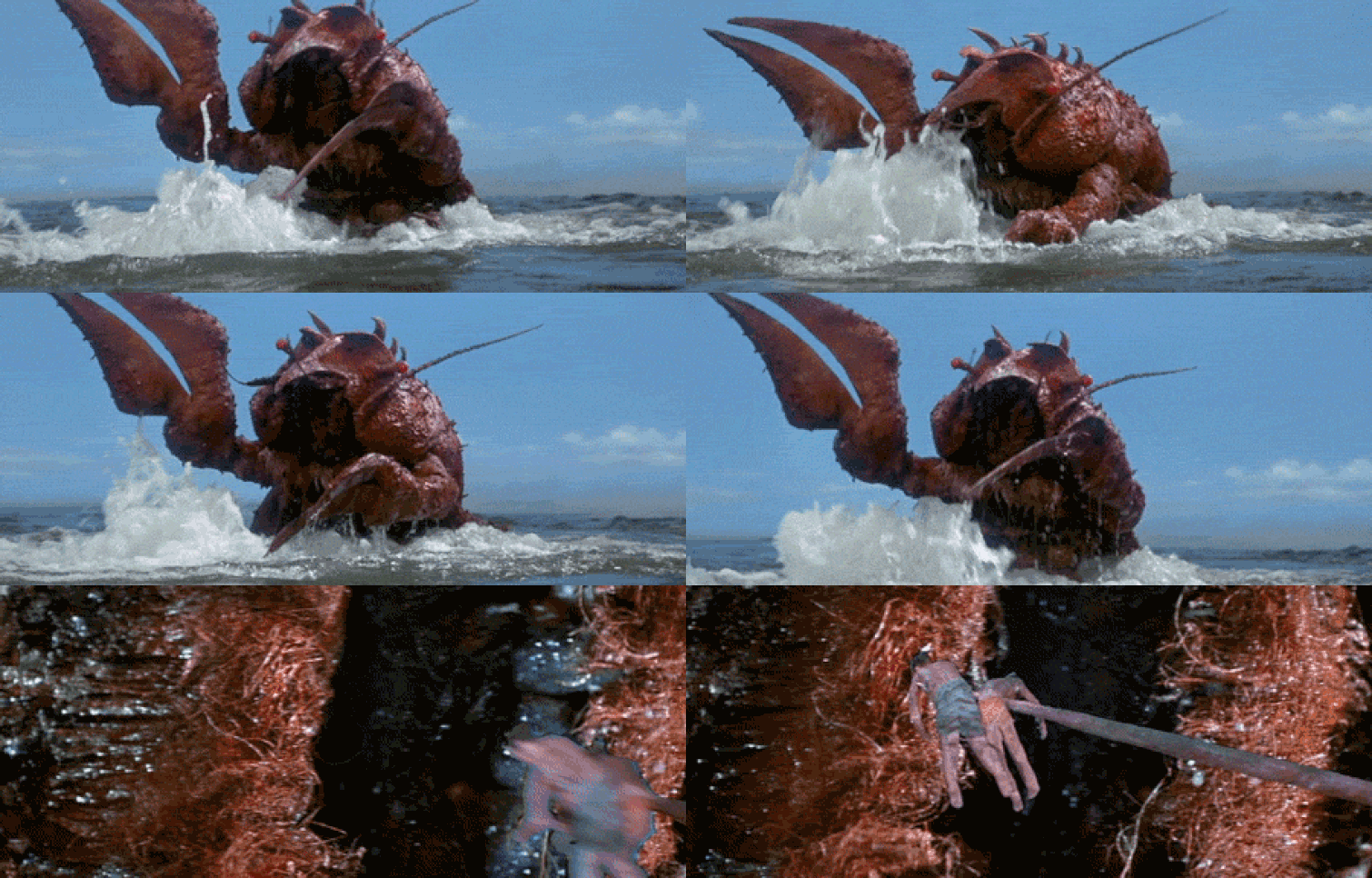
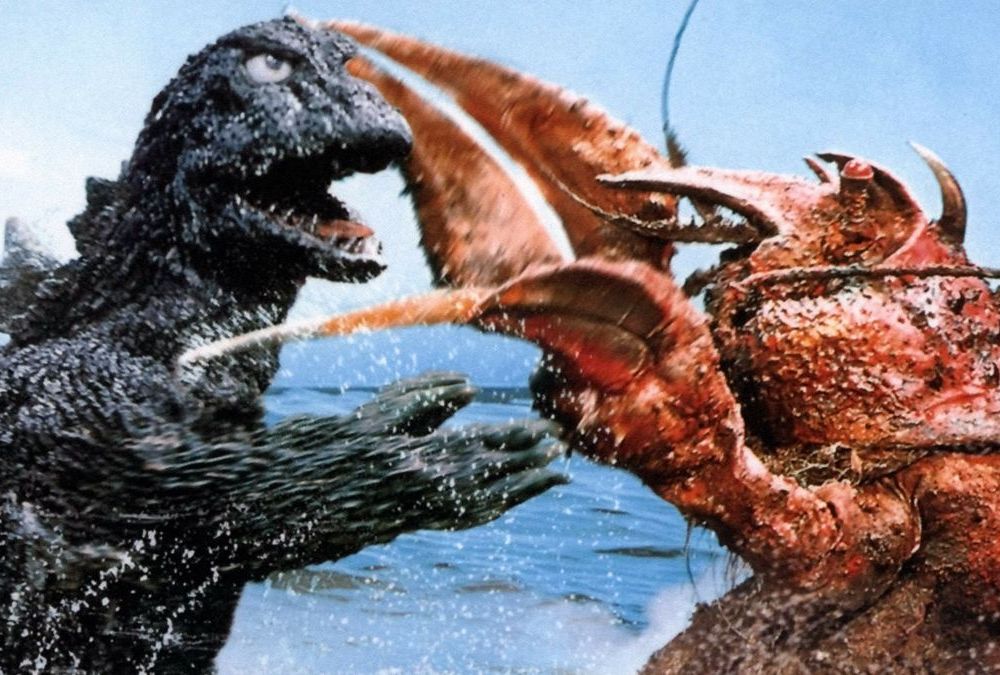
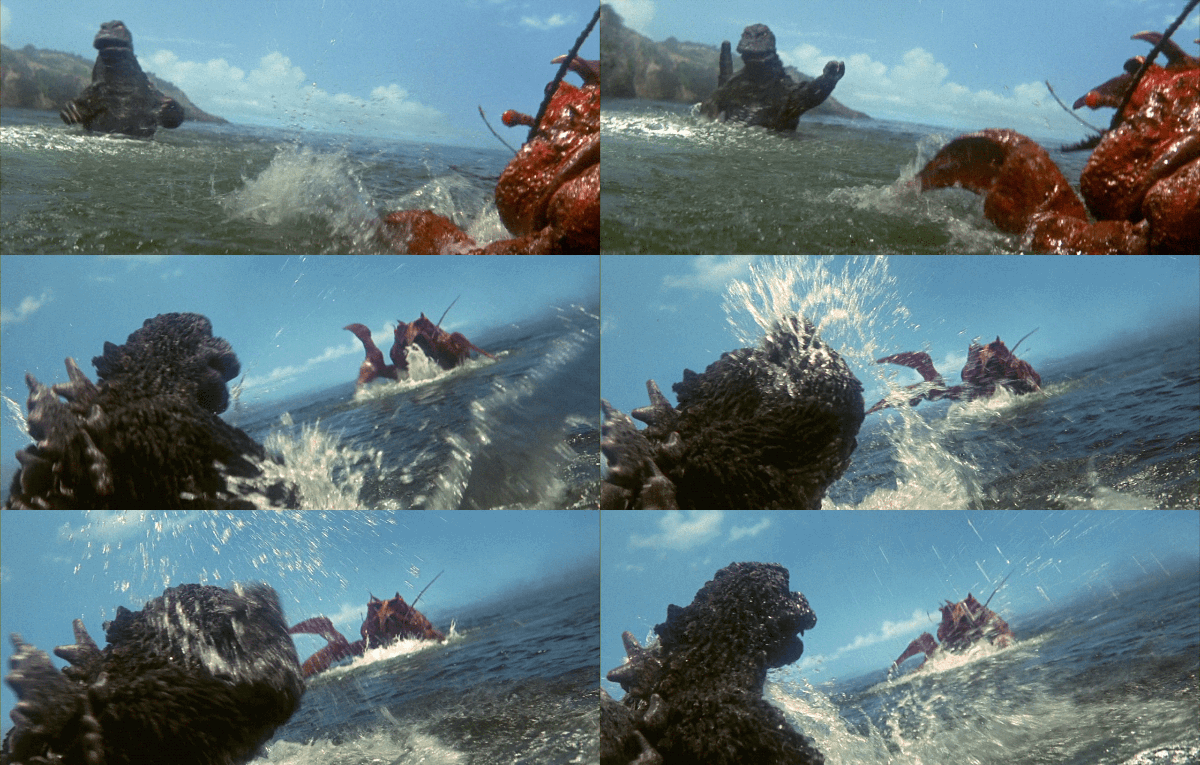
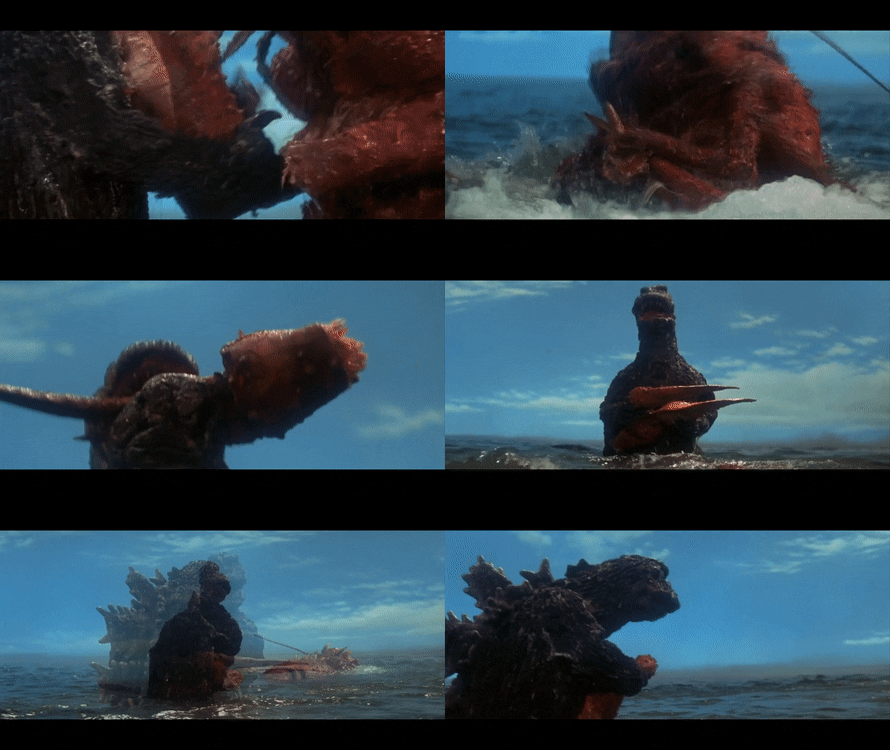
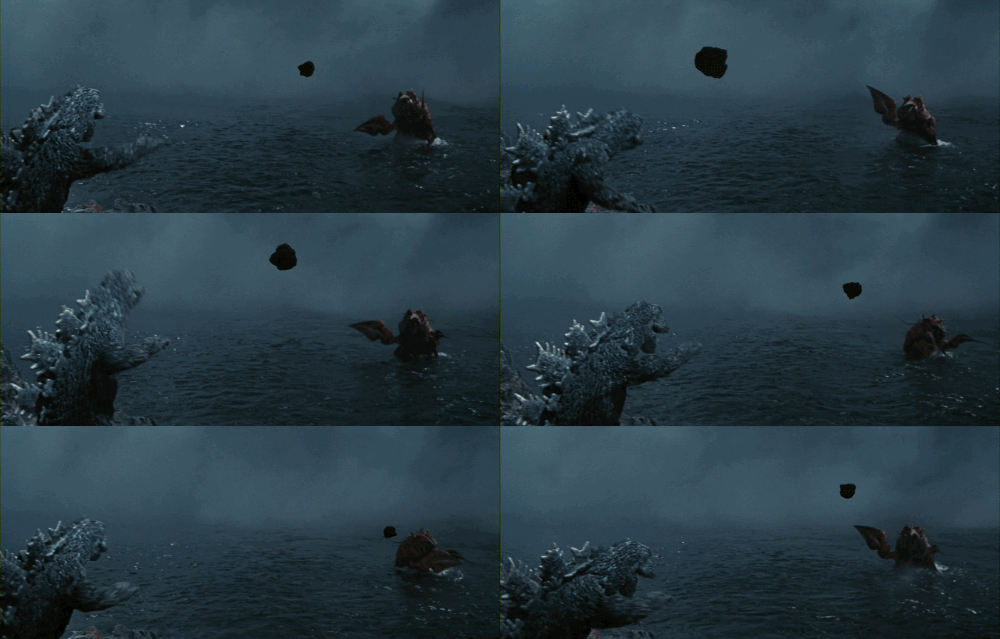
All the fights in this move rule, even when they’re goofy. Especially when they’re goofy. At one point, Ebirah just splashes Godzilla, and in retaliation Godzilla nukes him with radiation breath. Seems like an excessive response! There’s a great body-slam, pictured above, and boulder-volley pictured below. Near the end, Godzilla rips Ebirah’s goddamn arm off and has some lobster claw for dinner. The brutality in this one just doesn’t quit. Mothra is also in this, but only briefly, wear and tear on the model really starting to show. The Shobijin are now played by a new singing duet, Pair Bambi, who seem less spritely than the Peanuts, and more foreboding priestesses, commanding respect.
When watching this you may find some scenes a little out of character for Godzilla, and you’d be right: Ebirah, Horror of the Deep was originally optioned as a King Kong film, but Rankin/Bass Productions (of general Christmas fame) declined. Scenes where Godzilla is sleeping in a cave, where he corners and seems attracted to Daiko, and hurling boulders all fit the King Kong bill. It also borrows a lot from the 007 series, the Red Bamboo being a more militant S.P.E.C.T.R.E. and the island nuclear factory drawing a lot from Dr. No, down to the meltdown alarm in the final scene. If you like violent monster action, espionage, exotic south pacific locations, and especially surf rock, put this one on your list. You won’t regret it.
 Godzilla Vs...!