
1964. The Vietnam war heats up. President Kennedy had been shot a year prior, and currently the Civil Rights Act was passing in the States. 36 people died in an earthquake that struck the city of Niigata. The Olympic Games are being held in Tokyo. Survivors of Hiroshima had recently lost a case against the government that requested reparations, saying Japan had unduly waived the right to negotiate reparations from the US Government. And none of this has any bearing on Ghidorah, the Three-Headed Monster (1964). No, this film has some small climate change metaphors but is entirely focused on Having A Good Time, much to the chagrin of director Ishiro Honda.
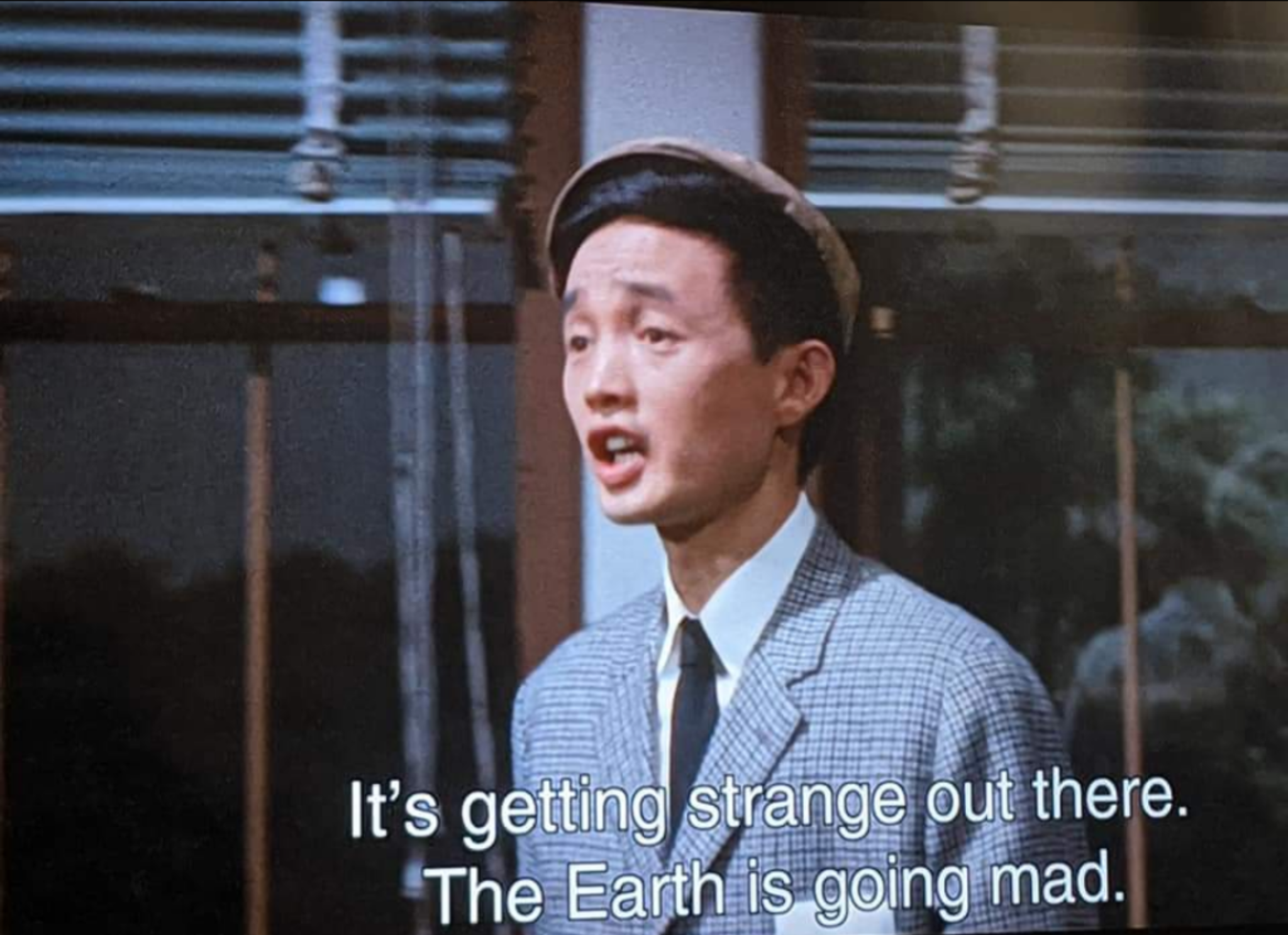
Honda had always wanted the monsters to remain symbolic of the horrors of nuclear warfare, uncaring agents of destruction. But producer Tomoyuki Tanaka wanted to aim the franchise at a younger audience, develop the monsters as characters, and shift their roles to occasional defenders of the Earth against larger threats. We saw some of this in King Kong vs Godzilla a couple years before, and Honda was able to shepherd his vision with more control in the interim Mothra vs Godzilla, released earlier that year. But Toho was intent on milking the kaiju cash cow and needed to rush this production to fill a gap in the holiday schedule. And so the train has left the station, and gone completely off the rails. Saddle in, folks, it’s about to get real weird, and it will not let up for decades, if ever.
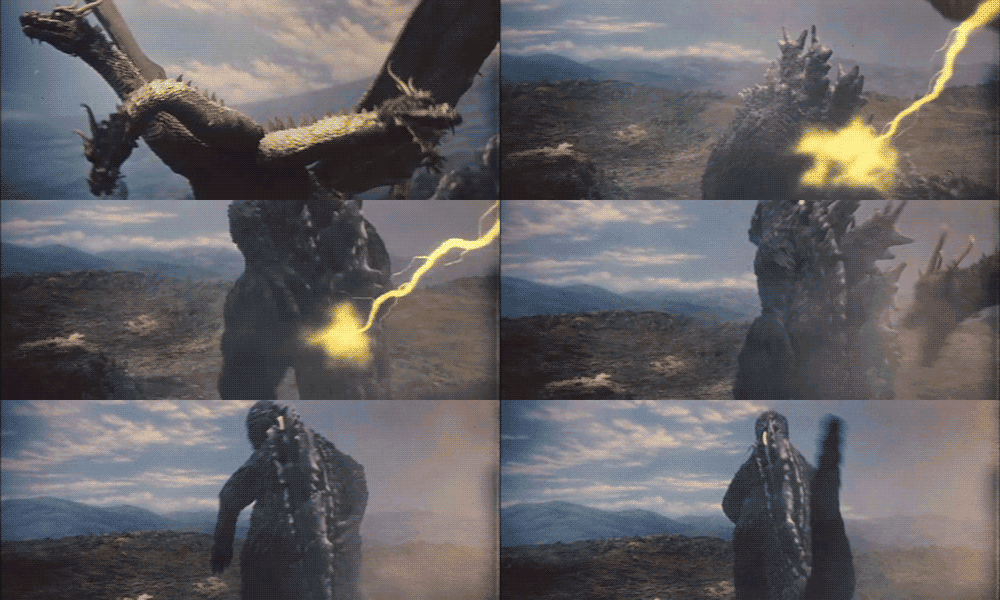
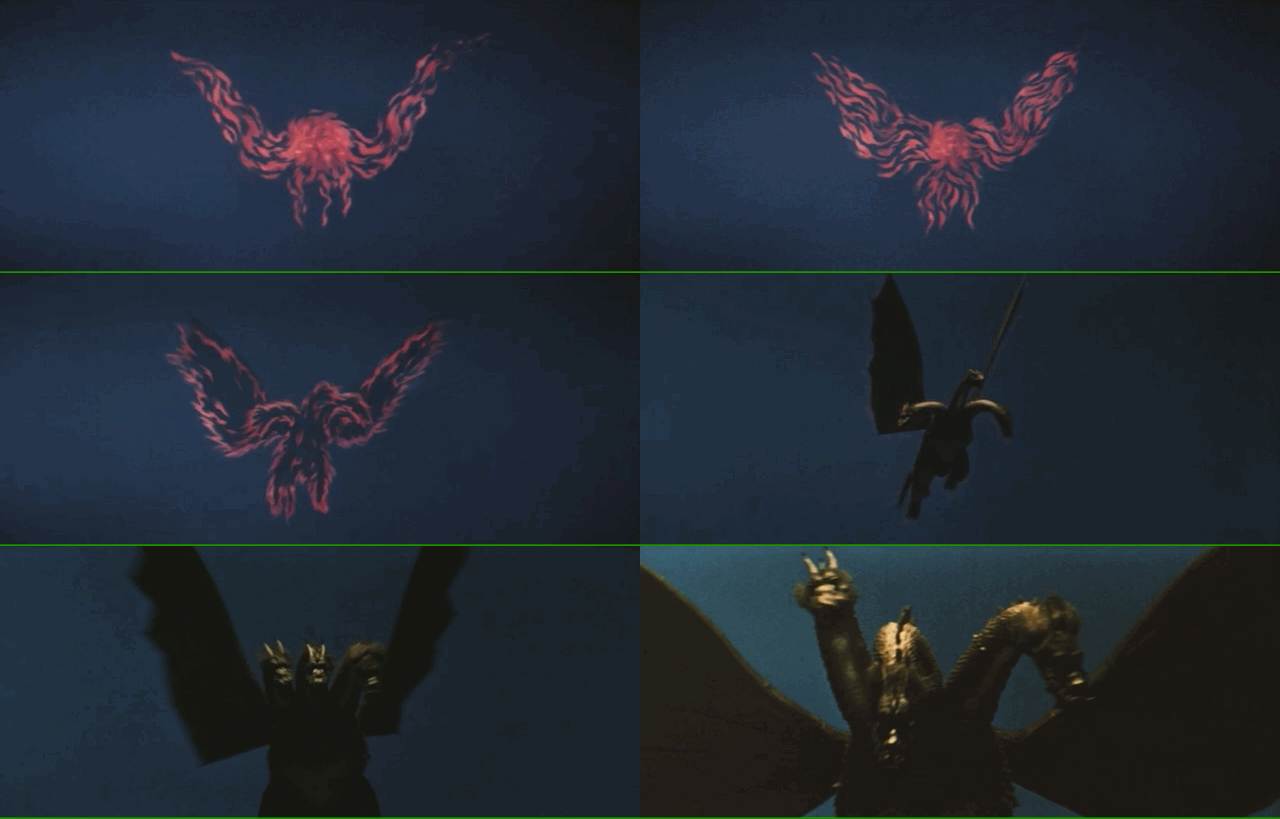
Ghidorah, the Three-Headed Monster re-uses some existing assets like the Godzilla suit and larva from Mothra vs Godzilla, with some minor alterations. A new Rodan is constructed, and…it is unfortunate. The new design has a comically flappy beak and looks more like a winged turd than the fearsome aerial terror we last saw in his eponymous ’56 film. (They’ve also introduced a new musical motif for Rodan, and as I said before…I absolutely hate it). The cheap Rodan design can be excused though, because Akira Watanabe, under the supervision of Eiji Tsuburaya created the most amazing badass heel of a villain we’ve ever seen: KING GHIDORAH! This dude is bad news every time he shows up, and you love to hate him! The suit design is incredible, all gold everything, three heads in constant chaotic motion, and a massive towering wingspan. It was apparently a nightmare to operate, requiring up to seven puppeteers. Ghidorah is accompanied by lightning-esque rays that are always animated beautifully and crackle with impressive sound effects. The end product is worth every man-hour.
This movie really hits the ground running with its antics. There’s an almost pink-panther-ish musical score before building into the traditional Godzilla theme, and we start to see short clips of the final battle yet to come. When the film kicks off and zeroes in on our human cast, they’re gazing at shooting stars. Ah, noble astronomers, you may think, engaged in the pursuit of science. If you did, you would be wrong. This is a UFO Club who are hanging out looking for aliens. One of our main characters, reporter Naoko Shindo played by Yuriko Hoshi is there for a scoop. We discover there’s meteor showers all over the Earth, and that it is an abnormally hot winter. Her brother, Detective Shindo has been assigned to guard a princess fleeing assassination, once she lands in Japan.
The princess, played by future Bond girl Akiko Wakabayashi, is aboard a plane attended by her neck-frilled servant from the 16th century. This style is apparently still all the rage in her country of Selgina, and we’ll meet the main human antagonist soon, similarly garbed, but wearing sunglasses. It’s just an incredible sight to behold. There’s some typical sci-fi theremin audio and the princess is visited by a flash of light, telling her to flee…the plane. So she does, right before it explodes. Yes. YES. I’m IN.

Audrey Hepburn’s 1953 hit Roman Holiday was incredibly popular in the States and Japan, which is apparent in a costume homage when we next see the princess garbed in a fisherman’s jacket and cap to hide her identity. And for someone who may be trying to keep a low profile, she sure is stirring up trouble, as a prophet from the planet Venus! Wakabayashi delivers a solid performance in prophet-mode, having said later she tried to emulate sleepwalkers and not make direct eye contact. The prophet foretells the coming of Rodan and Godzilla, then King Ghidorah, the alien entity that destroyed Venutian civilization hundreds of years ago. The main story revolves around the Shindo siblings trying to find out more about her and fend off the assassins. There’s a spy genre feel to it that’s clearly inspired by the James Bond films being produced around the same time; Goldfinger came out that same year.
The Shobijin are here too! As guests on a “Where Are They Now?” type of show. Yeah, just making the journey from Infant Island to do a TV spot, no big deal. They end up summoning the remaining living Mothra larva to convince Godzilla and Rodan to stop fighting and unite against King Ghidorah. This is where you can really picture Ishiro Honda drinking away his frustrations and kicking several chairs on set (I kid, the man was by all accounts a consummate professional). The Shobijin act as translators, and having actual language-based dialogue between the monsters is incredibly jarring, but does prompt one character to say “How would I know? I don’t speak monster” which is a great line to have in a movie. The “voices” of the monsters are bizarrely childish, but it fits with the studio direction to lure in younger audiences. Godzilla and Rodan want to duke it out at first, and don’t really care about Ghidorah or saving the humans because the humans “are always bullying them.” Yeah guys, you show up and wreck all our shit, and when we fight back, we’re the bullies. I guess from monster-perspective they’re only trying to live their lives and it’s not their fault they are huge.
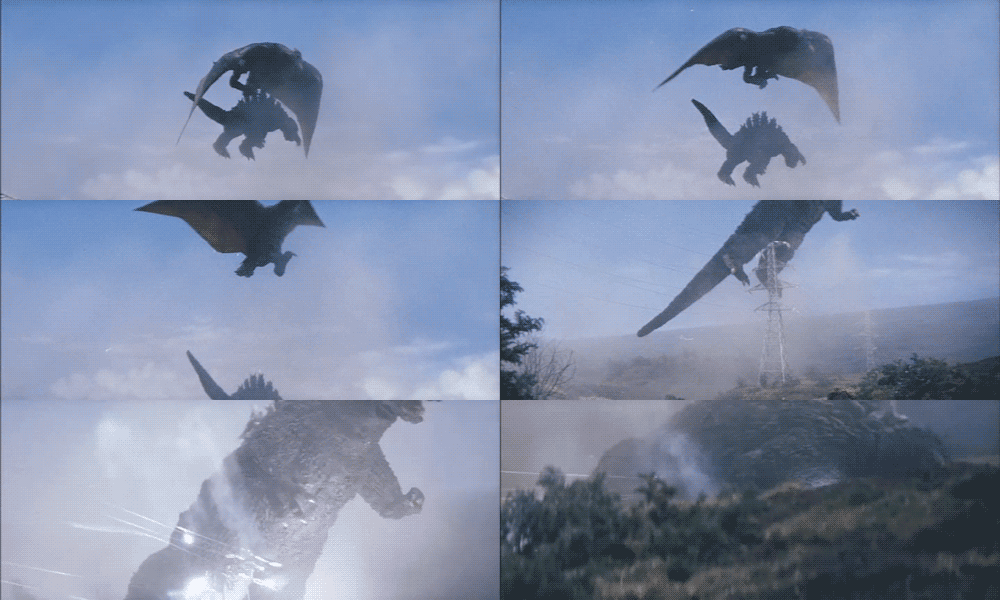
Ohhhh my groin! 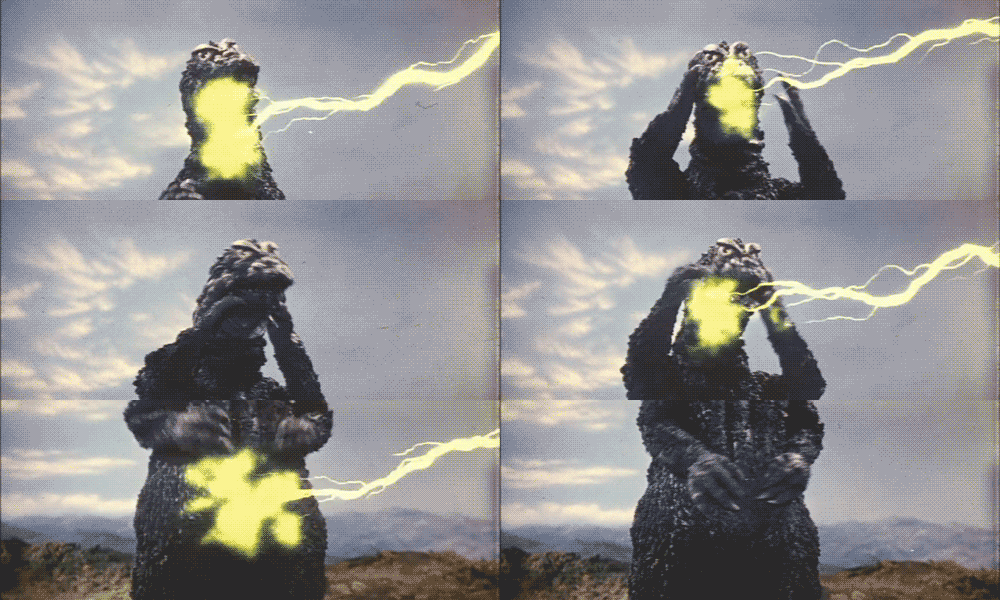
Aww man, not again!
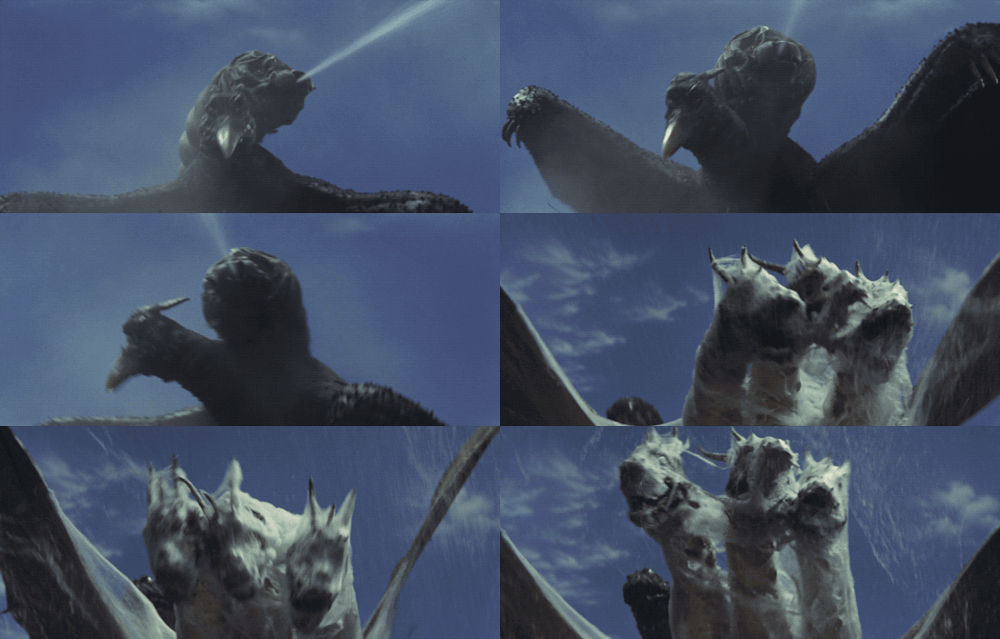
When the monsters do agree to “let bygones be bygones,” just an utterly bizarre phrase to hear monsters employ, the battle is pretty fun. Ghidorah has three heads, so of course three monsters have to unite to defeat him. Poor Godzilla has his nuts wrecked by both Rodan and Ghidorah, and while reptilian anatomy may not be a strong suit here, teenage humor most definitely is. The biggest highlight is when the Mothra larva crawls onto Rodan’s back and acts as a flying shoulder-mounted silly-string cannon. It is sheer brilliance.
Ghidorah, the Three-Headed Monster is a wild ride that acts as a turning point in the franchise. King Kong vs Godzilla started to introduce some wrestling maneuvers, but Ghidorah really cements the monsters as anthropomorphic and unites them against a common enemy to save Earth. Ghidorah’s strong first appearance and iconic design will make him a mainstay, and this marks the first time Rodan appears as part of the shared universe too. From here on out, each film is a love-letter to both professional wrestling and practical effects artistry. They embrace their own self-aware campiness, and exist to provide a joyous spectacle to the viewer. With Ghidorah, the Godzilla franchise has unequivocally found its brand.
 Godzilla Vs...!