Japan’s economic engine in the 1960s stemmed from the Korean war a decade prior. In an economically depressed postwar nation, acting as a staging area for UN troops to fight the ubiquitous threat of communism kick-started a massive transformation across the country. With many industrial centers being destroyed in WWII, Japan was able to rebuild with the latest technology and politically invested in robust economic expansion. The nation saw agricultural, rural population move from 85% prewar, to 50% in 1945, to just 20% by the 60s. The country shifted focus towards production of high-quality consumer products and urban infrastructure. While this rising tide did indeed lift all ships, it wasn’t without flaws or social cost. Japan is unique in being one of the only collective capitalist nations, relying on tight-knit business relationships, companies owning shares in each other, creating cartels that control the supply chain from manufacture to distribution, and deeply embedded government partnerships. The cronyism and rampant greed are on full blast here in 1964’s Mothra vs. Godzilla.
The fourth entry in Godzilla’s franchise is more of a remake than a continuation of 1961’s Mothra. It was intended to be a follow up in Shinichi Sekizawa’s original script, which involved the fictional nation of Rolisica, notably absent in the final product. Mothra vs. Godzilla follows reporter Ichiro Sakai paired with photographer Junko Nakanishi, accompanied by Professor Shunsuke Miura. They journey to Infant Island to implore the help of the Shobijin, and are met by primitive tribes played by Japanese actors in blackface (albeit more skillfully applied now). If this sounds familiar, that’s because it’s more or less the exact plot of Mothra’s debut film 3 years prior. So, while Toho is starting to weave in monsters from their other kaiu eiga, this outing works better if viewed as a reboot than a follow-up. Honda portrays Infant Islant as a much more desolate place, covered in bones and ash; a stark contrast to Mothra’s lush paradise. The effect puts more weight on Godzilla’s anti-nuclear themes, and merges it with the critique of exploitative capitalism, giving us the best of both worlds.

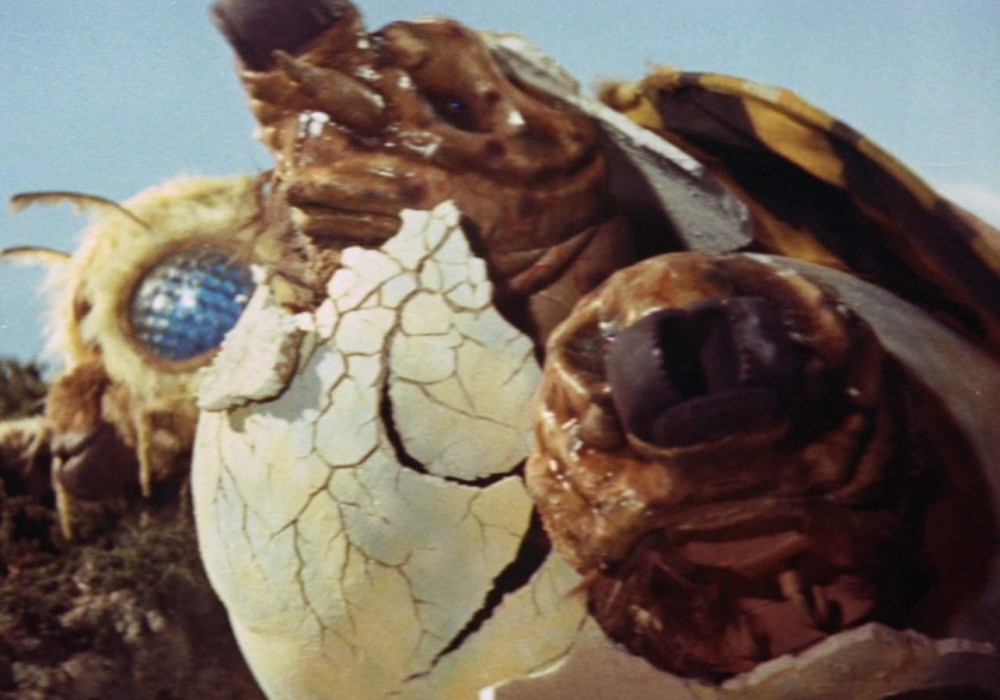
The main human villains are a pair of rich businessmen who plan to take advantage of a giant egg discovered in the bay that has washed ashore after a typhoon. Kumayama, a representative of the hilariously named “Happy Enterprises” has purchased the egg from a community of fishermen who laid claim to it because it was found in their waters. He plans to charge admission just to look at the egg and watch as it hatches, but his partner Jiro Torahata has something bigger in mind: build a whole damn amusement park around it, with the egg as a central attraction. The two have dollar signs in their eyes and have no regard for human life, going so far as to build a massive incubator around the egg, hoping it will hatch and they will have a Kong-esque attraction to charge the masses to view. They will meet their comeuppance later as Godzilla attacks, and are left fighting each other over money instead of fleeing to safety.
The Shobijin (faeries of Infant Island played Emi and Yumi Itō) ask the greedy capitalists to return the egg, or things will NOT go well for them. Of course they refuse, and the Shobijin seek out our intrepid reporters for help. They’re unable to secure the return of Mothra’s egg, so the faeries bug off back to the island. Sakai publishes some brutal headlines: “FAITH IN HUMANS SHATTERED! MOTHRA’S PLEA FOR HELP IGNORED!” to which of course Kumayama decries as “vicious slander!” The film touts journalism as a champion of the people and they refuse to give up.
Akira Takarada (Sakai), who played Hideto Ogata in the original Godzilla puts in a solid performance alongside costars Yuriko Hoshi (Nakanishi), and Hiroshi Koizumi (Miura) of Godzilla Raids Again. They aren’t quite the powerhouse trio featured in ’61’s Mothra, but deliver some good scenes. After Kumayama belittles Nakanishi when they first meet, she rails on her boss Sakai: “I can’t respect a boss who does nothing while their subordinate is insulted…”
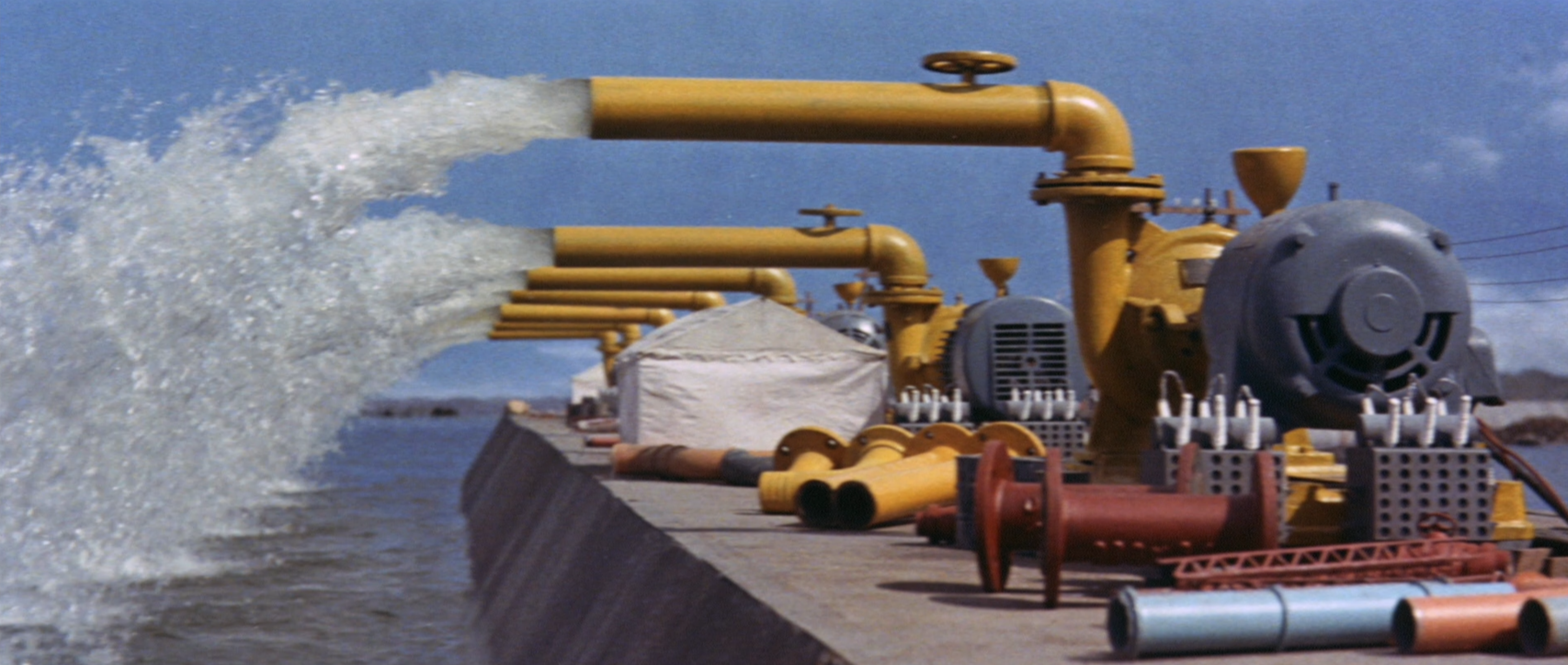
It’s not just the capitalists that Honda takes aim at either; he roasts politicians who care more about publicity than safety. Our representative is adamant on completing his infrastructure project, the water treatment facility, and refuses radiation testing which (shockingly) leads to Godzilla showing up and wrecking the whole thing anyway. Sakai and company are sent to Infant Island to beg for Mothra’s help, even after they were not able to help the Shobijin. Their humility and concern for all life sends a message of international community and cooperation, even in the face of mistrust. We cannot conquer the environmental problems that effect us all while holding fast to old grudges and self-interest only.
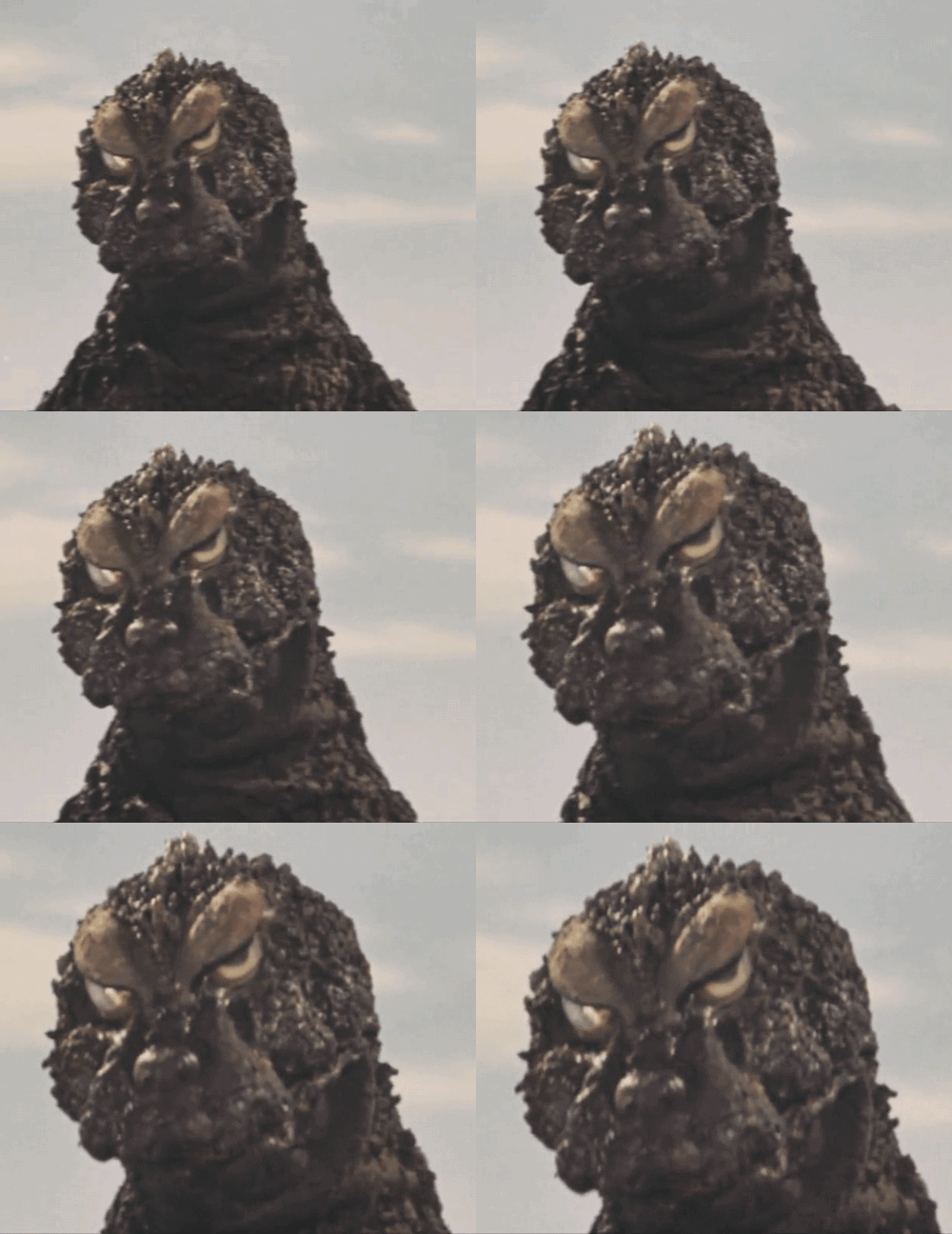
Godzilla’s return here also marks the last time for a long time he is portrayed as a villain. His ominous stare and animalistic lumbering are a return to form, but King Kong vs. Godzilla’s wild wrestling antics will win out in the end over the next twelve films.
Keeping with Mothra’s theme of death and rebirth, we’re treated to a huge battle where Godzilla is dragged around by the Elder Mothra, who dies protecting her egg. Two larvae hatch, renewing the cycle of life, and the lessons of cooperation are hammered home as they work together to outflank Godzilla and save the day.
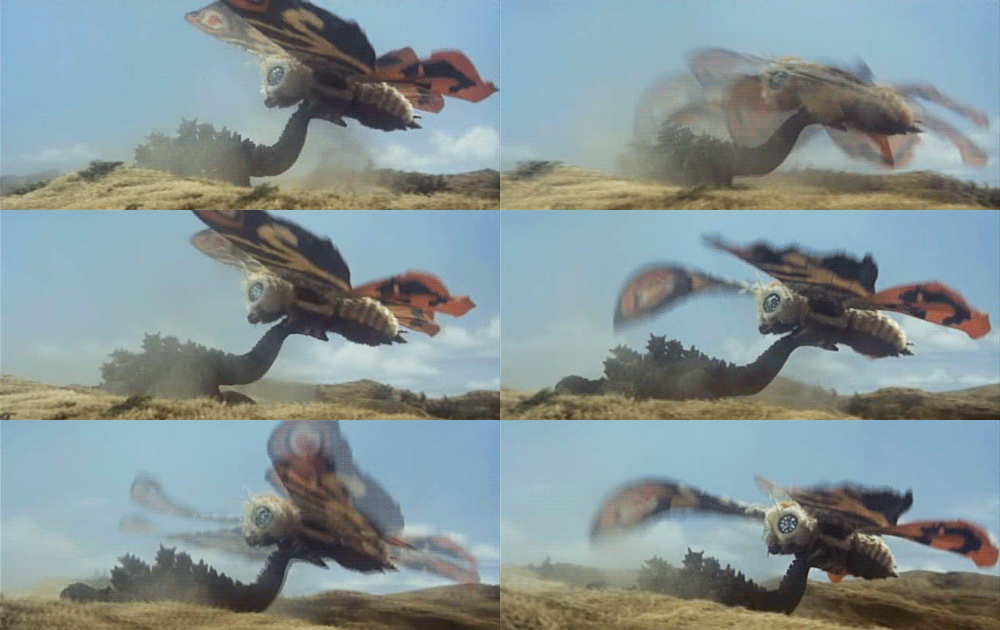
While the performances don’t quite measure up to the original Mothra, that’s not really what we’ve come here for. Eiji Tsuburaya’s new Godzilla suit is lighter and more mobile than ever, and Mothra’s head, antennae, and limbs all articulate spectacularly. Honda’s double whammy eviscerating nuclear testing and corporate greed shine and raise Mothra vs Godzilla to one of the top films in the pantheon, where it remains as a high point to this day. The fact that one of the strongest foils to Godzilla, a giant radioactive lizard beast, is a MOTH is incredible. It’s so uniquely bonkers and part of what has made the franchise so beloved for so many years. Hats off to you, Mothra!
 Godzilla Vs...!