
At the turn of the 20th century, new advances in technology shocked the world and connected us more than ever. Rapid expansion of the railroads gave manufacturers access to a wealth of raw materials and before long the popularization of automobiles and the combustion engine made travel more accessible to more people all over. The Wright Brothers’ first flight in Kitty Hawk in 1903 would lead to mankind’s access to the skies, and with it, access to some of the last untouched places on earth. Paired with the development of film, small portable cameras, and recording equipment, an interest in anthropological expeditions boomed to bring strange sights and reports of native customs to audiences around the globe. Adventures to pre-industrial tribes were popularized in pulp novels and magazines, and influenced film and television for decades to come. Taking more than a few queues from 1933’s King Kong, it is in this wondrous, curious, and exploitative vein that brings us Ishiro Honda’s 4th kaiju installment: Mothra. (His 3rd after Godzilla and Rodan being Varan The Unbelievable… a story for another time).
I’m going to continue on the aerial detour this week because Mothra is such a large part of the Godzilla franchise, and her 1961 debut is quite a trip. In contrast to the nuclear horror of Godzilla and the relative bloodbath of Rodan, Mothra is a much a lighter film, albeit with some anti-nuclear and anti-colonial themes. Casting famous Japanese comedian Frankie Sakai as the lead role solidifies Mothra as a much more jovial, family-friendly film about a violent, destructive monster. And let me tell you, my dude Frankie has put in some WORK. He had already done 41 films before starring in Mothra, and that wasn’t even the midpoint of his career. Seriously go check out this massive rap sheet on his wiki page. That’s more films than Honda directed at that point, and Honda was almost 20 years older than him!

In the opening credits, we’re treated to a score by Yūji Koseki. It’s a much more flowery orchestral number, using a lot of stringed instruments. Akira Ifukube, who did so well on Godzilla and Rodan was apparently offered the job, but declined because he didn’t feel he was good fit to write music for The Peanuts, Emi and Yumi Ito, twin singers who play the Shobijin faeries. The first draft of the Mothra concept was written by Iwao Mori with the intent of creating a giant monster film…that women would like to see. That’s right fellas, this one’s for the ladies! In light of this, it is good to see someone like Ifukube deferring to another with better expertise to write for the twin performers.
The film starts with a shipwreck in the waters near Infant Island, an atomic testing site of the fictional country Rolisica. The survivors are rescued and it’s found that they have no radiation poisoning, which seems weird to everyone involved. As they’re being interviewed, Frankie Sakai’s character, intrepid reporter Zen’ichirō Fukuda (nicknamed “The Snapping Turtle” because he never lets go of a story!) and his photographer Michi Hanamura are revealed to be hiding under the medical masks we’re all too familiar with today. Hanumara is played by Kyōko Kagawa whose wry charm lights up every scene she’s in. Their chemistry is stellar, and it’s not a romantic bond; they’re just incredibly good colleagues with a fantastic rapport. During the examination, the sailors say they got that good juice from the natives and were sent on their merry way. Natives? On the irradiated island? Sounds like a scoop!
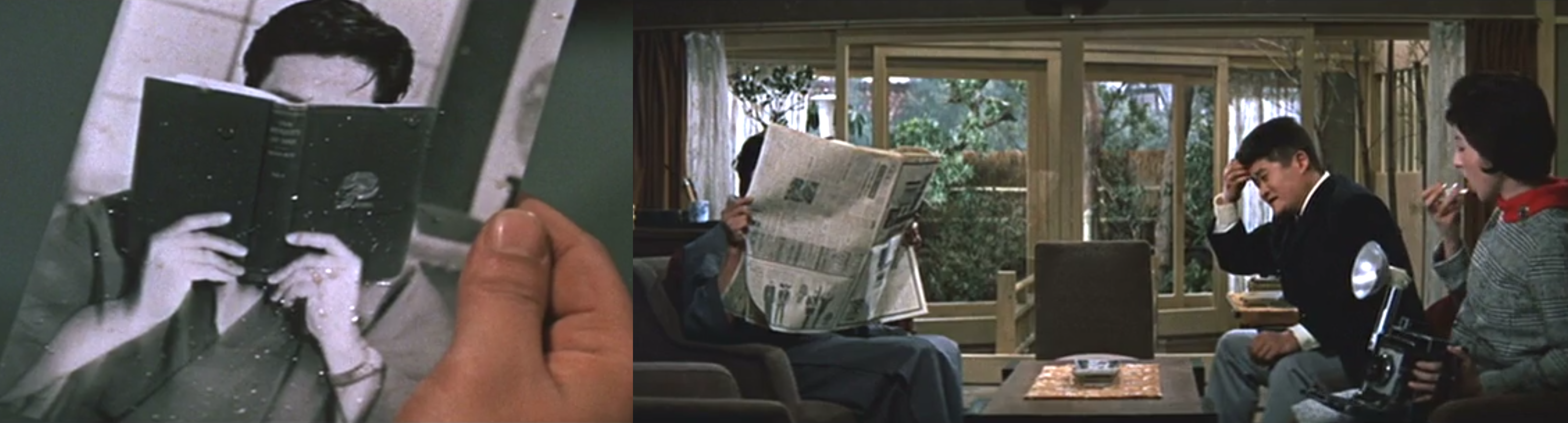
In what I’m sure is some of Frankie Sakai’s influence, the two decide to visit Dr. Shin’ichi Chūjō, an anthropologist played by Hiroshi Koizumi of Godzilla Raids Again. The exchange in the newsroom that cuts to Chūjō’s home is comic genius, a photo is shown of him behind a book. “What the heck is this?” the editor asks. “Great shot!” Fukuda responds, “He doesn’t like being photographed.” Smash cut to them trying to interview Chūjō who’s obscured be a newspaper. BRILLIANT.
An expedition is put together including the good Doctor, and this sketchy envoy from the Rolisican government by the name of “Nelson.” Rolisica is hilariously meant to be a stand in for both the US and USSR, the two major nuclear powers of the time. Uniforms and citizens look fairly Russian, while one of the later locations of the film is “New Kirk City” with a skyline clearly meant to mimic Manhattan’s. A majority of Mothra revolves around tensions between the Rolisican government, who insisted Infant Island was uninhabited before launching their nuclear tests. They seem to be shady all around, and freely threaten Japan’s free press at every opportunity. Luckily the editor and reporters by and large tell them go screw off.
There is a LOT going on in Mothra before we even see the larva. During this expedition, Dr. Chūjō finds a weird cave, which is an amazingly colorful set piece, and sees the tiny Mothra twins after being attacked by some vines. It’s wild. He also finds an inscription with native markings that will come into play later. When the expedition members find him, he describes the twins to them and Fukuda is just like “oh yeah, the Shobijin (small beauties)! It’s a journalism term!” Really?!? IS IT?!? They find the Shobijin and Nelson wants to capture them, but they’re surrounded by, uh…some uncomfortable “natives” portrayed by Japanese in blackface banging rocks together, who scare the team into letting the faeries go. After the expedition returns to Japan, Nelson leads a second team to capture the Shobijin and in doing so they slaughter a bunch of the natives. In an otherwise family-friendly movie, it’s a dark move that dehumanizes Polynesian tribes just to illustrate how bad the bad guys are. They’re disposable, and the massacre is never really addressed. Nelson needed to be dragged in front of the Hague for this shit.
In King Kong-esque move, he makes a traveling sideshow out of them, flying them on stage in a tiny golden chariot, and making them sing. Little does he know, the song is summoning Mothra. The juxtaposition between the Peanuts performing the Mothra song and the Infant Island Natives is impressive, despite the unfortunately awful blackface. The song is enticing, yet ominous; it embodies the voyeuristic enchantment with the exotic.
Our reporters spend the rest of the film trying to free the Shobijin from Nelson and the Rolisican thugs. When the Mothra larva is summoned, it crosses the ocean at night, downing a cruise liner while being beautifully underlit from below the water’s surface. The Shobijin are sad when they inform Fukuda and Hanumara that Mothra is coming, but they’re incredibly straightforward about it. Like “We regret to inform you that you’re absolutely fucked.”
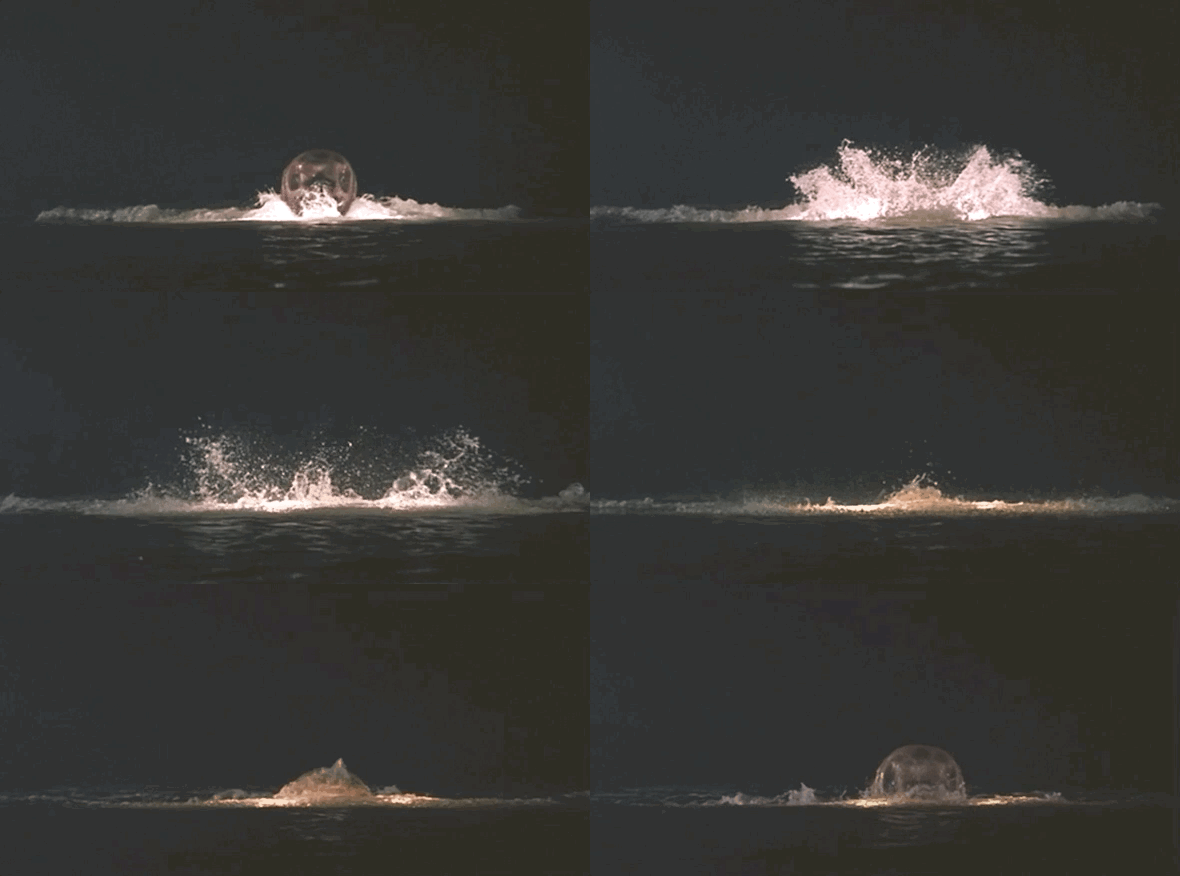
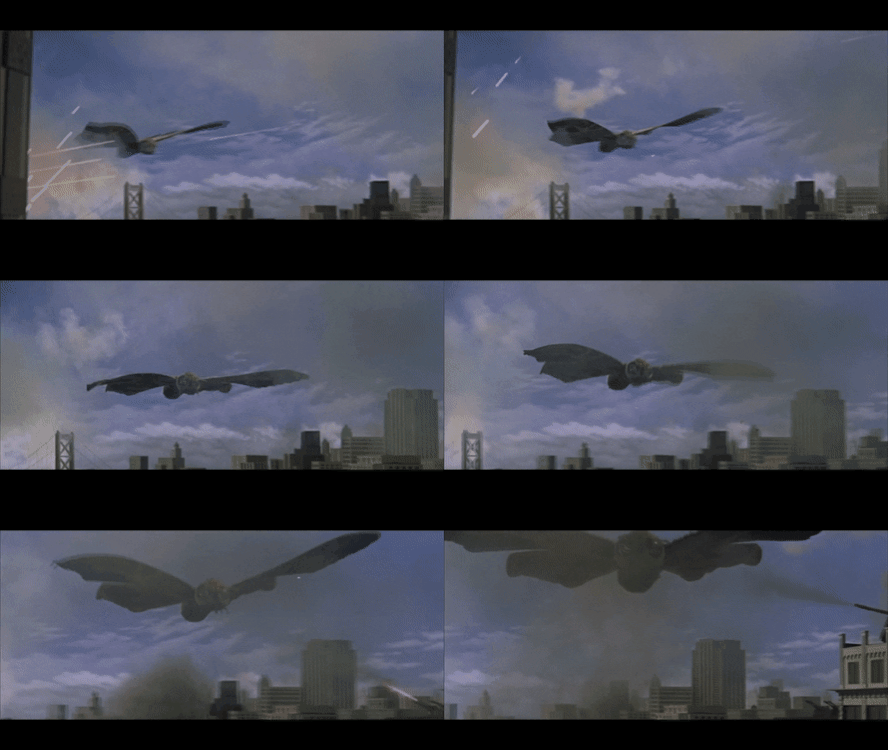
After the larva runs aground, and she’s tearing things up, there’s some great little RC tanks at play. They seem a lot more mobile than anything Toho has put together so far and it’s mad fun. The larva finally cocoons up around the hour and fifteen minute mark, and after blasting it with “Atomic Heat Cannons,” the government thinks Mothra is dead. Meanwhile, Nelson escapes to Rolisica with the Shobijin in a psychically shielded briefcase. Yeah, bonkers. But that’s not the least of it. It’s almost an hour and a half into the movie about a giant moth before the giant moth emerges from the burnt cocoon. The citizens in Rolisica turn on Nelson and surround him in public, where he sees flashbacks to the blackface natives and goes out guns ablazin. Yikes. Mothra is wreaking havok and a Rolisican preacher laments “Now we must rely on God’s will!”
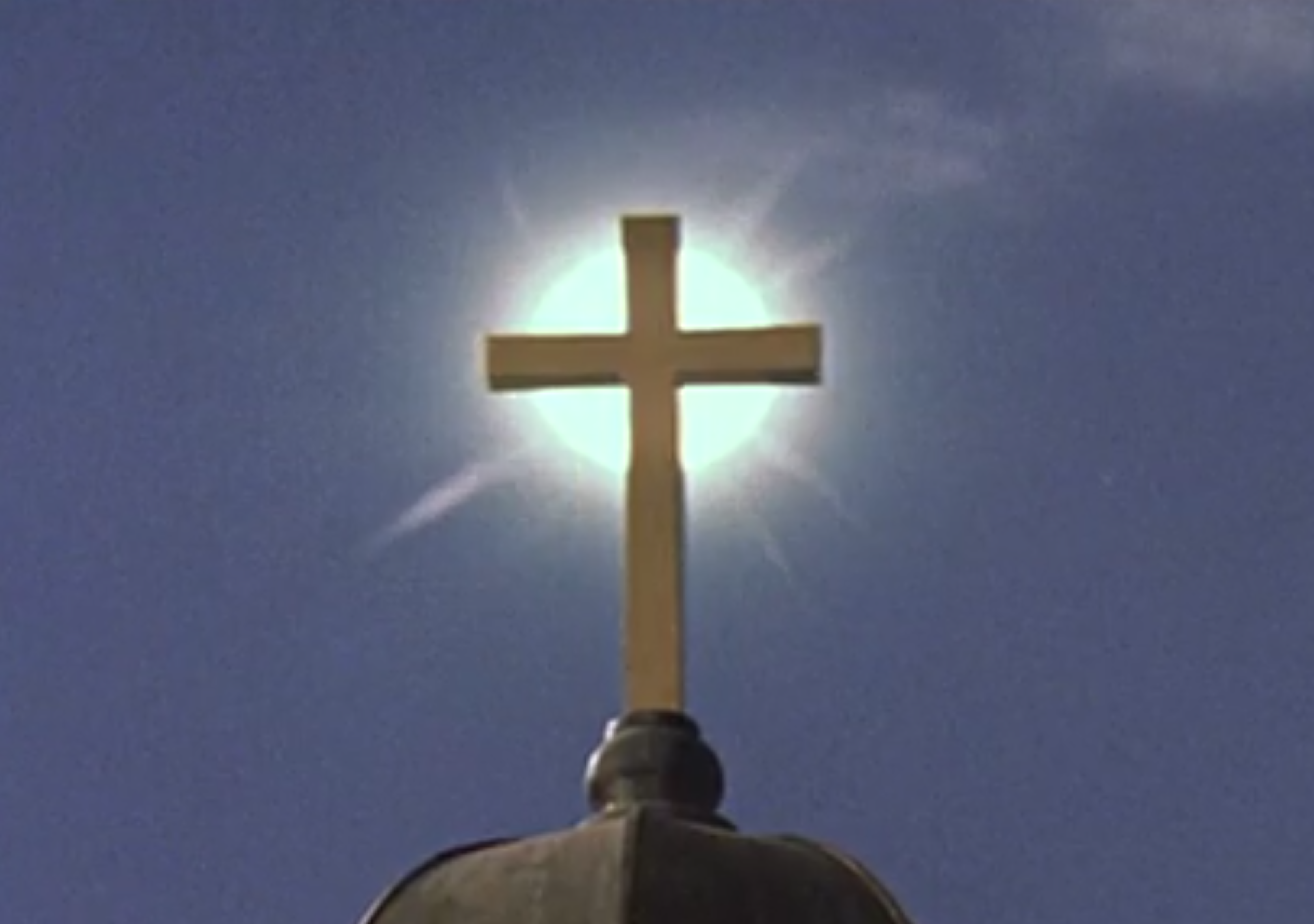
So, death and rebirth are going to be common Mothra themes in most movies moving forward, but in Mothra (1961) they are VERY explicit about the religious symbolism. Doc Chūjō realizes one of the symbols he found resembles a christian cross with the sun shining behind it and everyone prays…followed by another hilarious smash cut to Mothra barreling around through a barrage of rockets…just like Jesus did!
They end up luring Mothra to an airport tarmac by painting the symbol on a runway. She picks up the Shobijin, and they’re off. Roll credits. The moral of the story is, don’t do atomic testing on inhabited islands and run a freakshow with kidnapped natives, or Mothra will come fuck you up. You may be beyond the reach of the international courts, but you cannot hide from the vengeful goddess Mothra.
 Godzilla Vs...!
One comment