
I’ll admit: going into this rewatch of Godzilla and Godzilla, King of the Monsters! I expected the Terry Morse’s American version to shy away from the themes of the Japanese version a lot more than it did. The US edit draws a lot of criticism, which it deserves, for cutting some key scenes from Honda’s original. But the overall anti-nuclear themes are still prevalent. What doesn’t get discussed as much is the absolute dehumanizing erasure of all of Takeo Murata & Ishiro Honda’s characters. Morse’s King of the Monsters! butchers the tone and emotional pacing of the film, which has the effect of watering down any of the message the film tries to keep intact.
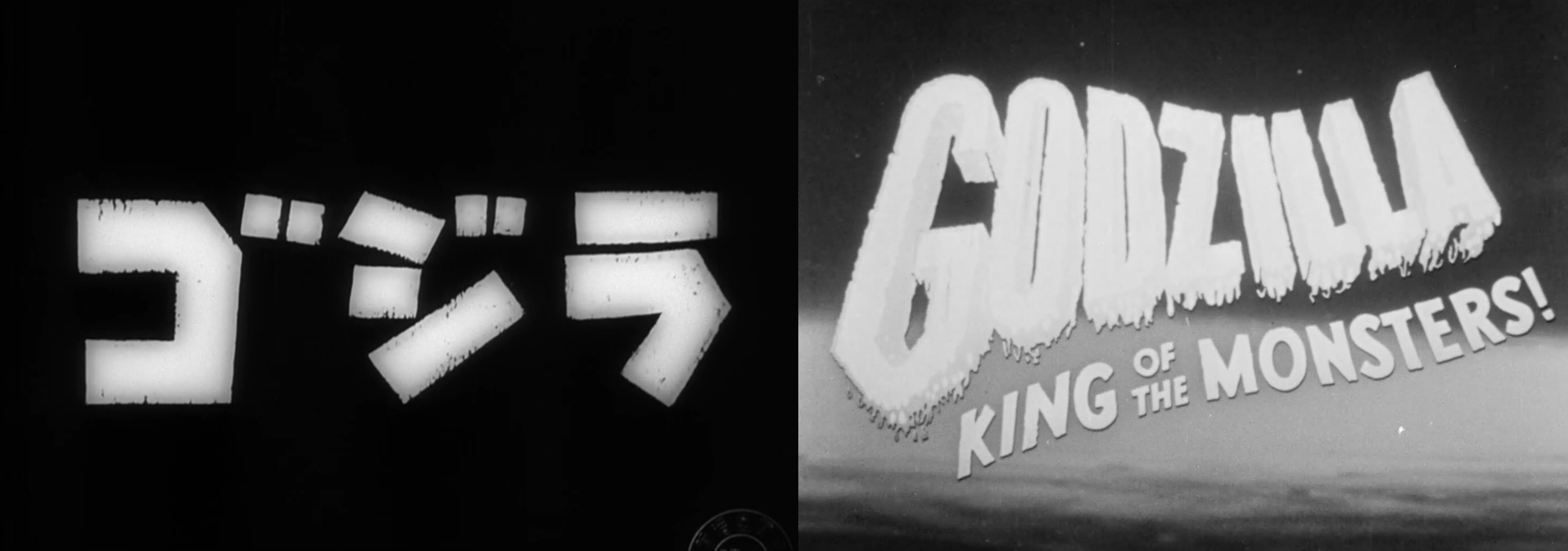
The first piece of emotional whiplash you’ll encounter if punishing yourself by watching King of the Monsters! directly after Godzilla is the title sequence. Where Honda opens his film with the masterful booming footsteps and iconic score in front the brutally simple block title, producers tacked on the hokey “King of the Monsters!” byline, complete with tacky exclamation point. The music also sounds like it’s out of a goofy Abbot and Costello/Universal Monsters crossover.
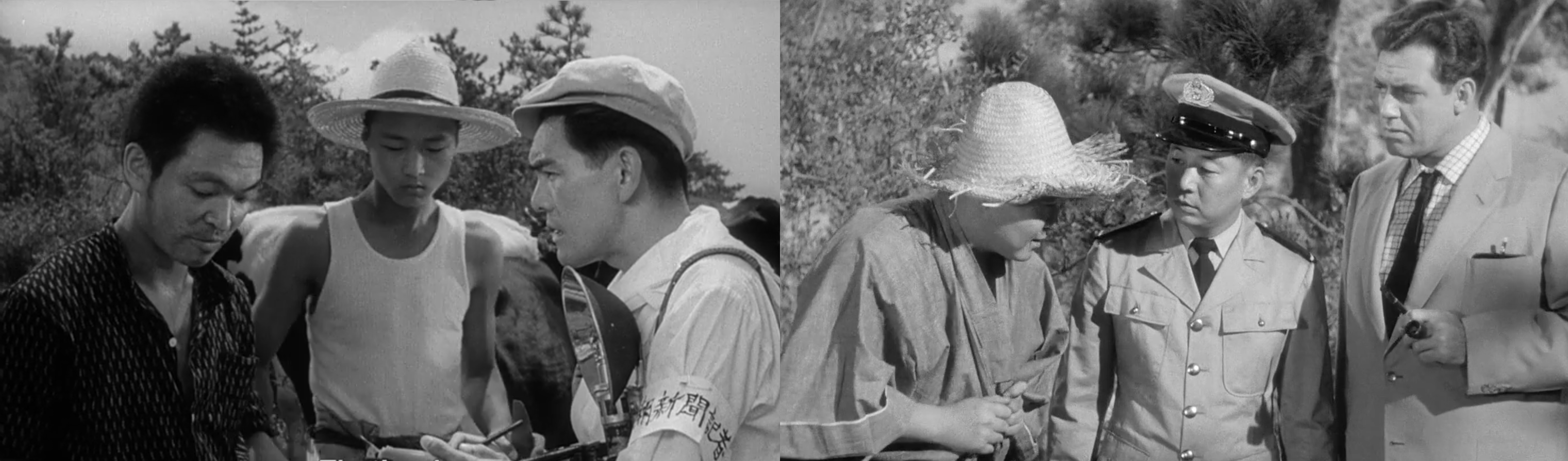
Our valiant white savior narrator is a journalist by the name of “Steve Martin”, played by Raymond Burr. Burr shot all of his scenes for this adaptation in a day, and it shows. The film opens in medias res amidst the rubble of a destroyed Tokyo. While we do see the oppressive fallout, and the harsh scene of a doctor taking a Geiger Counter reading off a small child, frontloading these emotional touchpoints for a cheap narrative gimmick wholly takes the wind out of their sails. It hasn’t been built up to; it’s cheaply unearned. Morse could not have predicted the rise of one of comedy’s greatest stars, but the fact that the character’s name is Steve Fucking Martin just makes the American edits stand out even more.
Perhaps the worst decision Morse and company made, and I’m sure the studio had a part in this, was to not at least subtitle the original Japanese cast outside the main characters. Professor Yamane, Serizawa, and Emiko get dubs from time to time, but there’s a lot of Japanese dialogue left unknown to the American audience. We rely on Steve Martin and his translator/security detail Tomo Iwanaga completely to tell their story without being able to experience it firsthand. This has a dehumanizing effect on almost every scene. Where in Honda’s original, we spend time with the villagers of Odo Island and feel their pain while searching for survivors, we’re just left with this pipe-smoking doofus to walk us through all the events leading up to Godzilla’s appearance. We also miss out on the most grim line of the entire film when the mother assures her children they’ll be with Daddy soon, moments before their deaths. The people of Japan are thoroughly detached and othered by this directive choice.

Steve is uncomfortably shoehorned into the main cast as a long-time friend of Professor Yamane. When Emiko finds him in the hospital after the attack on Tokyo, we’re subjected to a rapport-establishing scene where she apparently very much cares about her good friend Steve Martin. “Oh Steve! What brought this upon us?” Your dad is literally the guy who discovered what brought this upon us, and the answer is Hydrogen Bomb testing, which we will find out shortly. You’ve got the memory of a goldfish, American Emiko.
When we flash back to Steve’s arrival in Japan, he accompanies the officials in their investigation of Odo Island. It’s sort of framed that Steve is a real investigative reporter, hitting the beat while the Japanese reporters are essentially doing the same thing as him. Only we’re treated to a comically racist depiction of an Odo Island native, and it feels like the director saw the few people in robes and conical hats from the original footage and decided to dial it up a notch and have him submissively bow every other word.
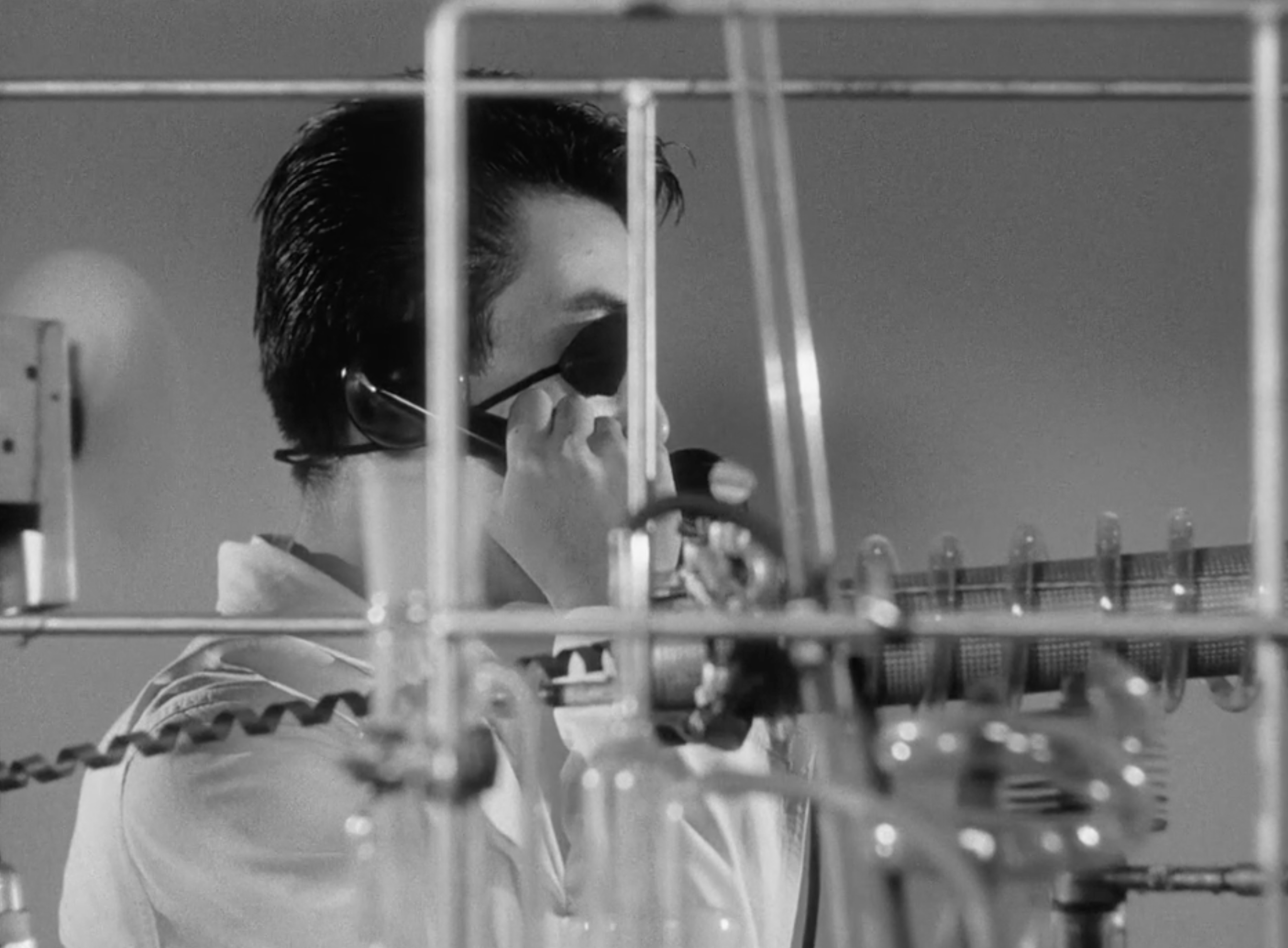
In Honda’s original Godzilla, Dr. Serizawa is not once portrayed with happiness. From the moment he first appears, ominously standing on the docks to see off Emiko on her trip to Odo Island, Serizawa cuts a severe, troubled figure. Heavy is the burden that weighs on his soul in each and every scene. Which makes his introduction in King of the Monsters! incredibly hilarious as he jovially takes a phone call from his good bud from the States, Steve Martin! He opens with a joke: “Steve! You make a better newspaperman than a linguist!” WHAT IS GOING ON HERE?!?
The plot surrounding Serizawa, Emiko, and Ogata is gutted to the bones, with Ogata almost fully written out of the picture until the end. The Japanese Emiko brings a reporter over to Serizawa’s home, and sharply rebuffs the reporters questions, which leads to Emiko prying into his research. You can tell it’s killing Serizawa keeping the grim knowledge of the Oxygen Destroyer to himself, and gives in to Emiko, his bride to be. But American Serizawa simply wants to further the plot and pretty much says, “Hey check out this crazy thing I’ve been working on!” utterly unbidden.
When Godzilla attacks, Steve Martin is interspersed into the scenes narrating away on his little microphone. His scenes mirror the valiant Japanese reporter from the ’54 version, even to the point where Steve says [to his editor] “This is it, George, Steve Martin signing off from Tokyo, Japan” right before the building he’s in collapses. But, we know Steve survives because we see him in the beginning of the movie. Again, all the weight and intensity has been taken out of the film. When we catch up to the present, it is, of course Steve Martin who urges Emiko to convince Serizawa to use the Oxygen Destroyer because the Japanese only exist as an extension to the Steve Martin Show. In a film about the atrocities committed by the US government against the nation of Japan (and humanity itself), of course it has to be the American who makes the moral conclusion and urges the ostensibly “main” characters to act.
When Ogata and Emiko discuss using the Oxygen Destroyer, Serizawa is still hesitant to use it, and wants to destroy his research, but no mention is made of the higher powers that would force him to reveal his secrets. Instead of a pertinent discussion on the escalation of weapons of mass destruction, it’s Ogata who poses a distinctly American pragmatic view “You have your fear, which might become reality, and you have Godzilla, which IS reality.” There’s no talk of Serizawa killing himself to prevent the anyone from using his invention, which makes Emiko’s breakdown weirdly out of place.
The film ends with Serizawa’s sacrifice, but we don’t get Yamane’s warning about more Godzillas returning if nuclear testing continues. Instead, it’s just a celebration that the monster was defeated, and the world can live again. By placing the most gruesome imagery of Godzilla’s fallout at the very beginning of the film, it distances the actual impact from the victory and subverts the whole point of the entire film. Pair that with lack of translation for all the background characters, and missing scenes like the Nagasaki survivor on the train, and it counteracts any of the work done by showcasing the horrors of atomic testing. Terry Morse has the gall to put his name before Ishiro Honda’s, but it’s good that he owns this awful chop job.
If you’re unlike me and actually value your time, do yourself a favor and skip this entry.

 Godzilla Vs...!